

COLLECTIONS
LEGACY HALL
STEPHEN WONG COLLECTION
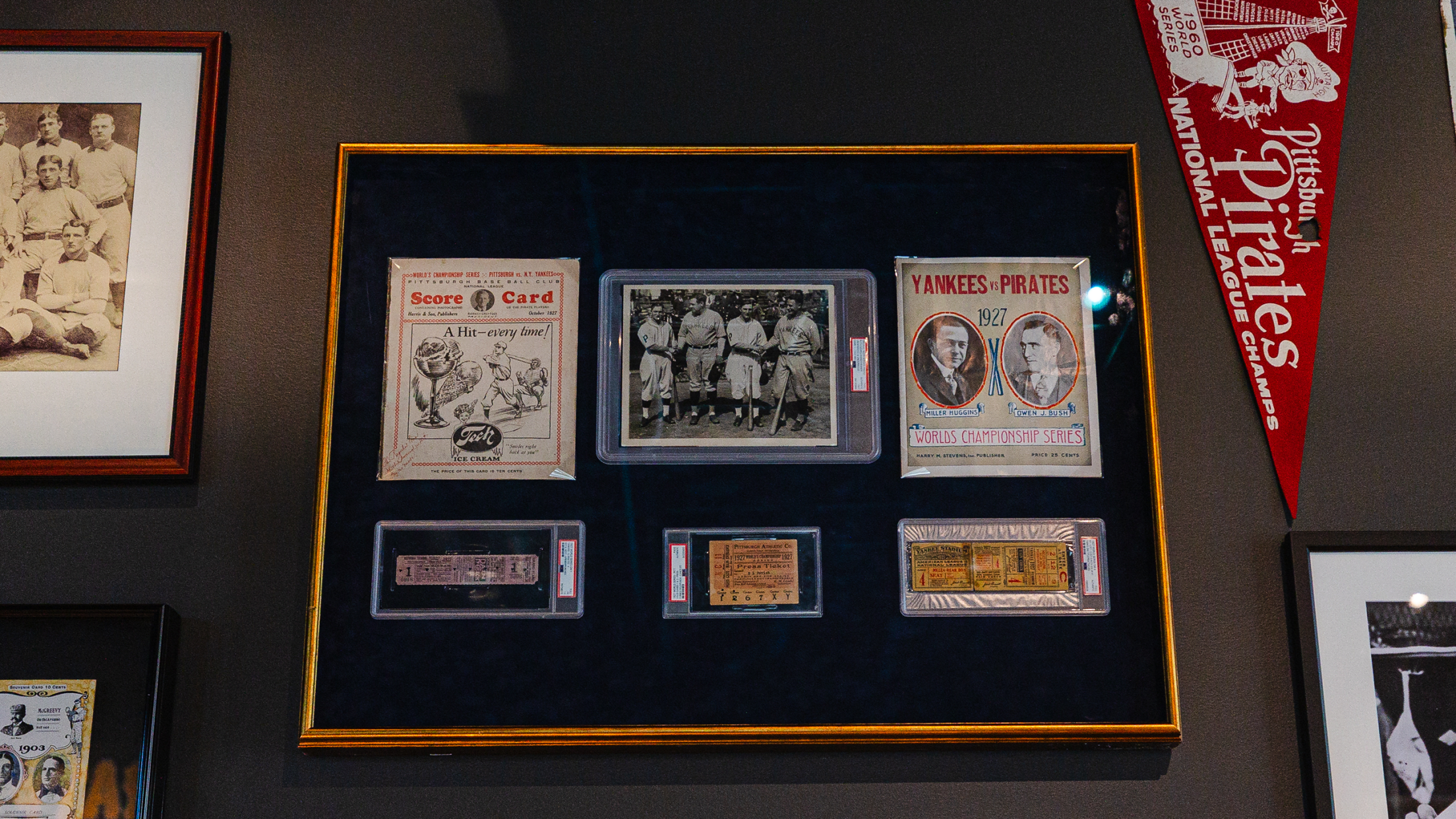
The Pirates and New York Yankees met in the 1927 World Series. This framed piece contains a photograph of Paul and Lloyd Waner, Babe Ruth and Lou Gehrig, along with the World Series programs sold at Forbes Field and Yankee Stadium, a Game 1 ticket, a Game 4 ticket and a Press Pass issued to renowned American sportswriter and columnist, Shirley Povich, who was the recipient in 1975 of the J.G. Taylor Spink Award from the Baseball Writers’ Association of America.
Courtesy of the Stephen Wong Collection
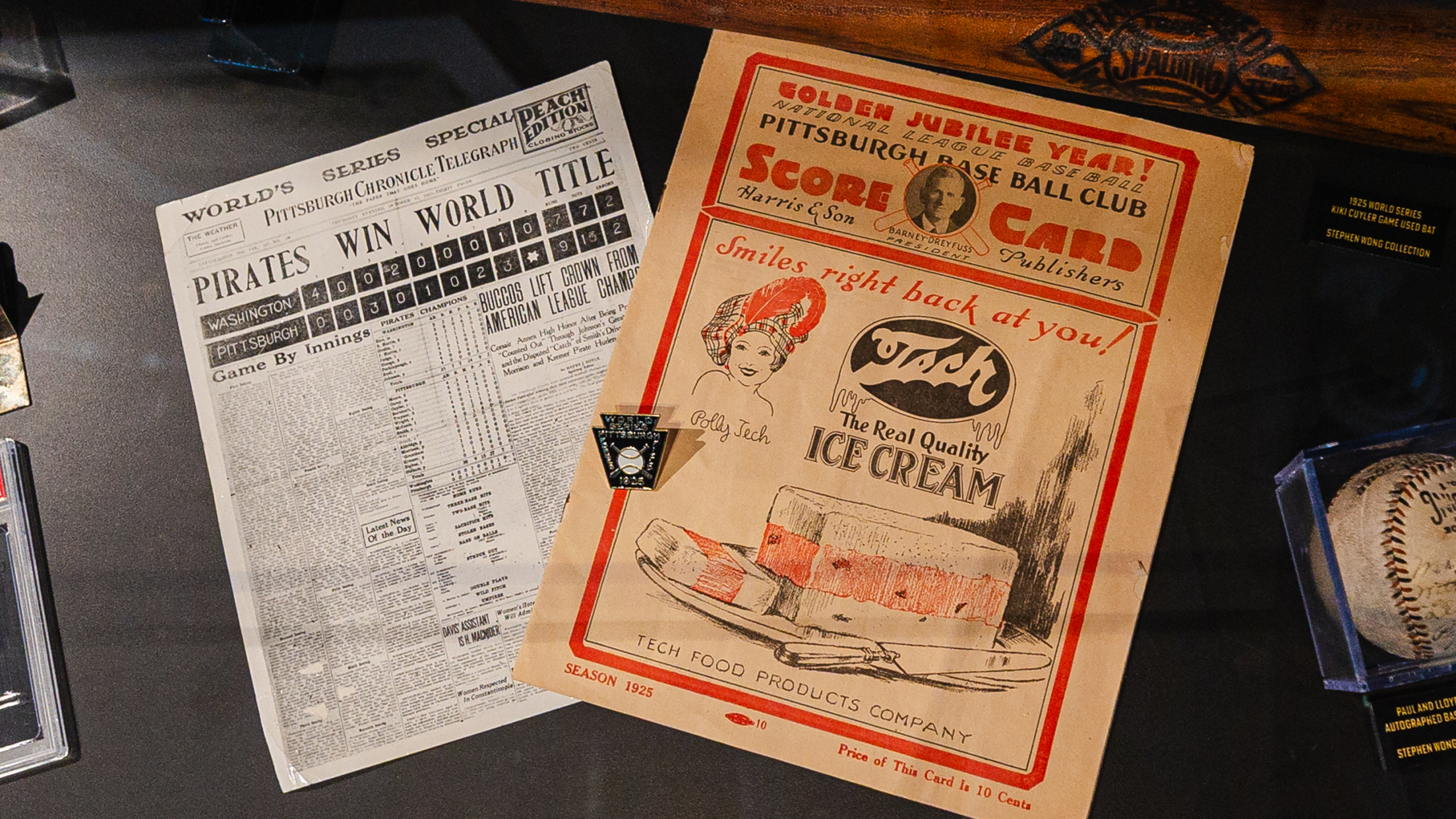
The Pirates defeated the Washington Senators in seven games to win the 1925 World Series, becoming the first team in North American sports history to overcome a 3–1 series deficit to win a playoff series.
Courtesy of the Stephen Wong Collection
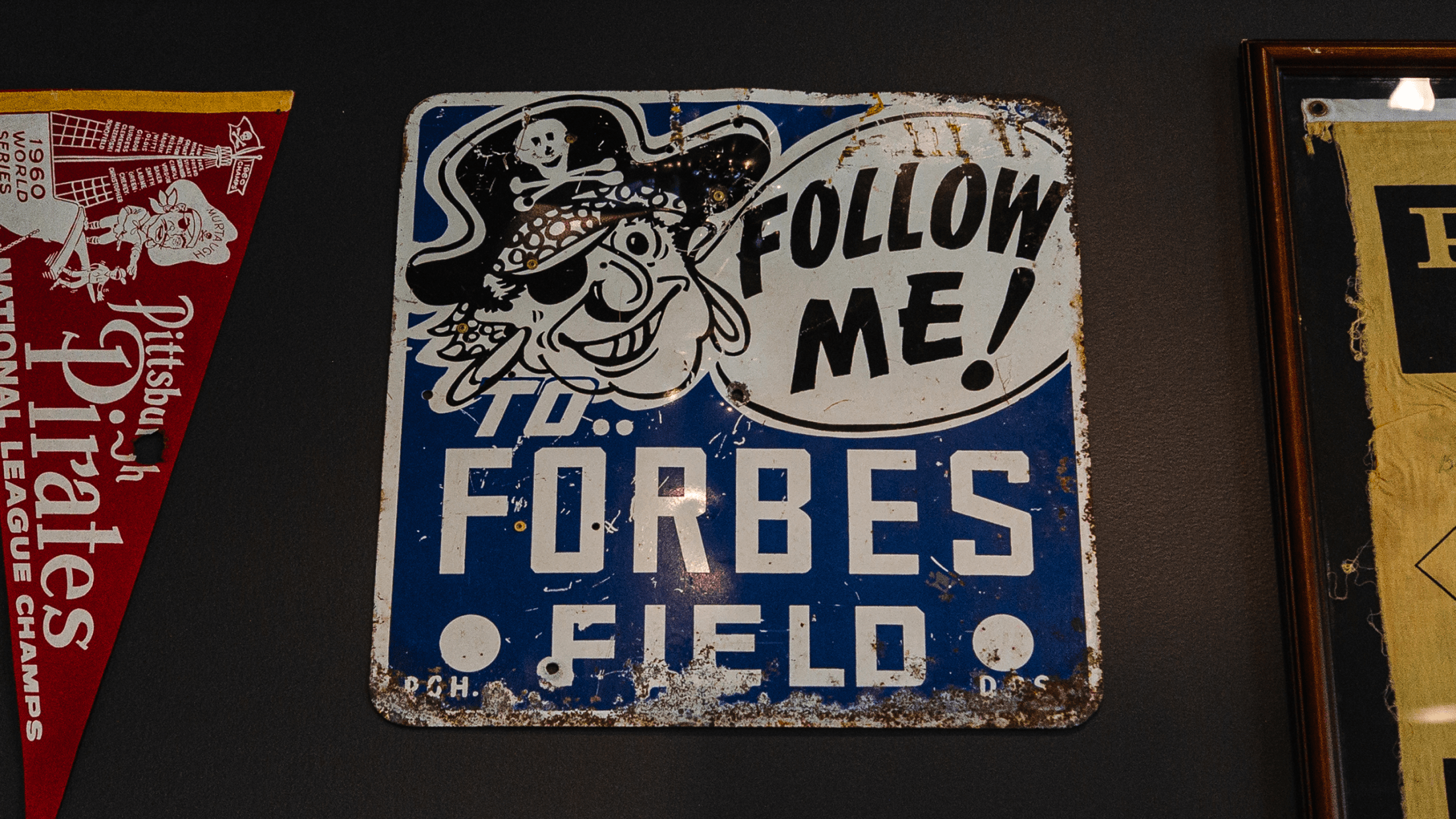
An iconic metal sign from 1960 encouraging fans to go watch the Pirates play regular season games as well as the World Series against the New York Yankees, at their historic home field. These signs were typically nailed to telephone poles and exterior building walls in Pittsburgh throughout that magical season.
Courtesy of the Stephen Wong Collection
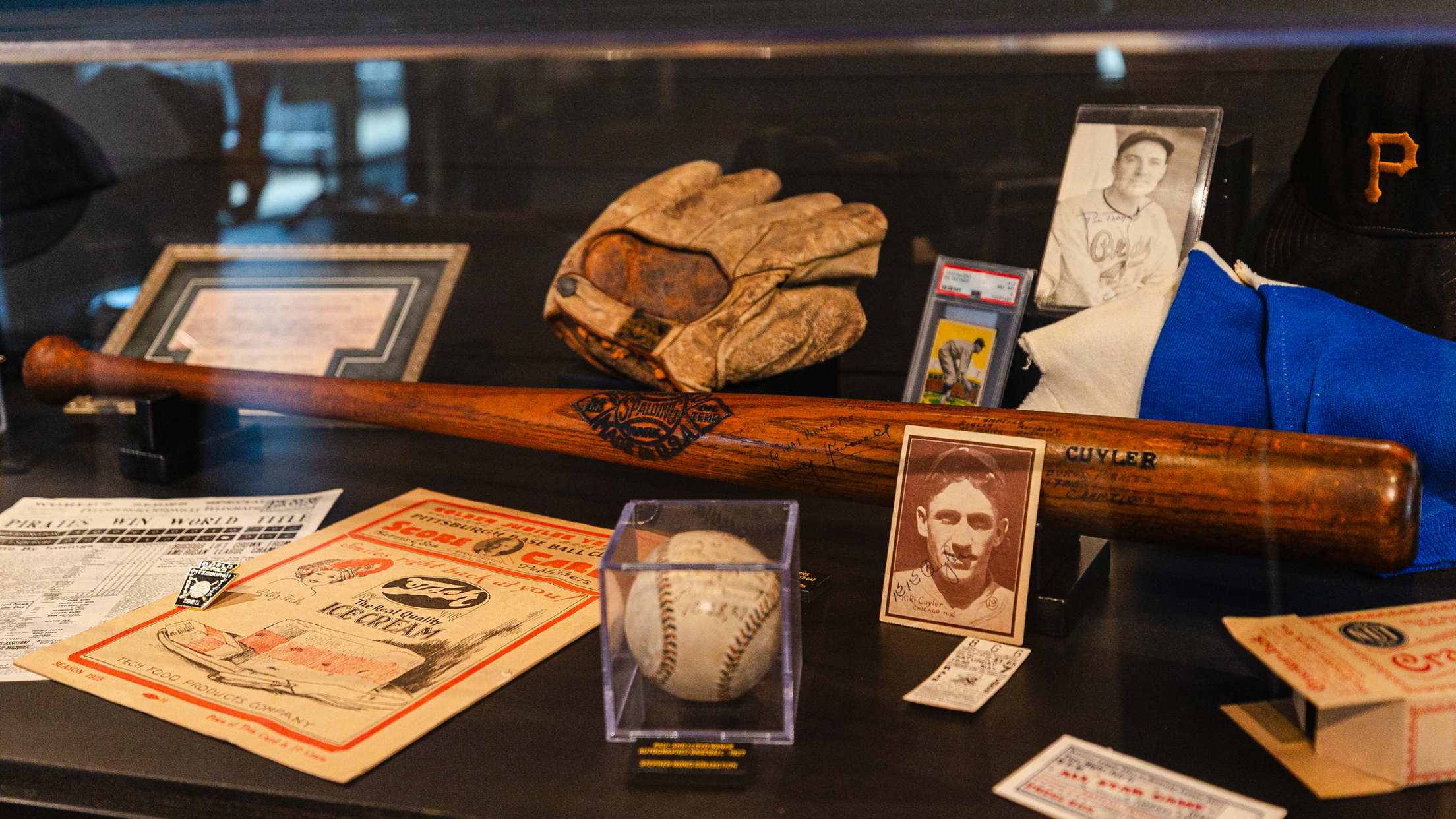
Inducted into the National Baseball Hall of Fame in 1968, Kiki Cuyler delivered the game-winning hit in Game 7 of the 1925 World Series, leading the Pirates to their second championship. This bat was used by Cuyler—whose 26 triples in 1925 were the second-most triples in any season after 1900—during the Series and is signed by members of the entire 1925 team. It also features a hand-written note to long-time Pirates fan and future broadcaster Rosey Rowswell. The bat derives from Rowswell’s family estate.
Courtesy of the Stephen Wong Collection
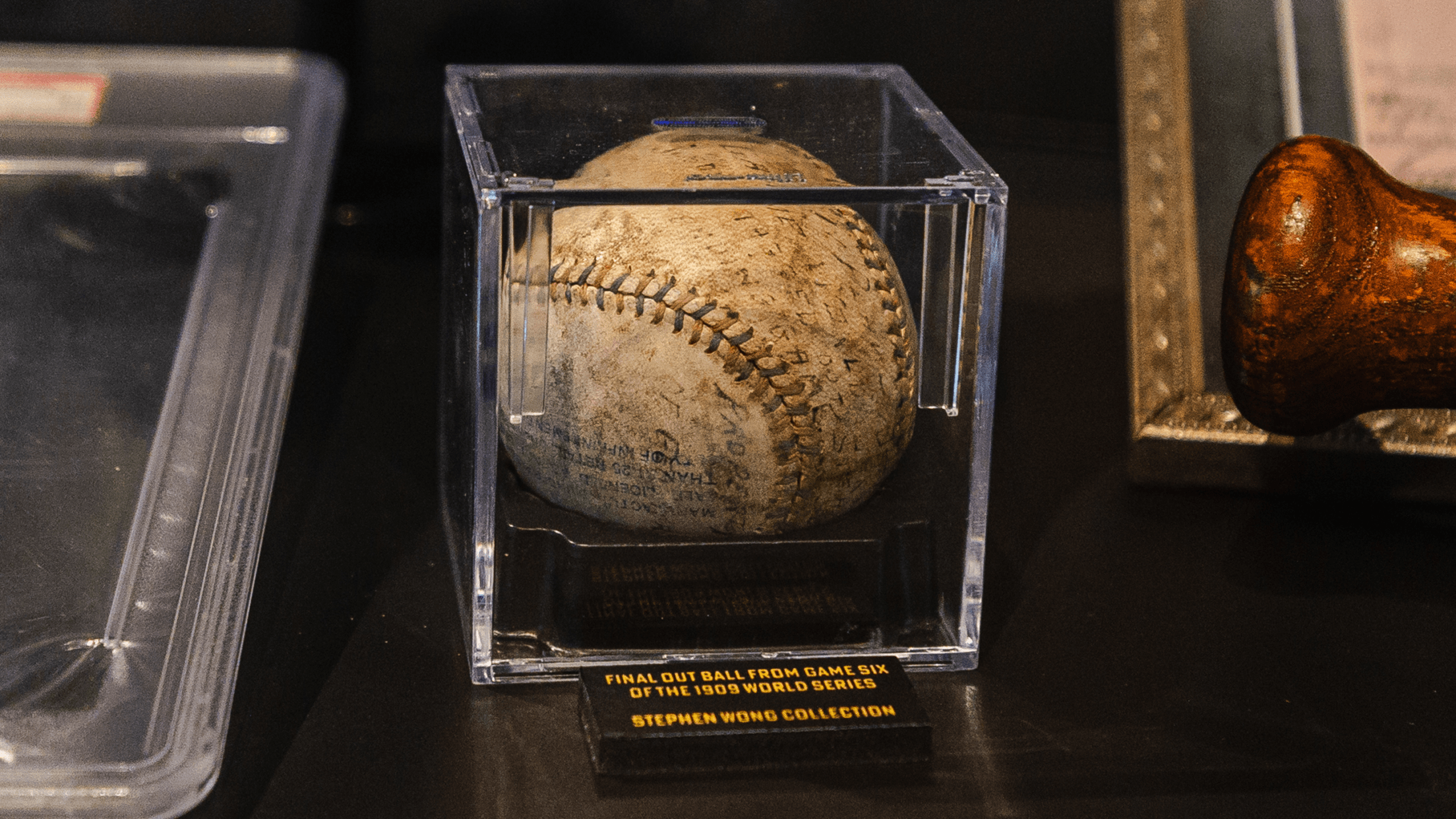
Honus Wagner and the Pirates beat Ty Cobb and the Detroit Tigers in the 1909 World Series, marking the first major professional sports championship ever won by a Pittsburgh-based team. The 1909 World Series was as much about Wagner vs. Cobb as Pittsburgh vs. Detroit. Wagner entered the contest having just captured a fourth straight N.L. batting title, as well as leading the league in RBI, doubles, total bases, and slugging percentage. Cobb owned the A.L. batting crown while also leading the junior circuit that season in home runs, RBI, hits, total bases, stolen bases, runs scored, and slugging pct. However, their World Series confrontation involved more than just statistics. It was a battle between the beloved Wagner - the fan favorite, the best player in the National League who, at 35, would soon be nearing the end of the road - and the feisty Cobb - at 22, already a three-time American League batting Champion and one of the game's most feared and disliked players. This ball was used for the final out in Game Six when Pittsburgh’s Owen “Chief” Wilson was caught stealing third base and was tagged out by Detroit’s third baseman George Moriarty. The ball derives from George Moriarty’s family estate.
Courtesy of the Stephen Wong Collection
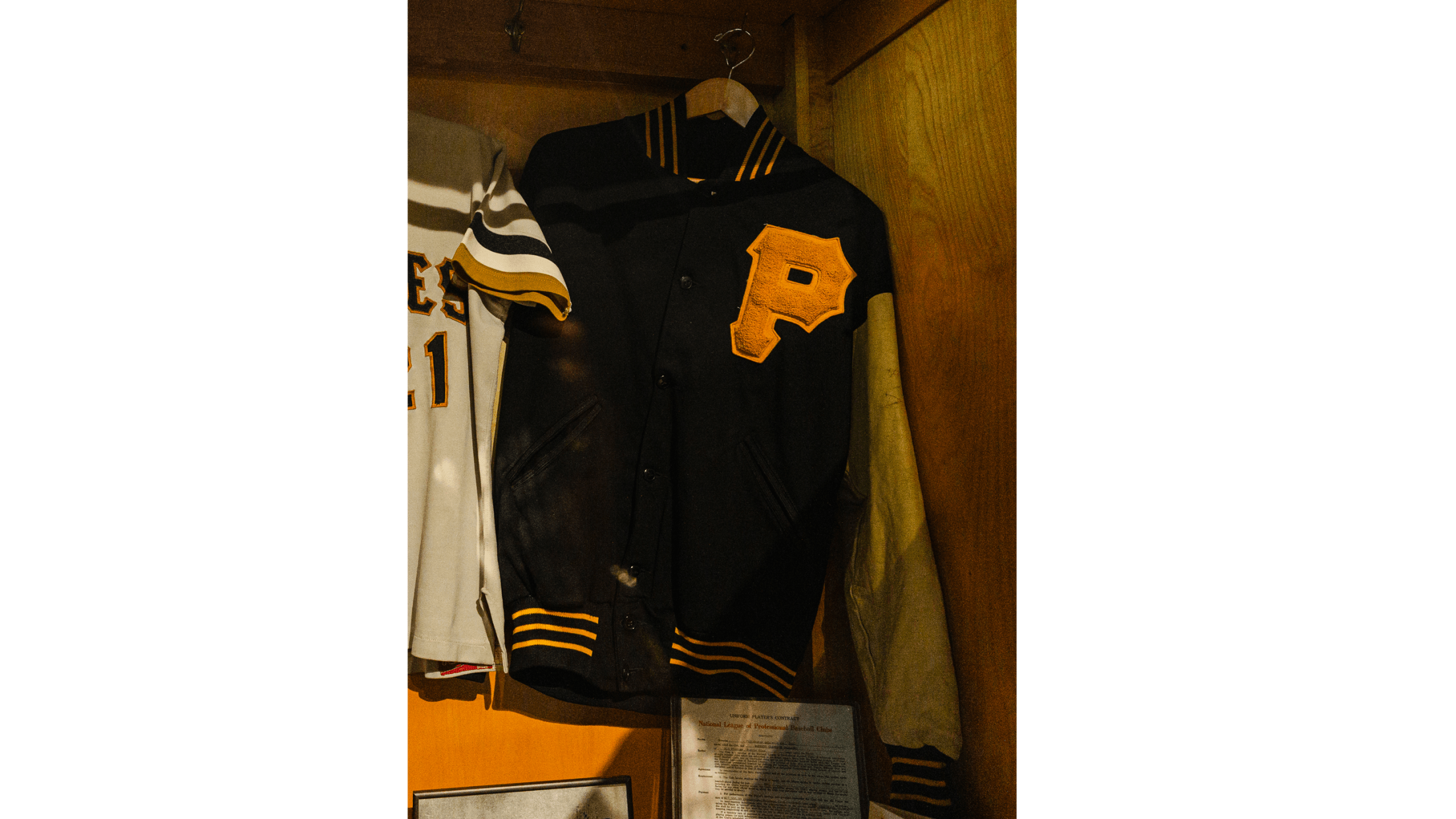
Pirates General Manager Joe L. Brown once said about Roberto Clemente: "He's a shining star to many, many people. He grows and grows over time. He doesn't diminish... The sad part is that there are not enough TV pictures of him. He made so many great plays that people can only talk about. You could never capture the magnificence of the man.” Clemente wore this jacket during the 1965 season when he won the N.L. batting title with a .329 average and in 1966 when he won his first and only N.L. MVP Award. The jacket derives from Roberto Clemente’s family estate.
Courtesy of the Stephen Wong Collection
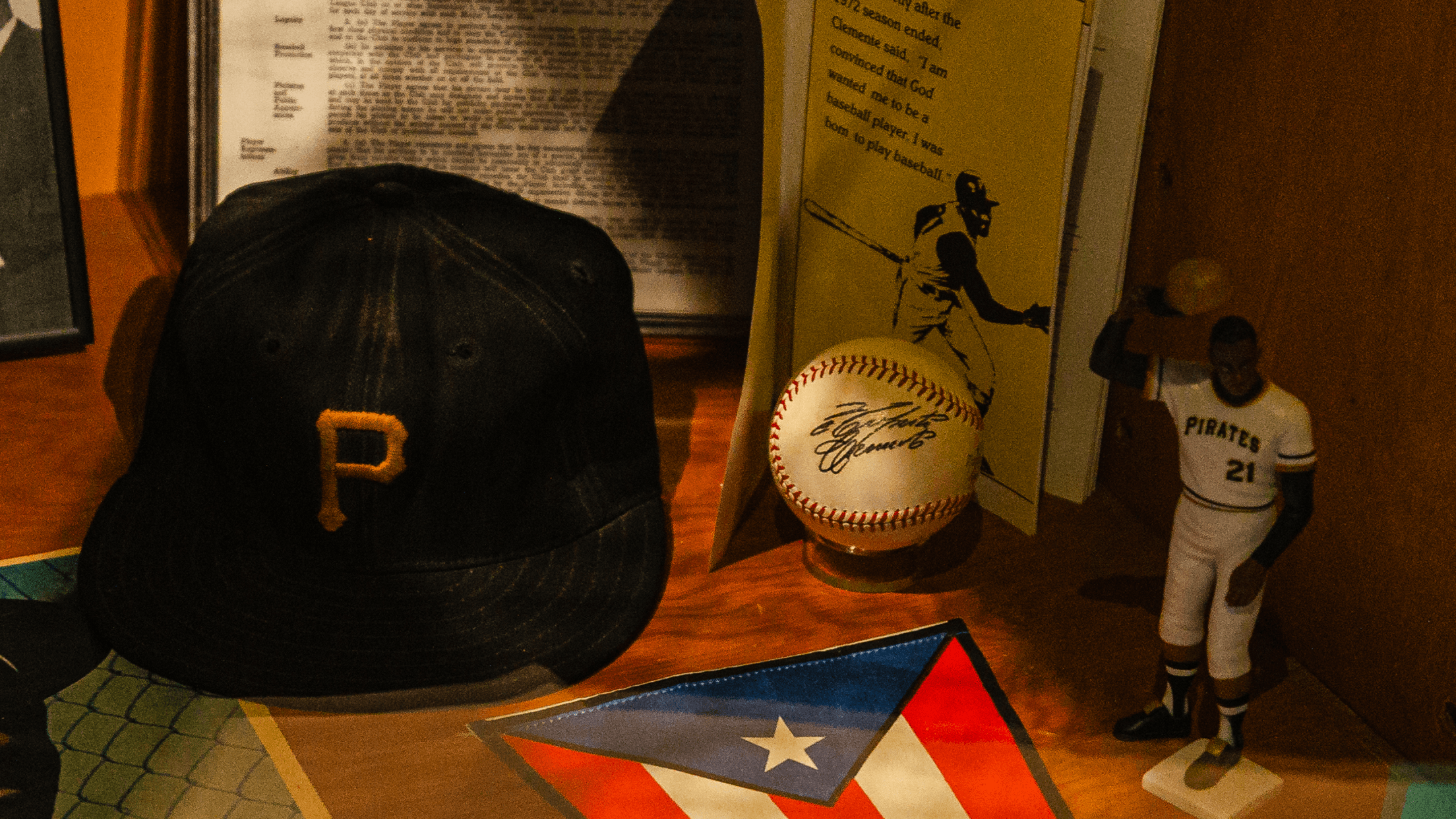
This cap was worn by Roberto Clemente between 1955 and 1964. On the diamond, Clemente played “a kind of baseball that none of us had ever seen before,” wrote sportswriter Roger Angell, “throwing and running and hitting at something close to the level of absolute perfection, playing to win but also playing the game almost as if it were a form of punishment for everyone else on the field.” But his perfection extended beyond the diamond as well—he was a constant advocate for equality and fair treatment for African Americans and Latino players, a profound contribution to the game not noted in the record books. At the end of the 1972 season, he left baseball and threw himself into his charity work. On December 31, he boarded a plane to fly to Managua, Nicaragua, to ensure that relief supplies for victims of a devasting earthquake did not wind up in the hands of black marketers. The overloaded cargo plane crashed into the sea off Puerto Rico immediately after takeoff. Clemente’s body was never found. Clemente once said, “Any time you have an opportunity to make a difference in this world and you don’t, then you are wasting your time on Earth.”
Courtesy of the Stephen Wong Collection
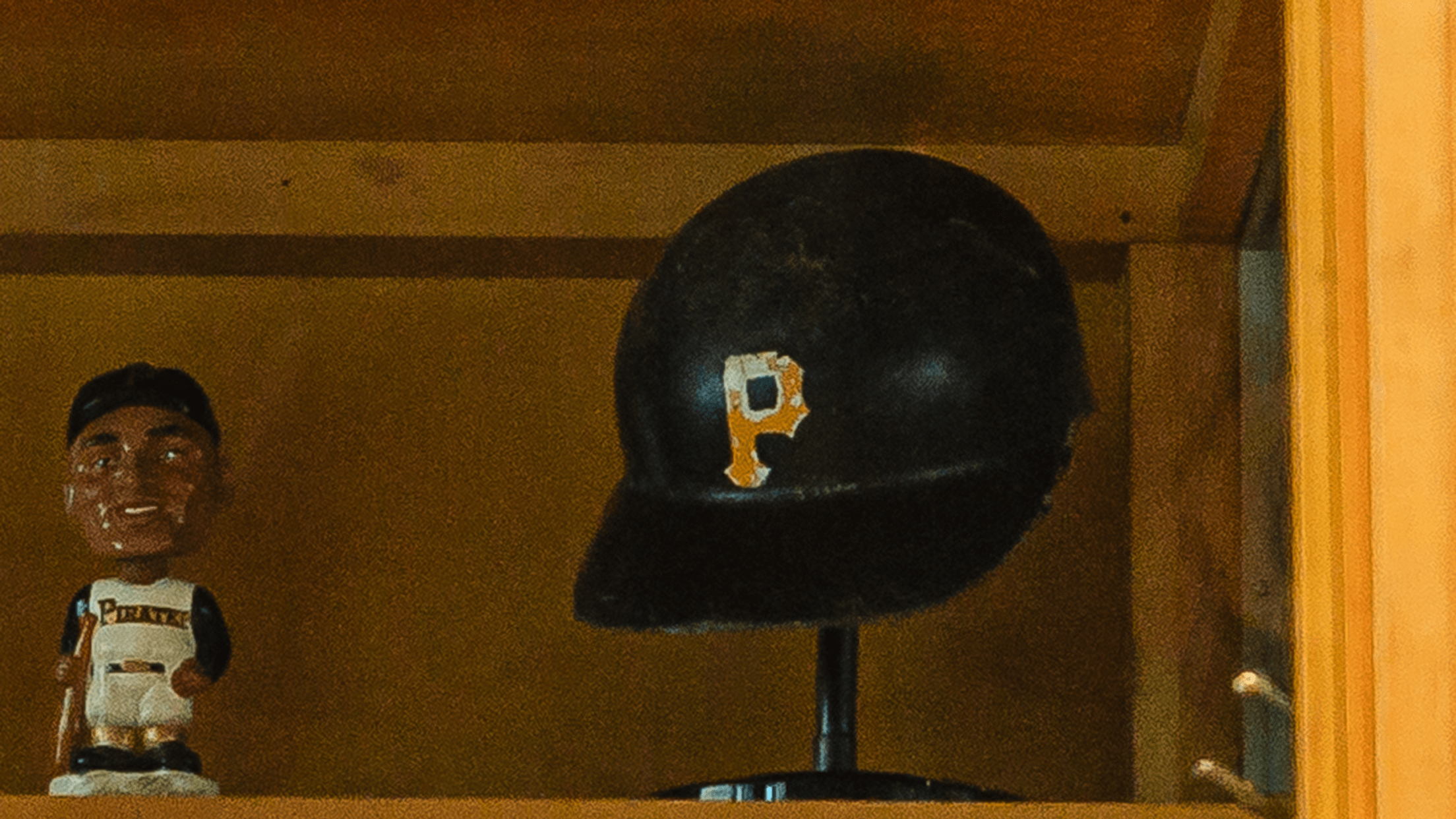
Previously on display at the National Baseball Hall of Fame in Cooperstown, this game-worn batting helmet was used by Roberto Clemente during the early 1960s.
Courtesy of the Stephen Wong Collection
Among the great rarities in the category of pre-war sports advertising is the sparsely issued 1928 Lucky Strike large-format, linen advertising banners. Measuring over 5 feet wide by nearly 2-1/2 feet tall, these two banners, which feature Hall-of-Fame Pirates brothers Paul and Lloyd Waner, were displayed outdoors throughout the east coast starting in 1928. For these banners to have survived in such remarkable condition is quite miraculous.
Courtesy of the Stephen Wong Collection
Members of the 1960 World Champion Pirates are featured on posters promoting the Kahn’s line of hot dogs and a series of collectible trading cards that were inserted into their product. Kahn’s Wieners, made by the Cincinnati based meat company founded in 1883 and a long-time sponsor of the Pirates, were sold at Forbes Field. Headshots of 12 Pirates, including Roberto Clemente and Bill Mazeroski, are displayed on one of the posters with the “BEAT ’EM BUCS” headline across the top.
Courtesy of the Stephen Wong Collection
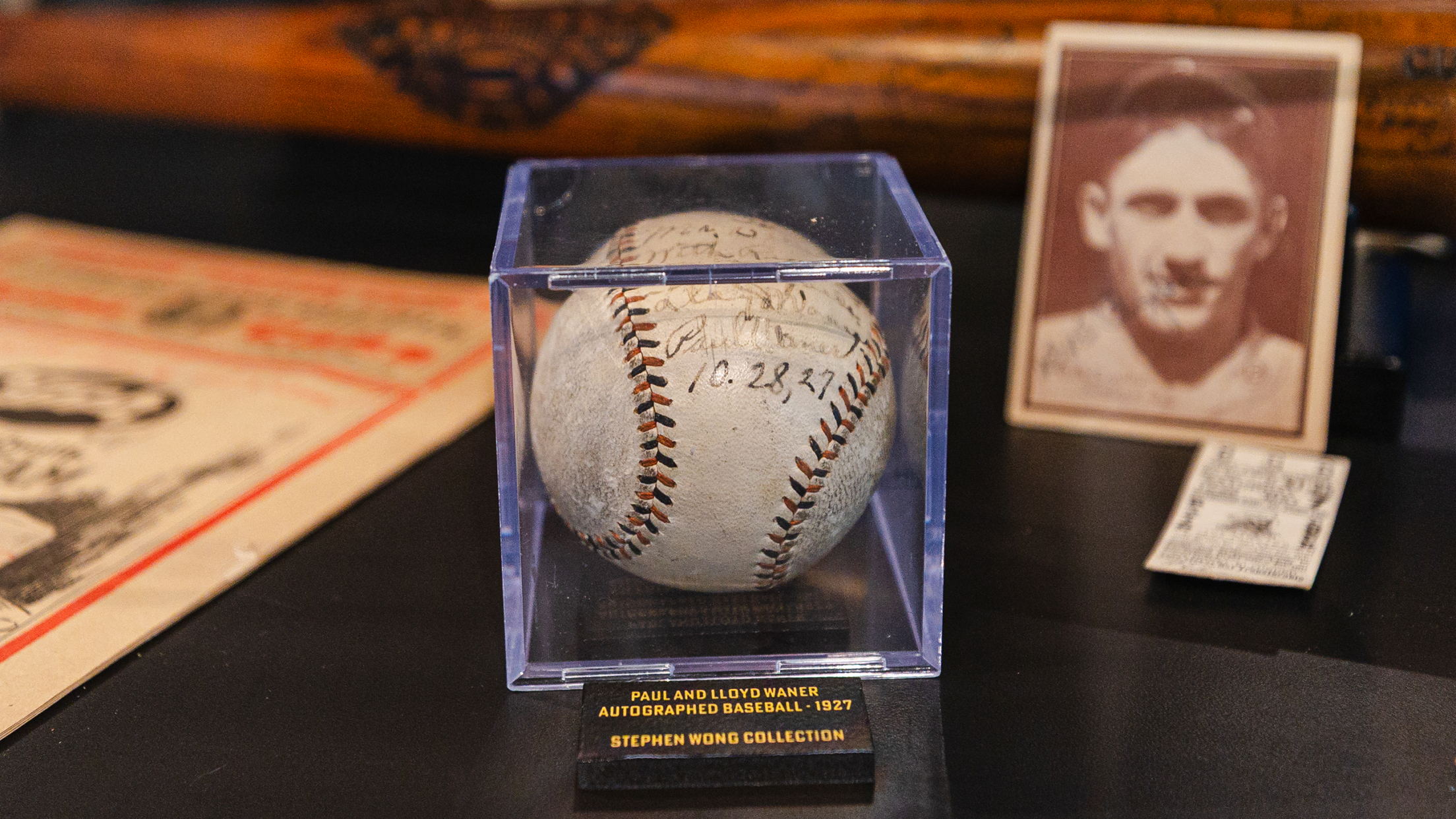
Mainstays in the Pittsburgh Pirates outfield between 1927-1940, Paul "Big Poison" Waner and Lloyd "Little Poison" Waner got their nicknames because New York (especially Brooklyn) fans pronounced “person” as “poison” when yelling about “that big person” and “that little person” in the Waner brothers’ batting order. They set the career record for most hits by two brothers, and both are the only brothers who are inducted into the National Baseball Hall of Fame as players. Many of their autographs were signed in later years. Here we find an Official National League ball signed on October 28, 1927, which was on the heels of the Pirates '27 National League crown.
Courtesy of the Stephen Wong Collection
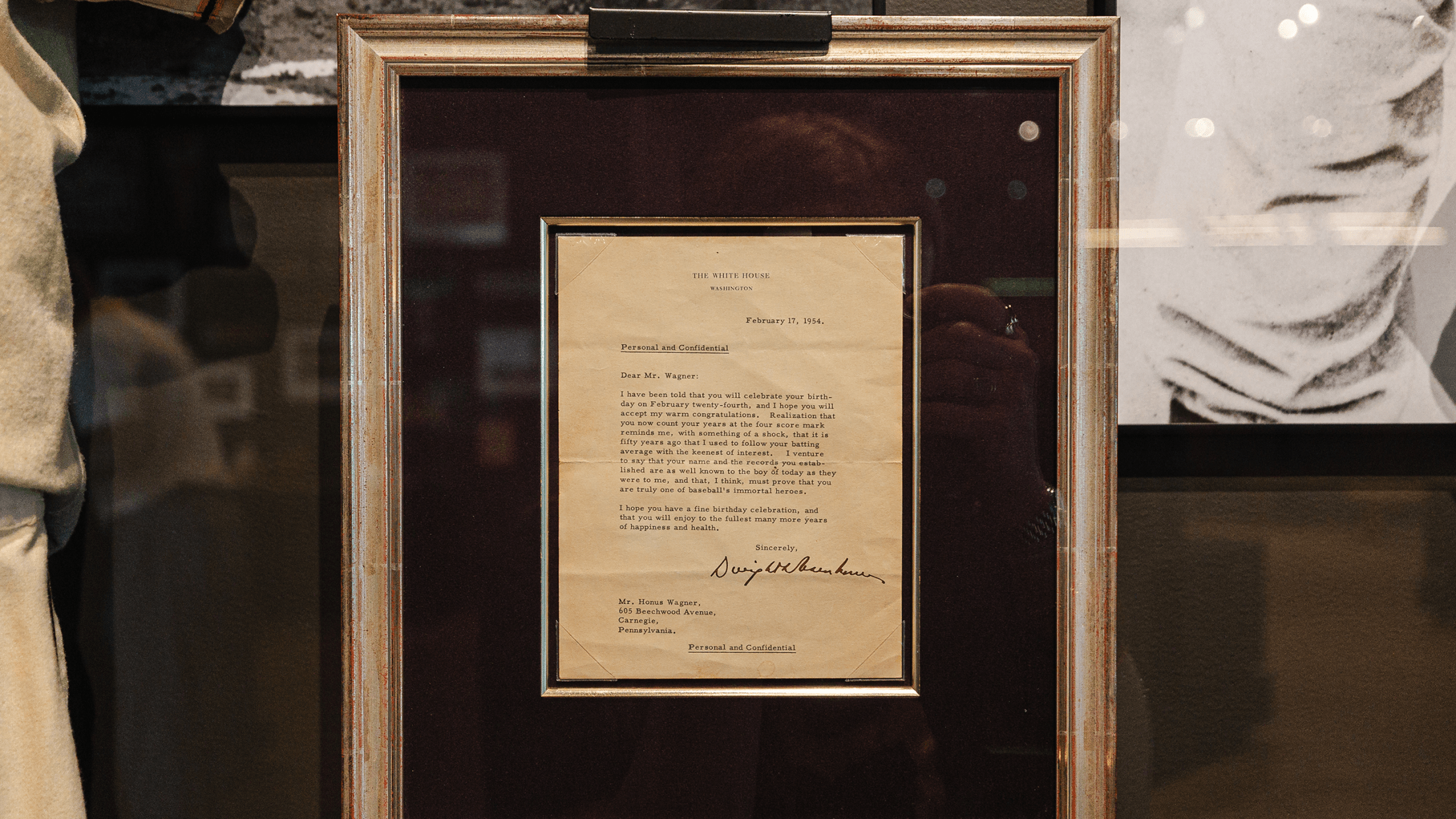
Dwight D. Eisenhower was the 34th President of the United States and was in office from 1953 to 1961. He sent this personal letter to Pirates legend Honus Wagner a few weeks prior to his 80th birthday in February of 1954.
Courtesy of the Stephen Wong Collection
VARIOUS BASEBALL CARDS AND ITEMS FROM 1909-1979
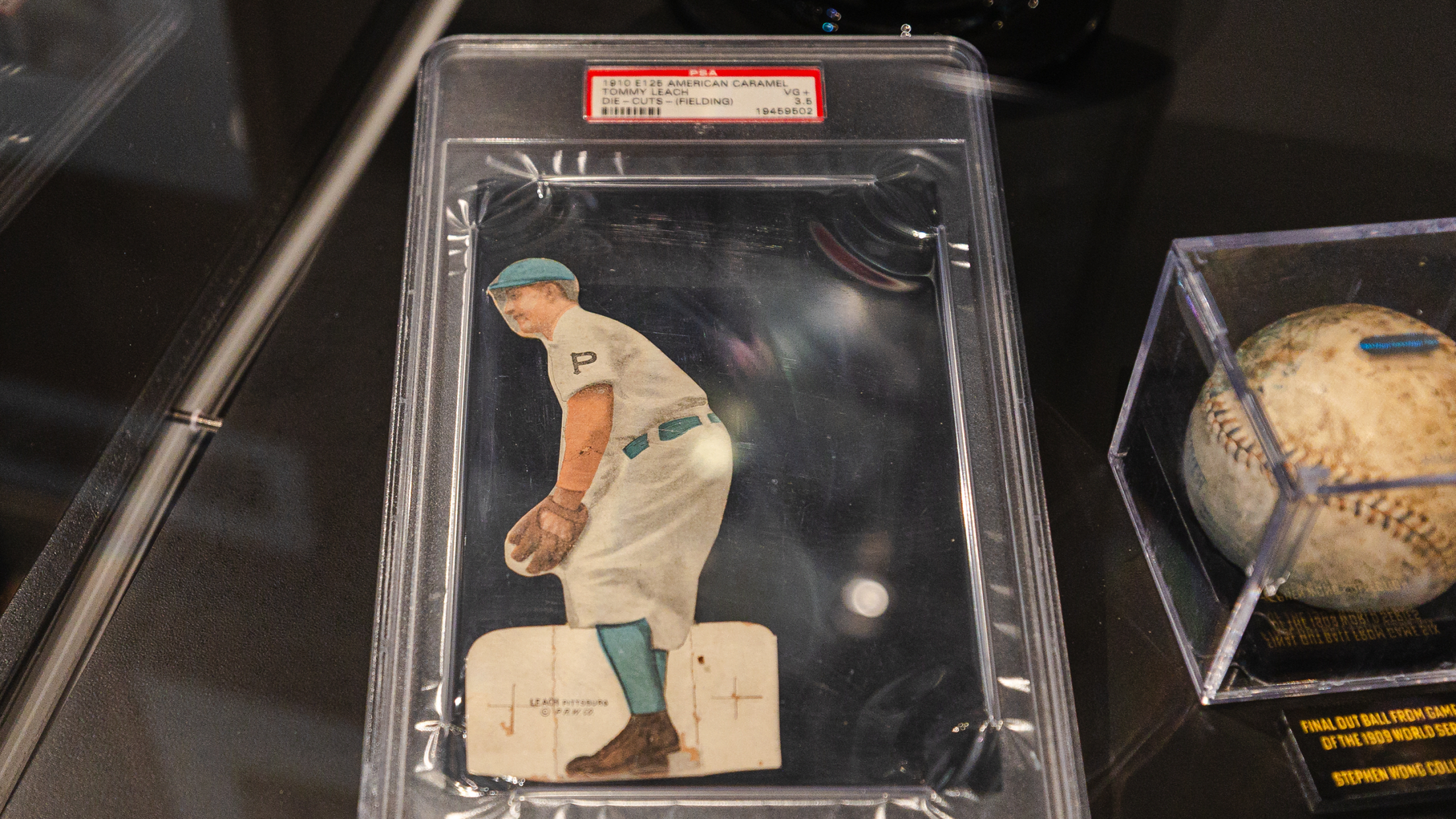
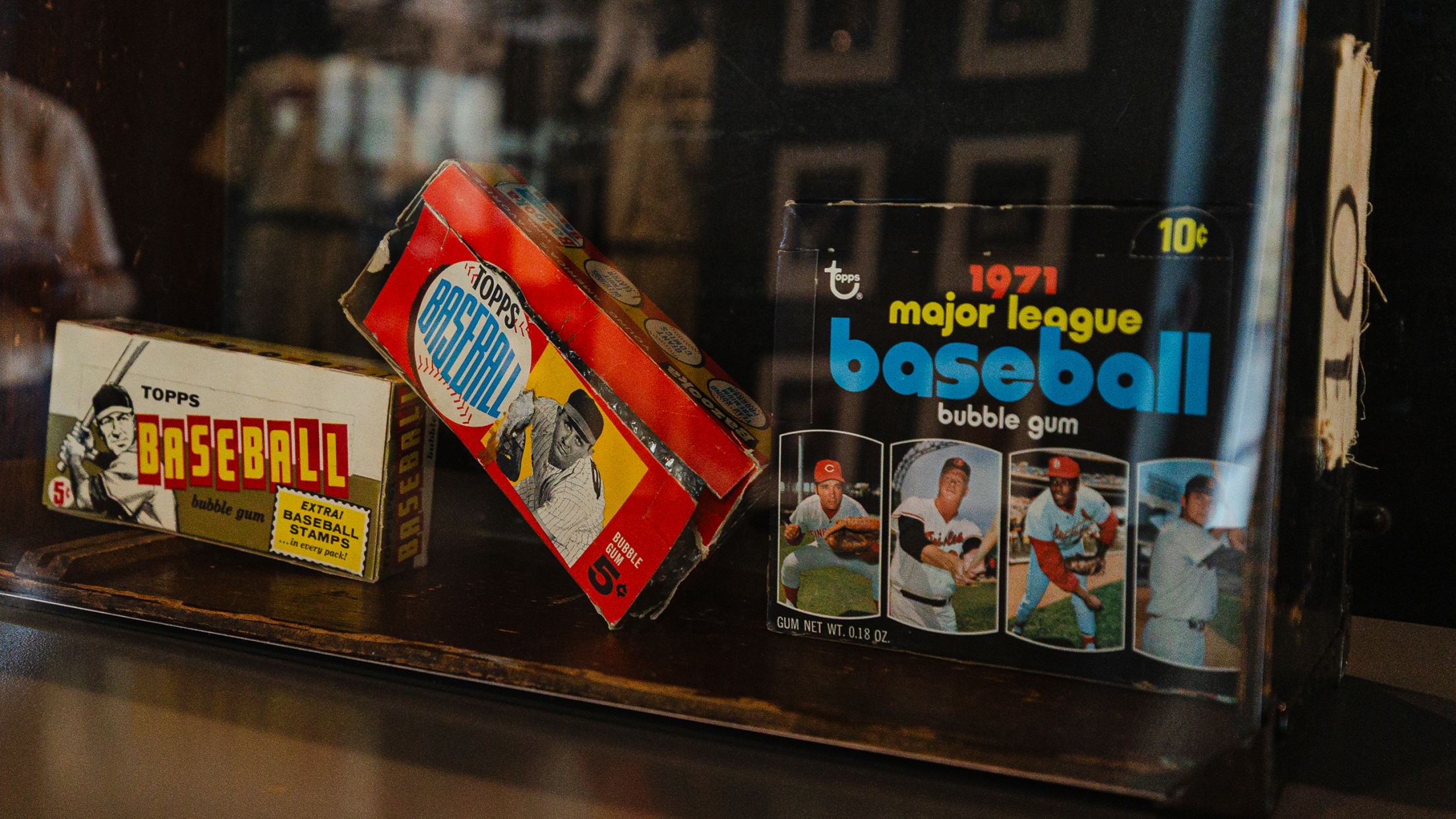
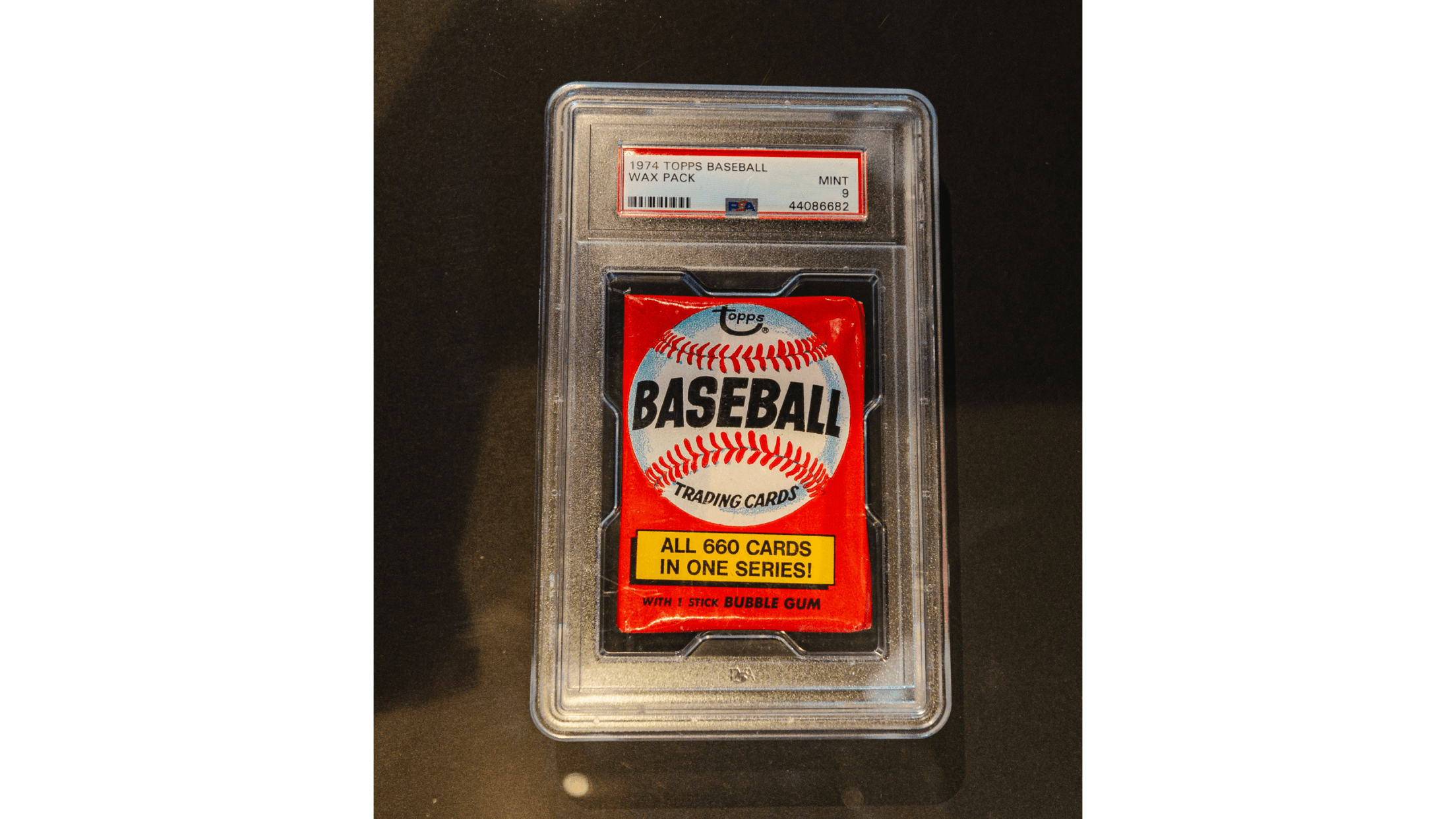
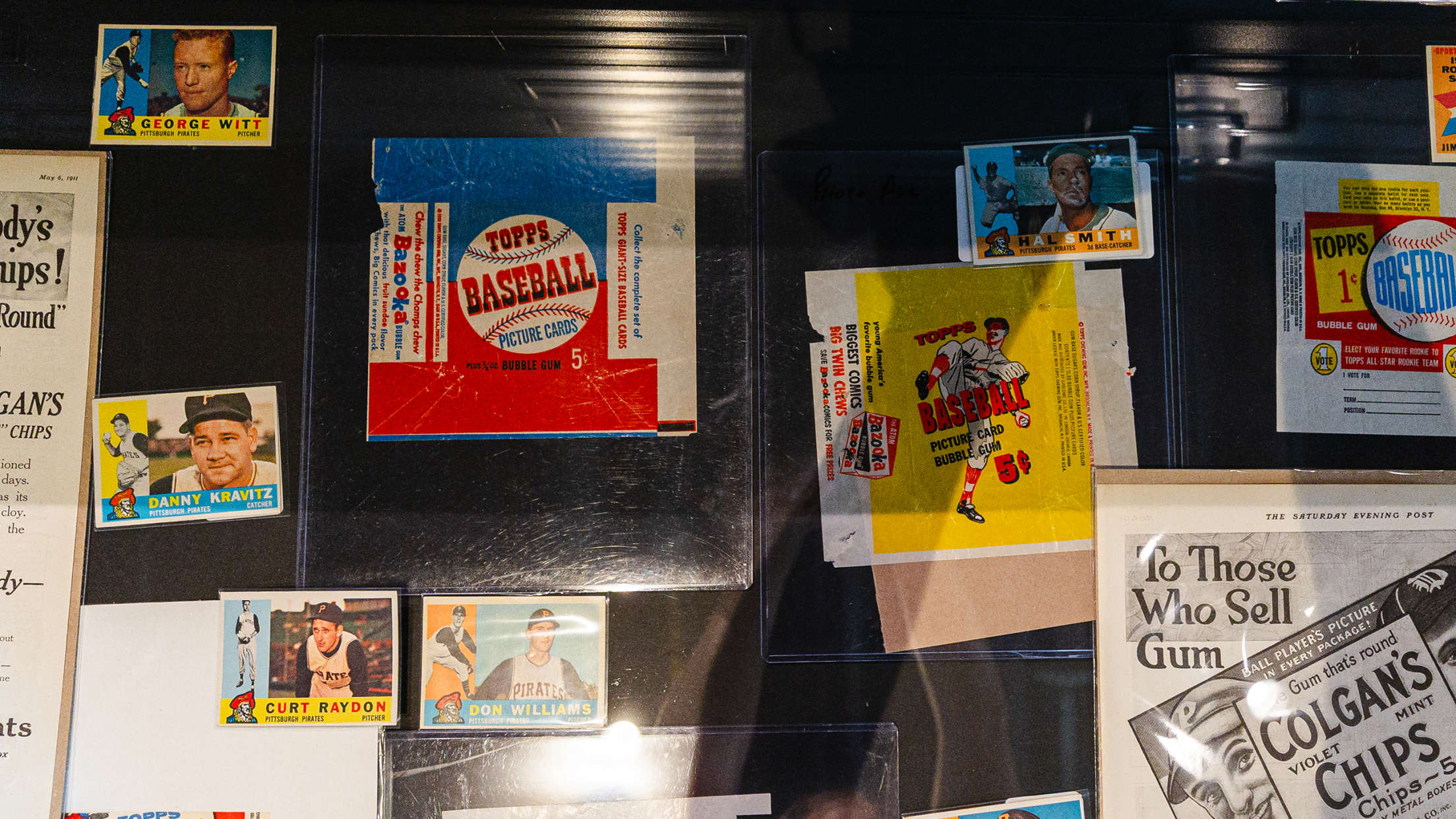
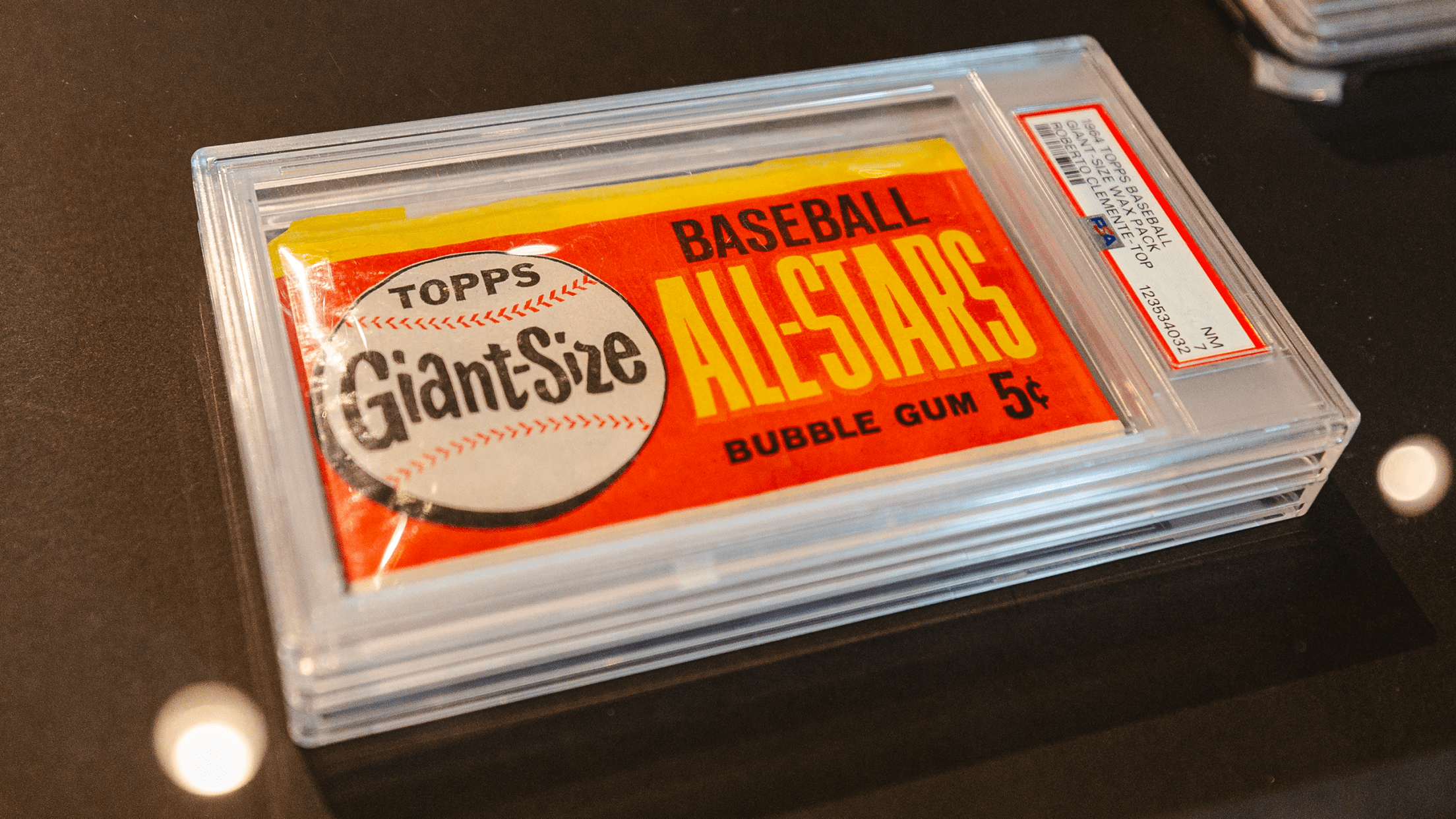
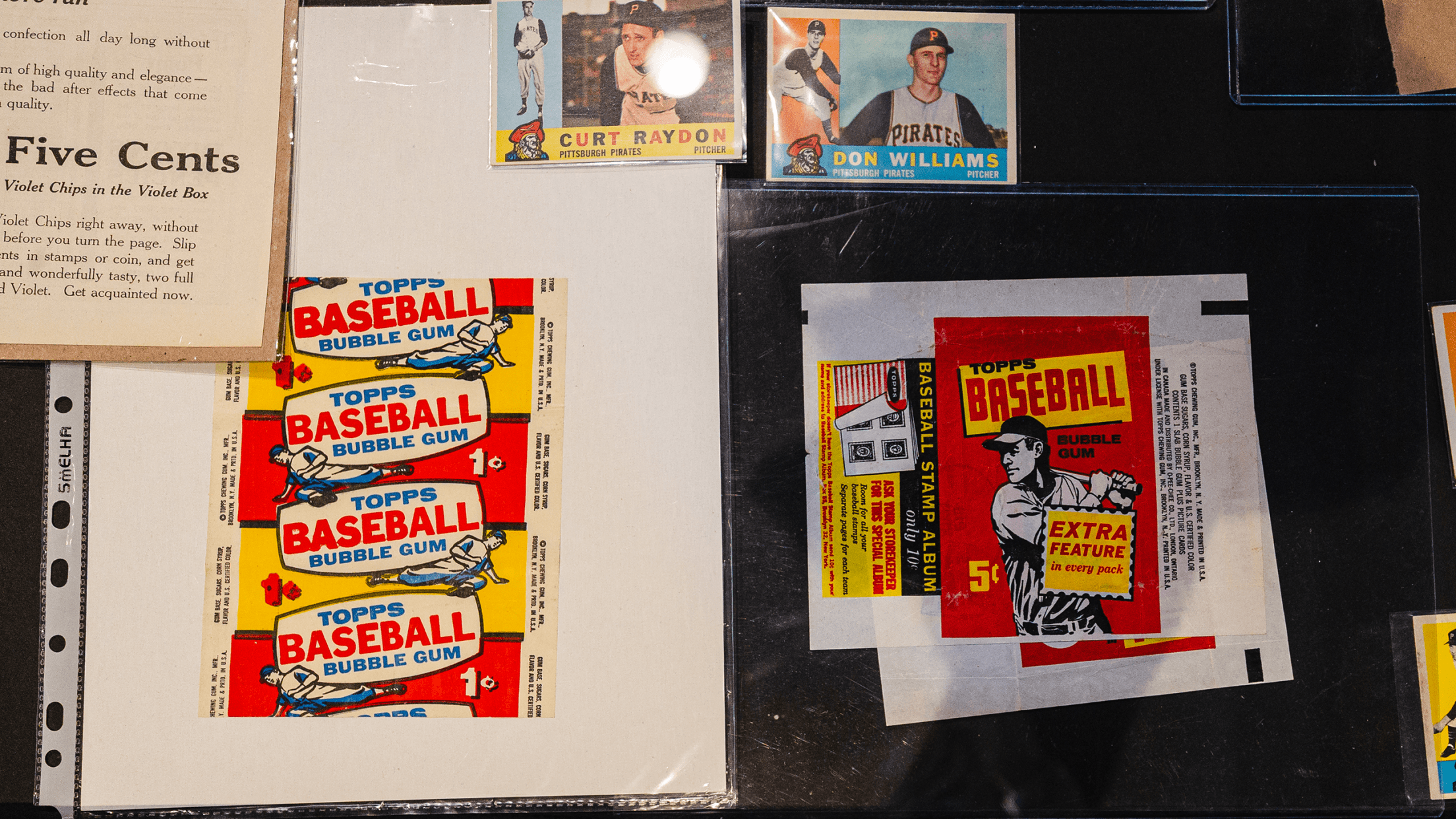
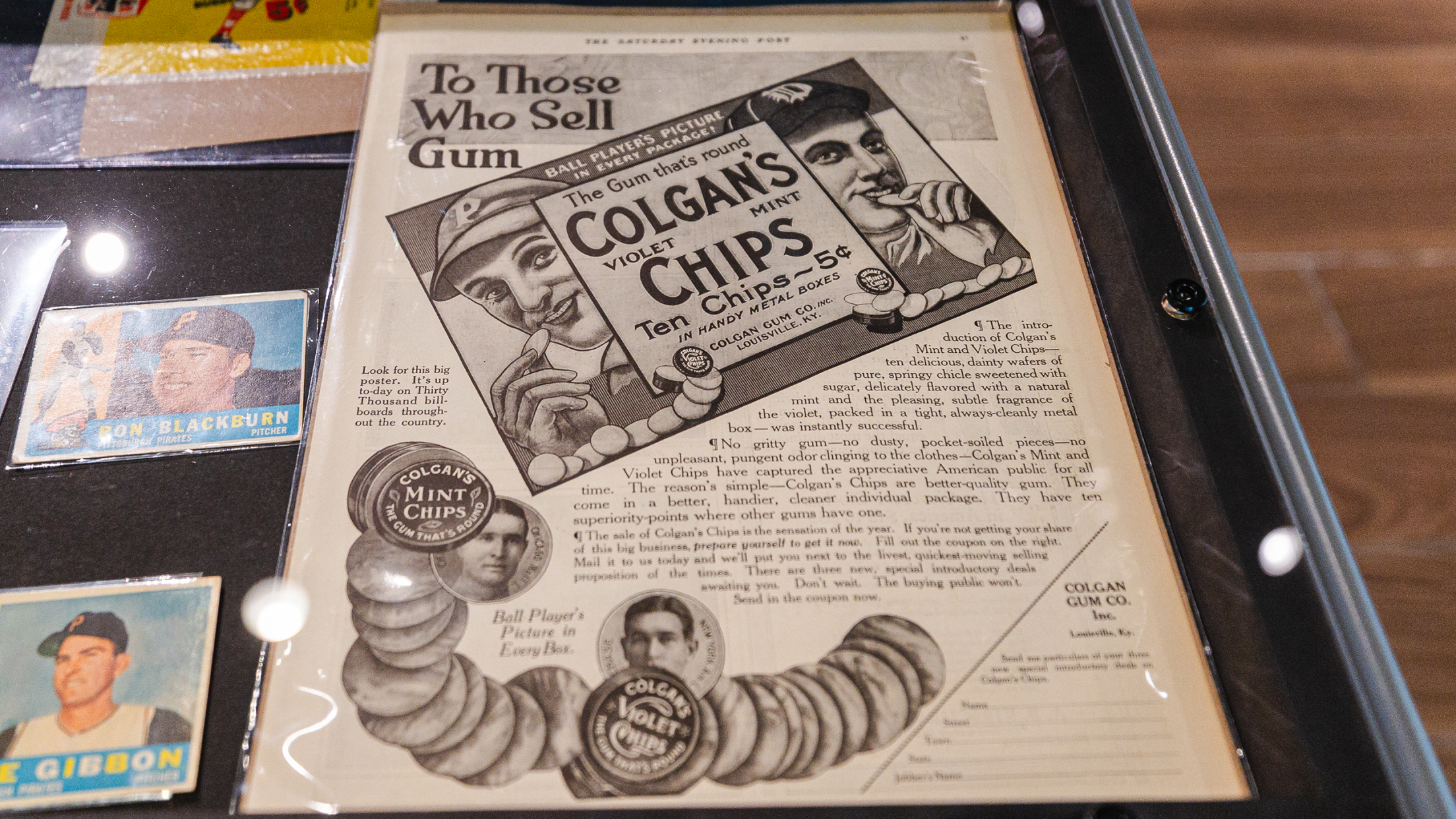
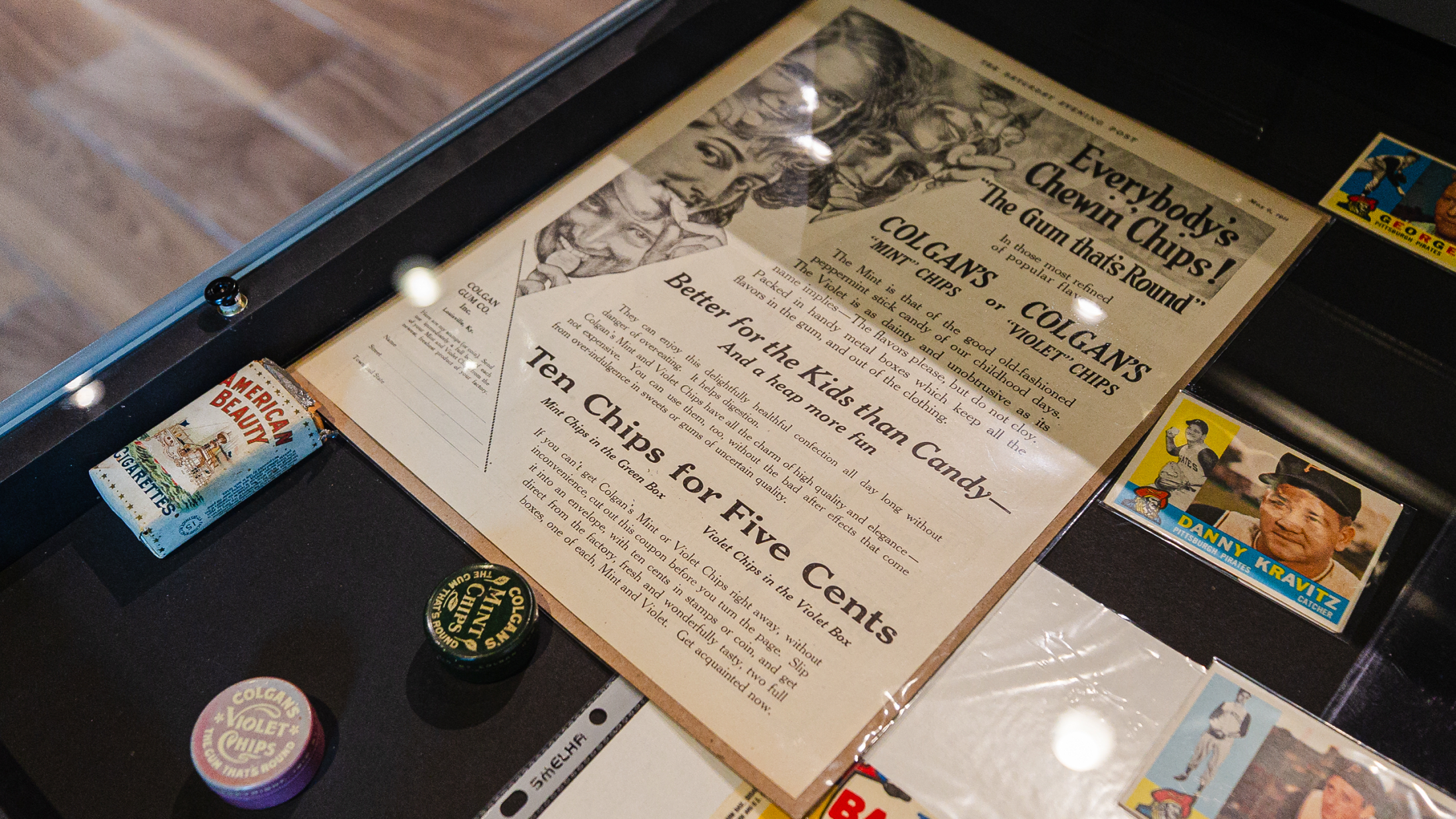
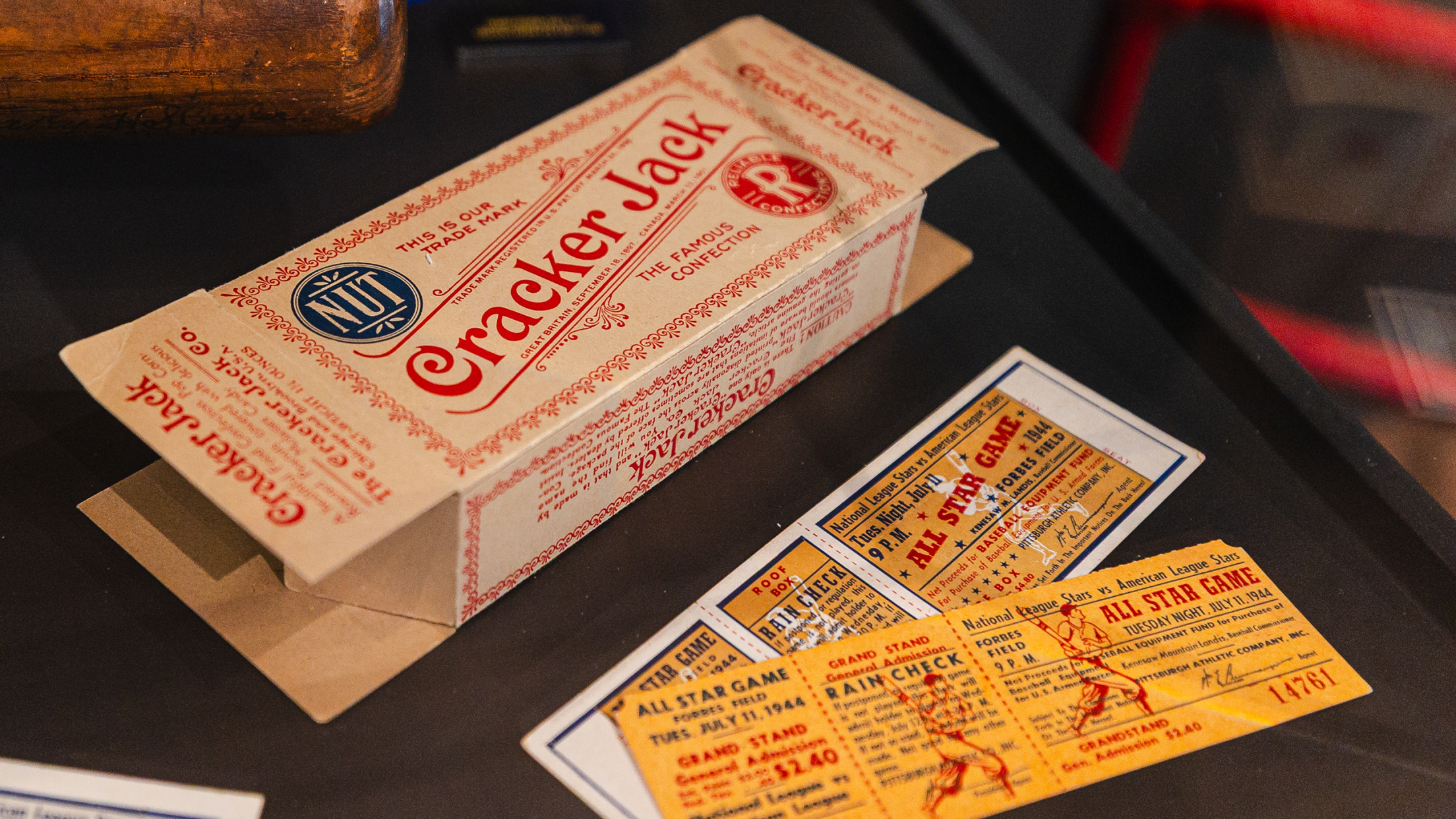
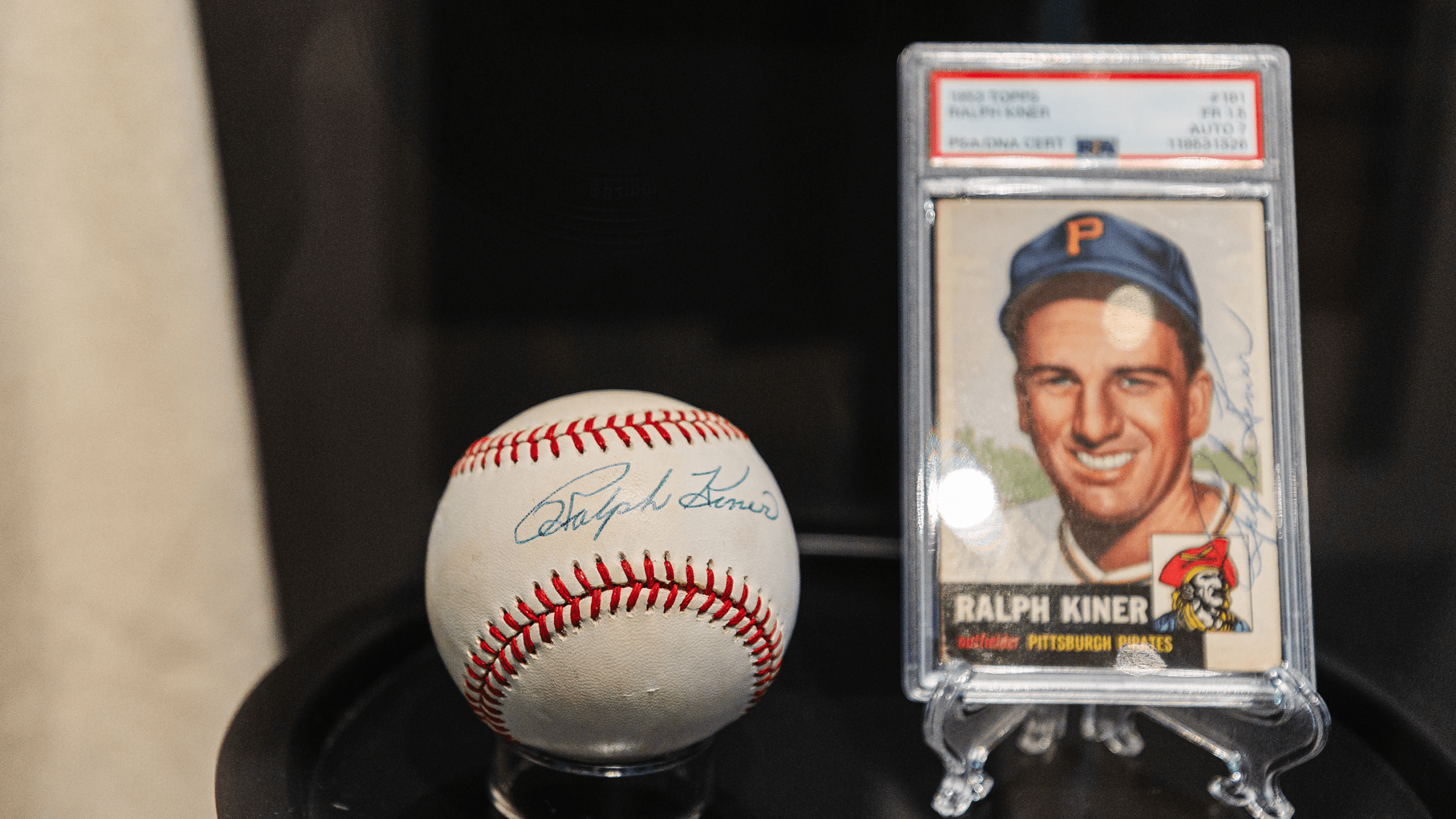
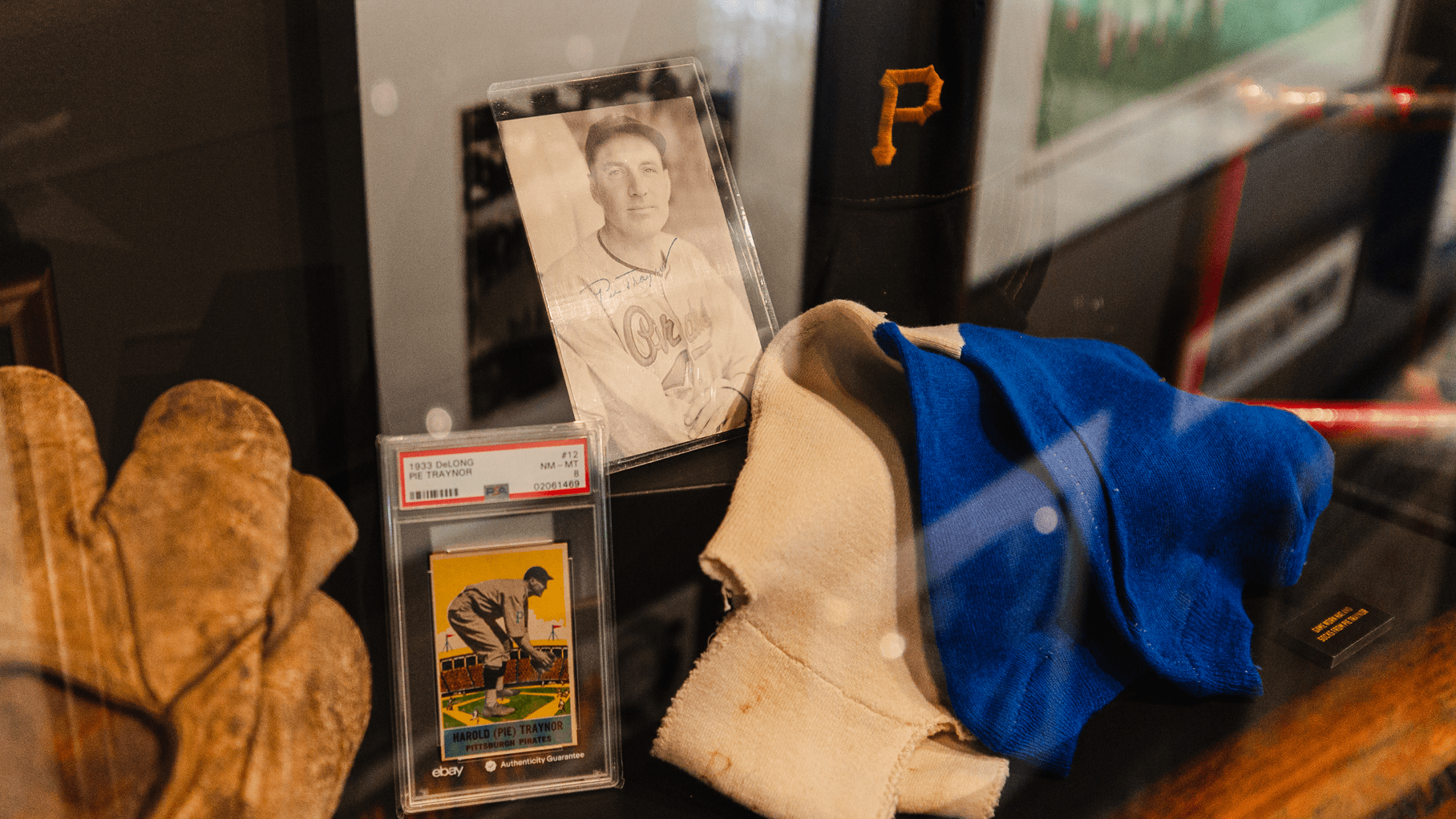
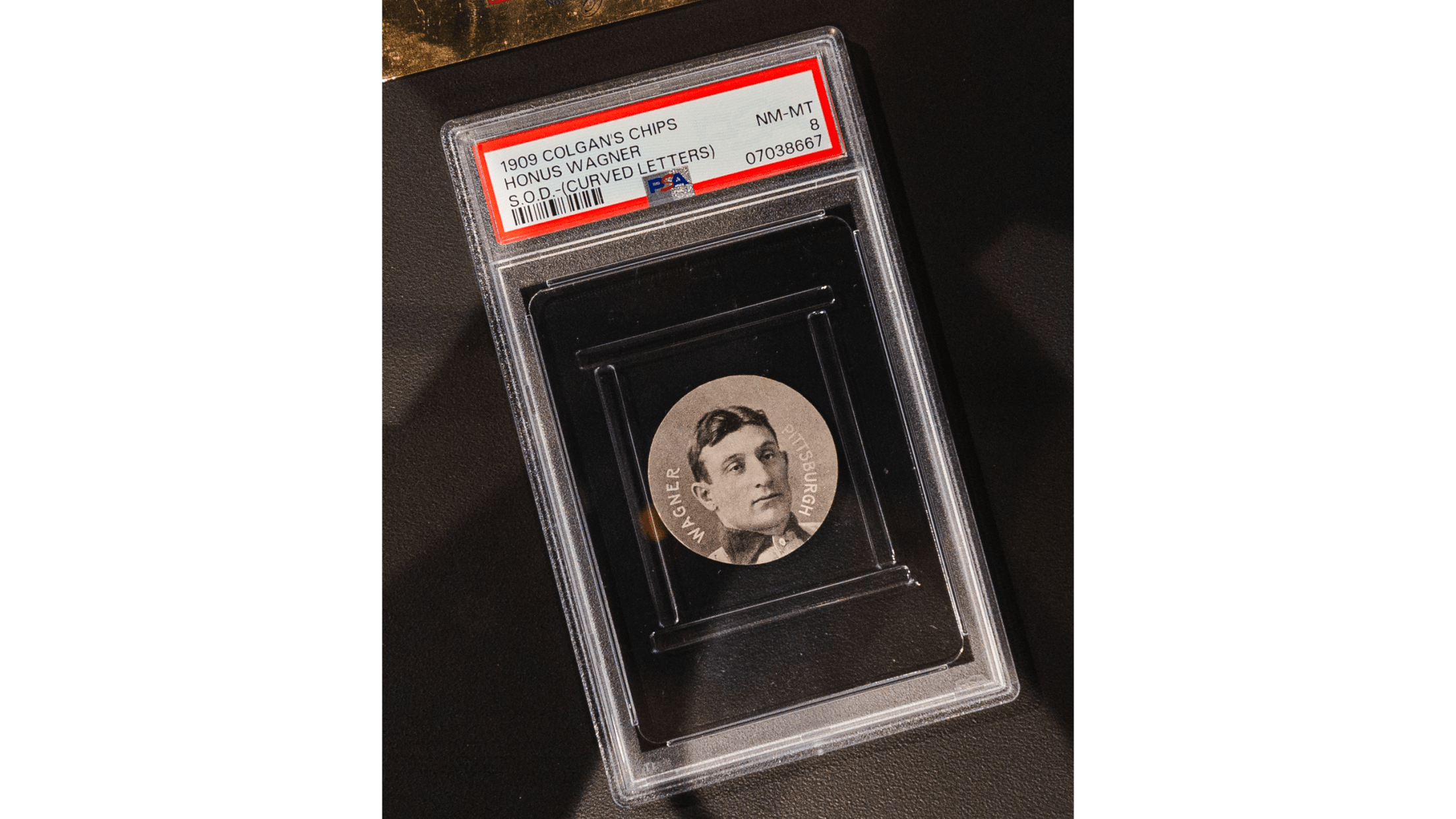
Starting in the 1880s, tobacco companies began slipping cardboard portraits of athletes into cigarette packs to stiffen the packaging and build brand loyalty, with product advertising and sometimes checklists on the back encouraging buyers to collect complete sets. In the 1930s and after World War II, candy and gum companies took over, and the fierce rivalry between Bowman and Topps through the early 1950s produced what collectors now call the golden age of the hobby. Housed within the five drawers of this cabinet are select baseball cards of Pirates greats dating back to the early 20th century. This collection tells that story through a Pittsburgh Pirates lens: from a 1909 Colgan’s Chip Honus Wagner card (along with the tins the cards came in and advertisement from an edition of the Saturday Evening Post from 1911), 1910 American Caramel die cuts card of Tommy Leach, 1915 Cracker Jack card of Babe Adams, and 1933 Delong card of Pie Traynor to the post-war Topps cards, accompanied by original unopened wax packs, wrappers and candy store display boxes that once brought these pieces of baseball history to the public.
Courtesy of the Stephen Wong Collection
DENNY HEINDL COLLECTION
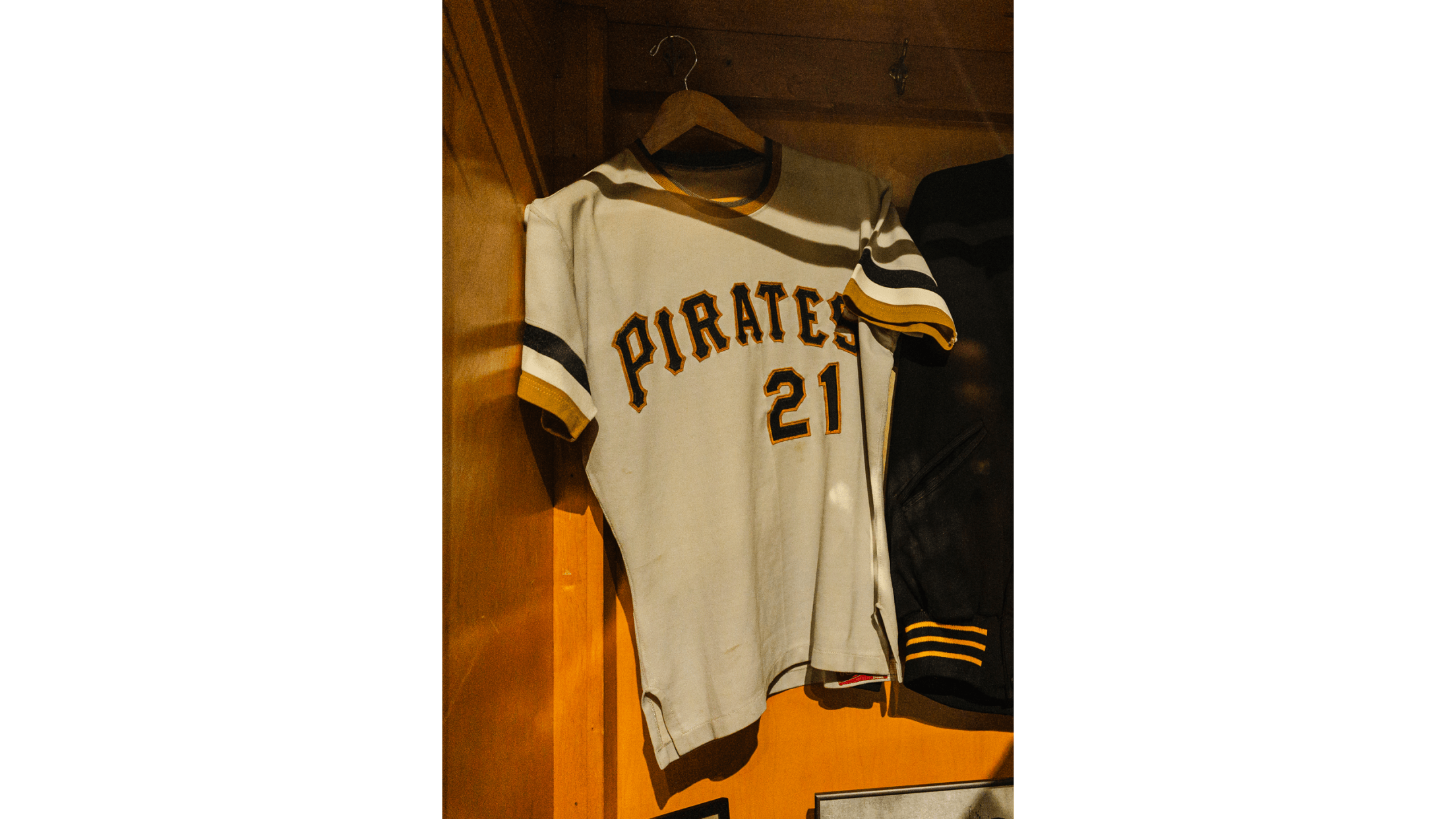
Roberto Clemente wore this jersey during the 1970 season - his 16th with the Pirates and the team’s final one at Forbes Field. He batted .352, was selected to the All-Star team for the 10th time in his career and captured his ninth Gold Glove award.
Courtesy of the Dennis D. Heindl Sports Collection.
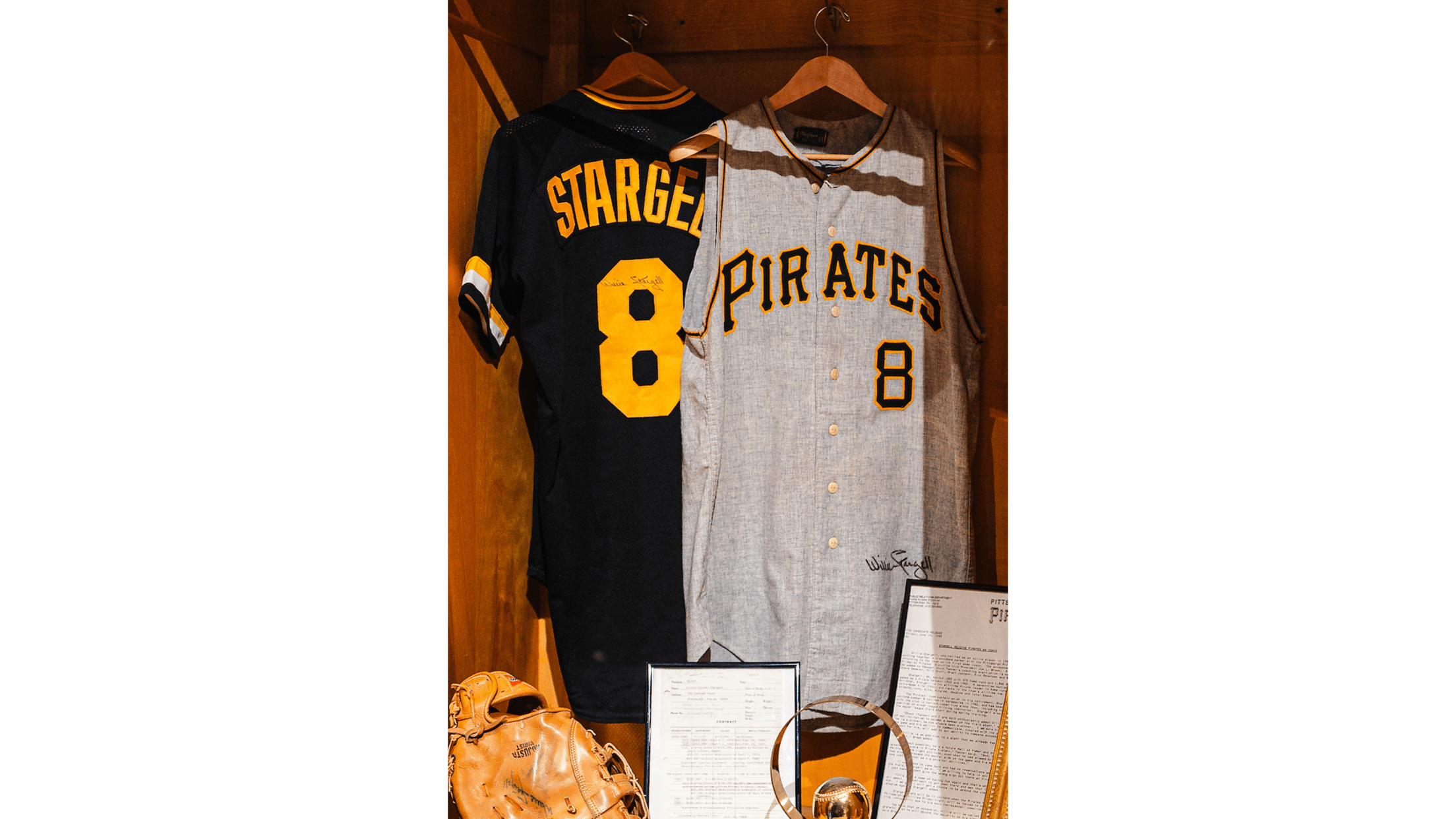
Willie Stargell made his Major League debut with the Pirates in 1962 and played his entire 21-year career in Pittsburgh. Willie wore this sleeveless jersey during the 1960s, a decade in which he was selected to the National League All-Star team three times between 1964-66.
Courtesy of the Dennis D. Heindl Sports Collection.
During the decade of the 1970s, Willie Stargell was one of the most-feared hitters in Major League Baseball. He led the National League in home runs in 1971 and 1973, posted a career-high in OPS (1.038) in 1973 and led the league in the same category in 1974 (.944). Willie shared the league’s regular-season MVP honors in 1979, before going on to win the MVP award in both the L.C.S. and World Series. This black jersey was worn by Stargell during that glorious decade.
Courtesy of the Dennis D. Heindl Sports Collection.
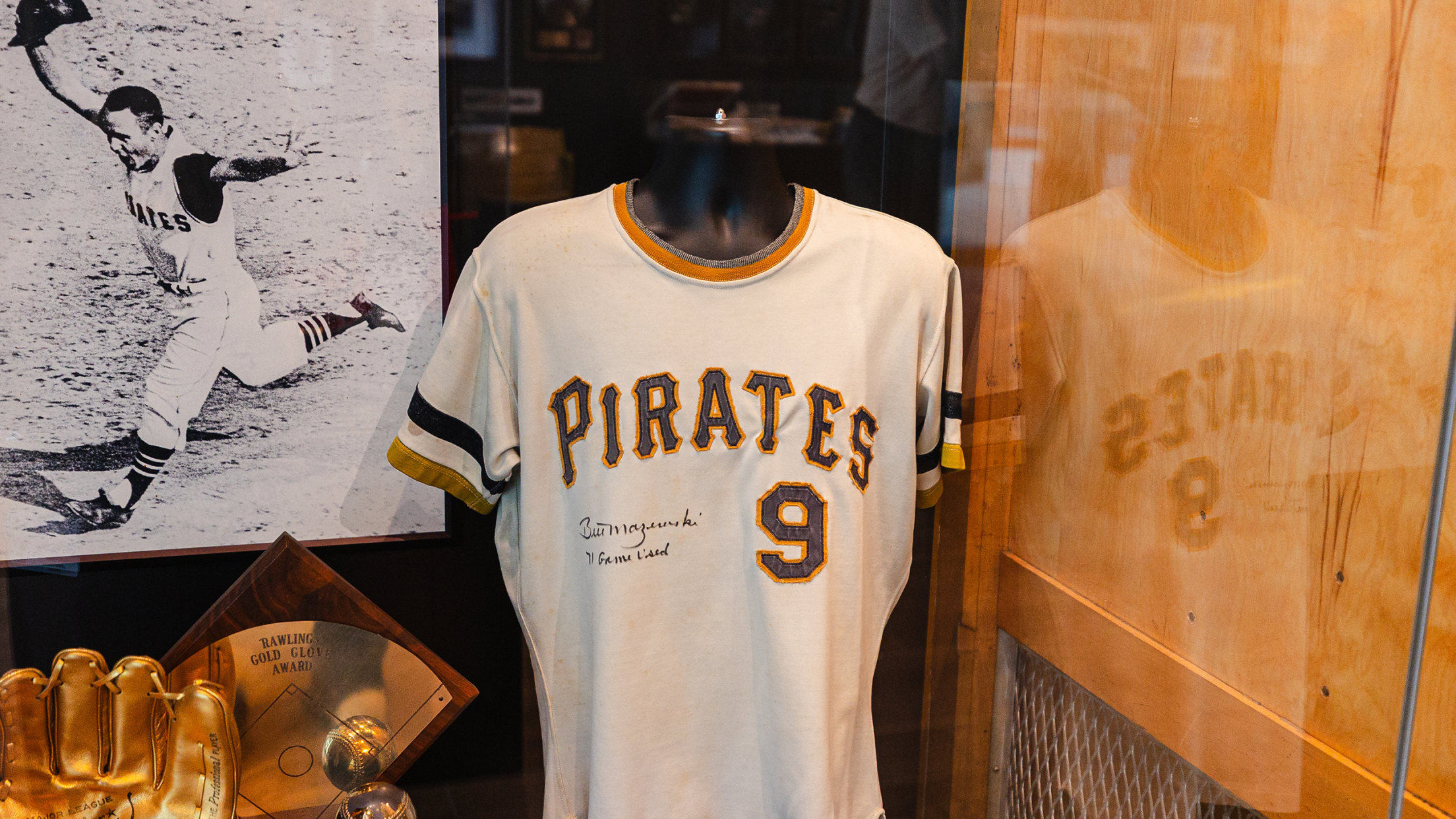
This autographed jersey was worn by Hall-of-Famer Bill Mazeroski during Pittsburgh’s first full season playing at Three Rivers Stadium.
Courtesy of the Dennis D. Heindl Sports Collection.
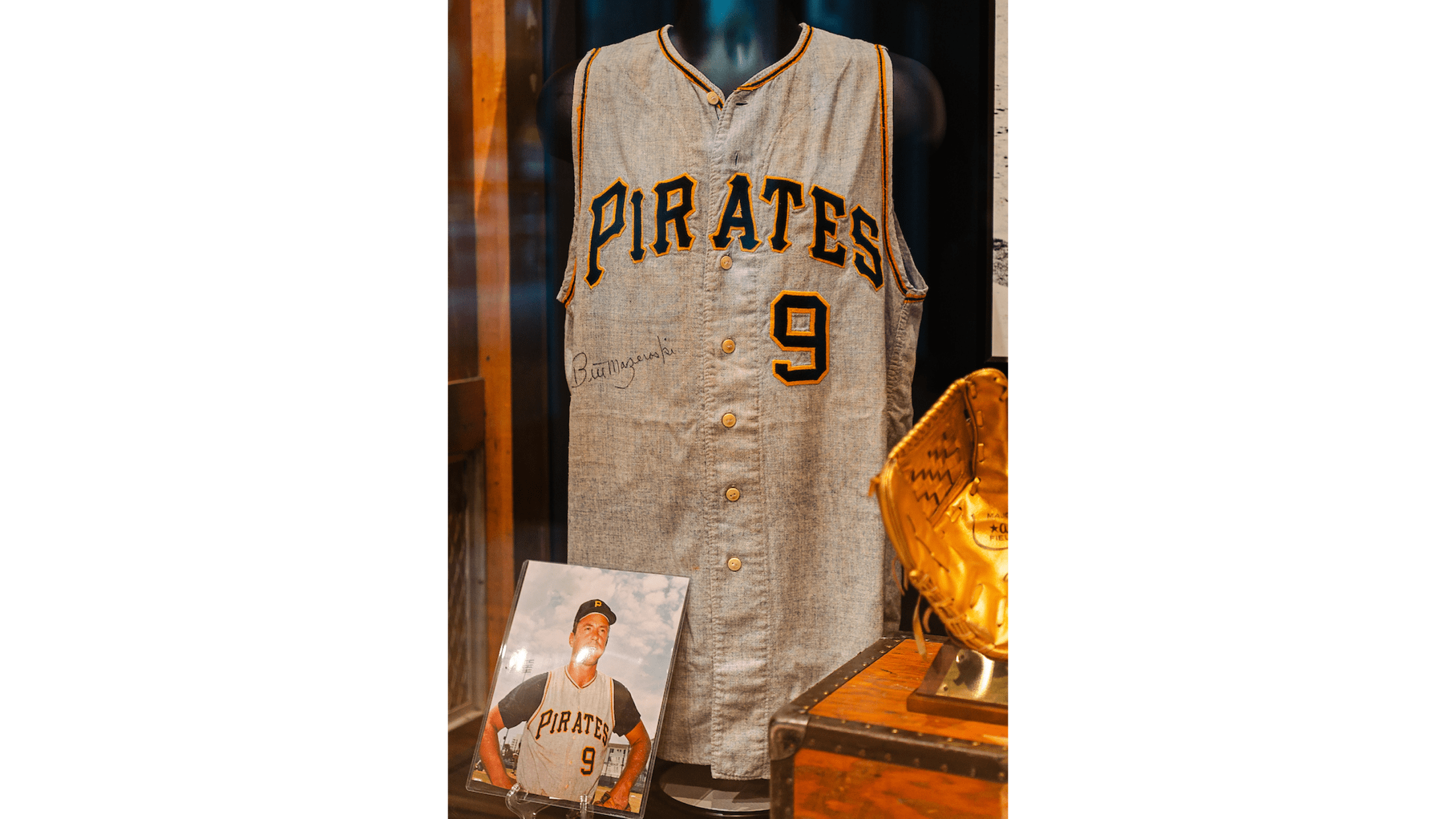
In 1957, the Pirates became the second Major League team to wear sleeveless jerseys. Numbers were introduced on front of both the home and road jerseys in 1962. This autographed road grey jersey was worn by Bill Mazeroski during the 1960s.
Courtesy of the Dennis D. Heindl Sports Collection.
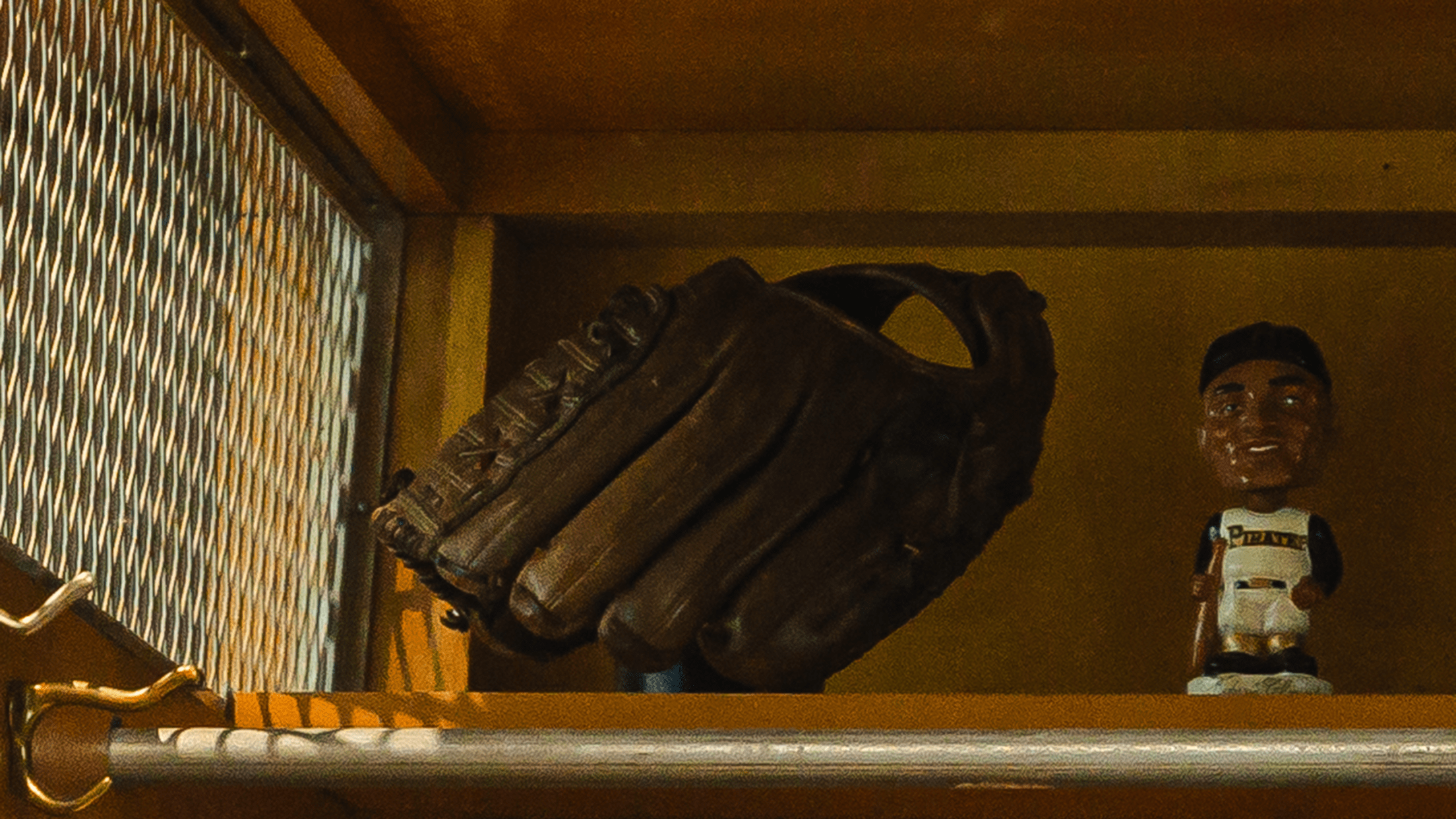
Roberto Clemente spent his entire 18-year career with Pirates from 1955 through 1972. In addition to being one of the best hitters in Major League Baseball, Roberto won 12 consecutive Rawlings Gold Glove Awards for his fielding excellence from 1961-1972. This glove was used by Clemente during the 1960s.
Courtesy of the Dennis D. Heindl Sports Collection.
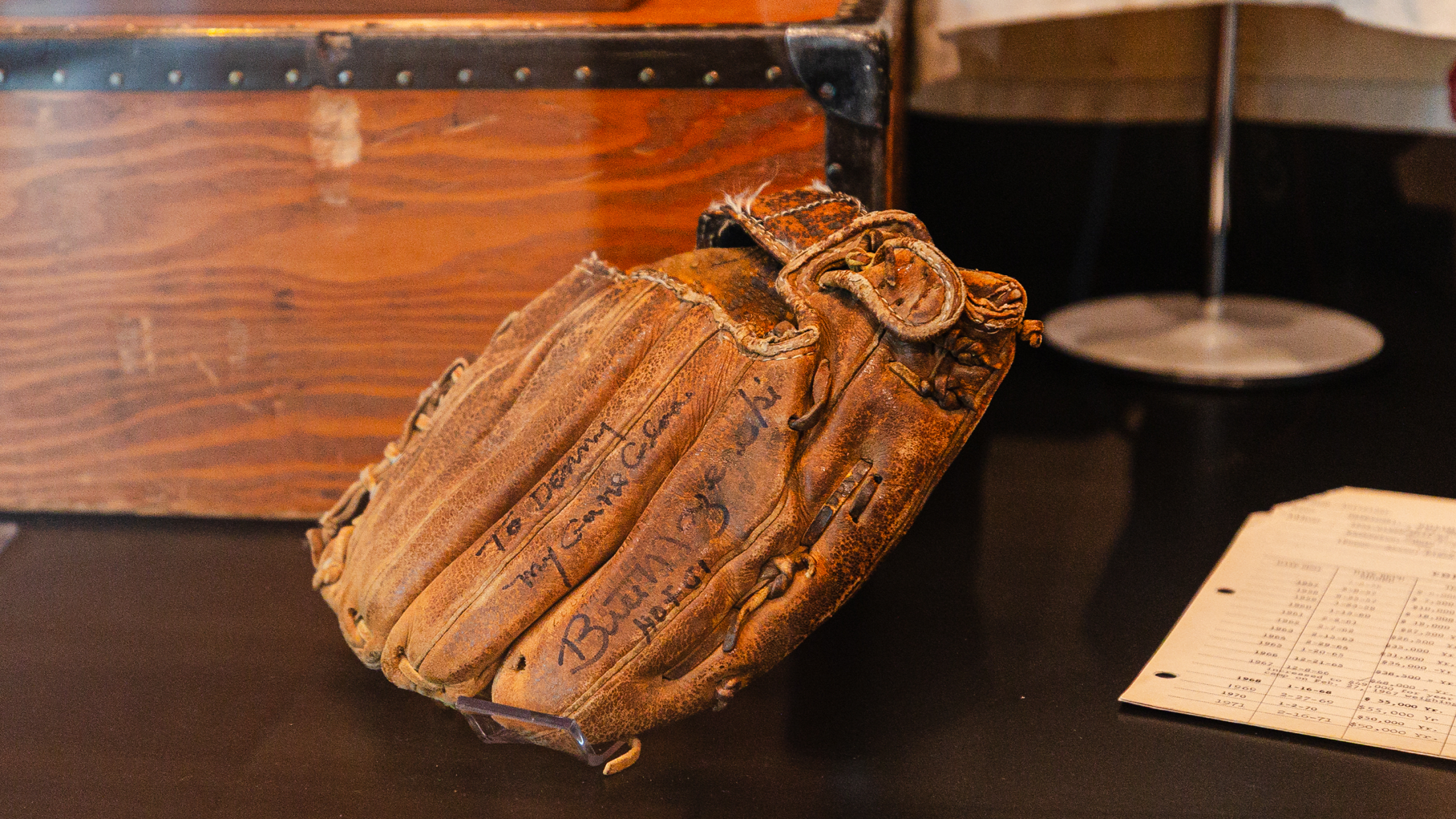
Bill Mazeroski once said, “Defense belongs in the Hall of Fame.” The smooth-fielding second baseman was a man of his word as he won eight Gold Glove awards in his 17 seasons with the Pirates and was inducted into the National Baseball Hall of Fame in 2001.
Courtesy of the Dennis D. Heindl Sports Collection.
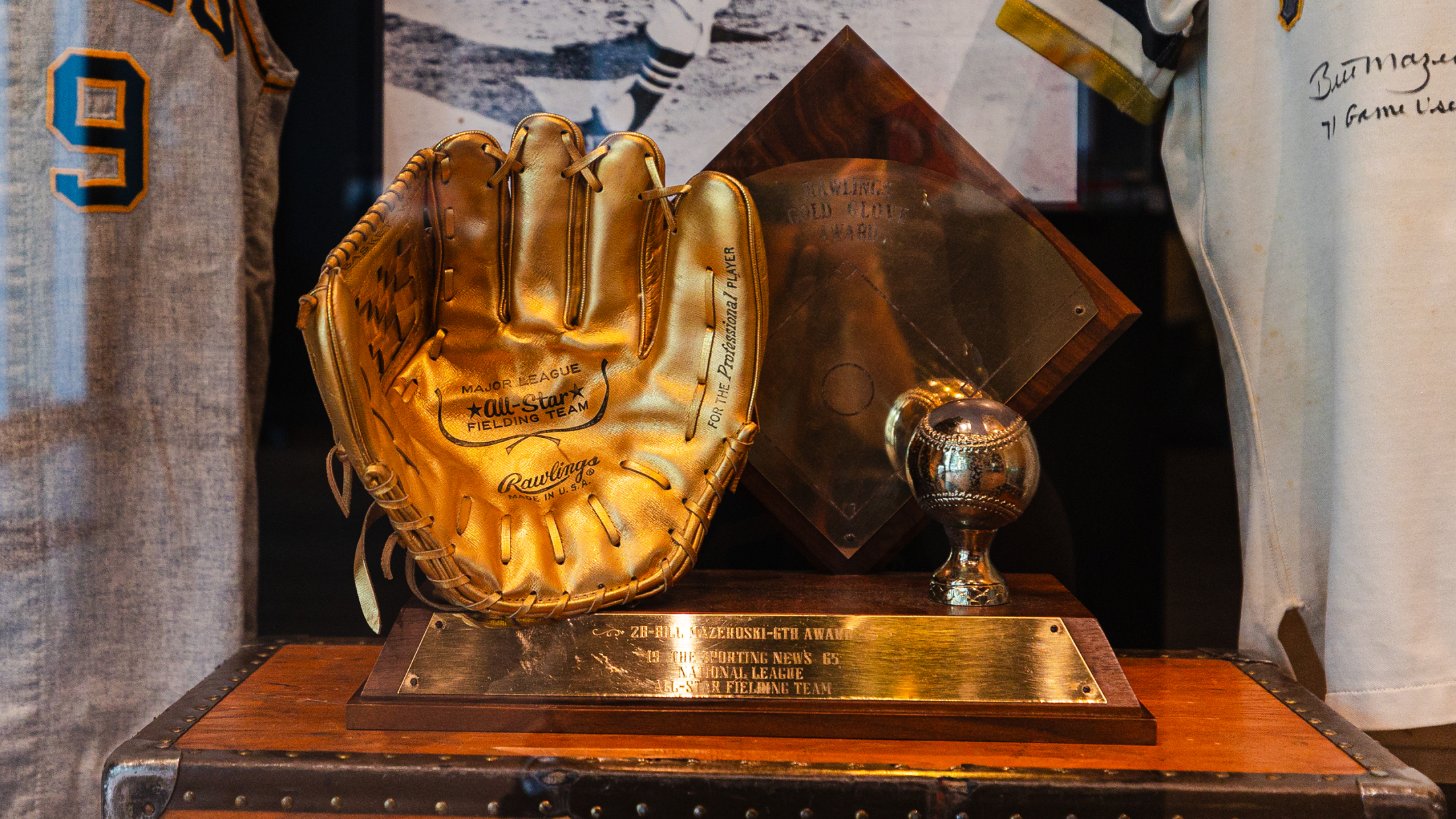
The official Rawlings Gold Glove Award on display in Legacy Hall was presented to Bill Mazeroski in 1965. It was the sixth of his eight such awards that he won during his Hall-of-Fame career with the Pirates.
Courtesy of the Dennis D. Heindl Sports Collection.
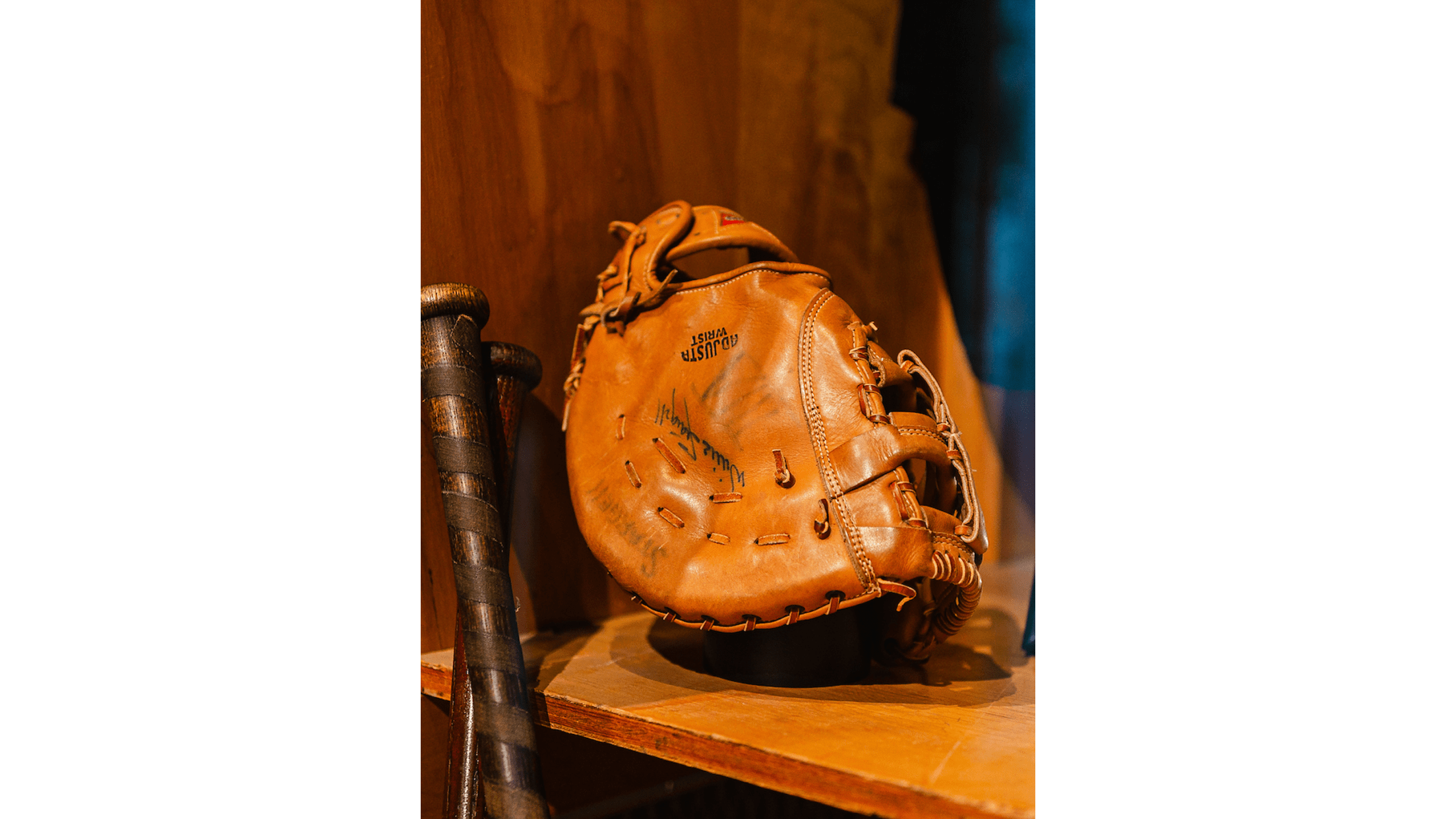
Willie Stargell began his illustrious 21-year career as an outfielder and spent a majority of those first 13 seasons in the outfield. He made the full-time transition to first base in 1975 and finished his career at that position. This first baseman’s glove was used by “Pops” during his time on the infield with the Bucs.
Courtesy of the Dennis D. Heindl Sports Collection.
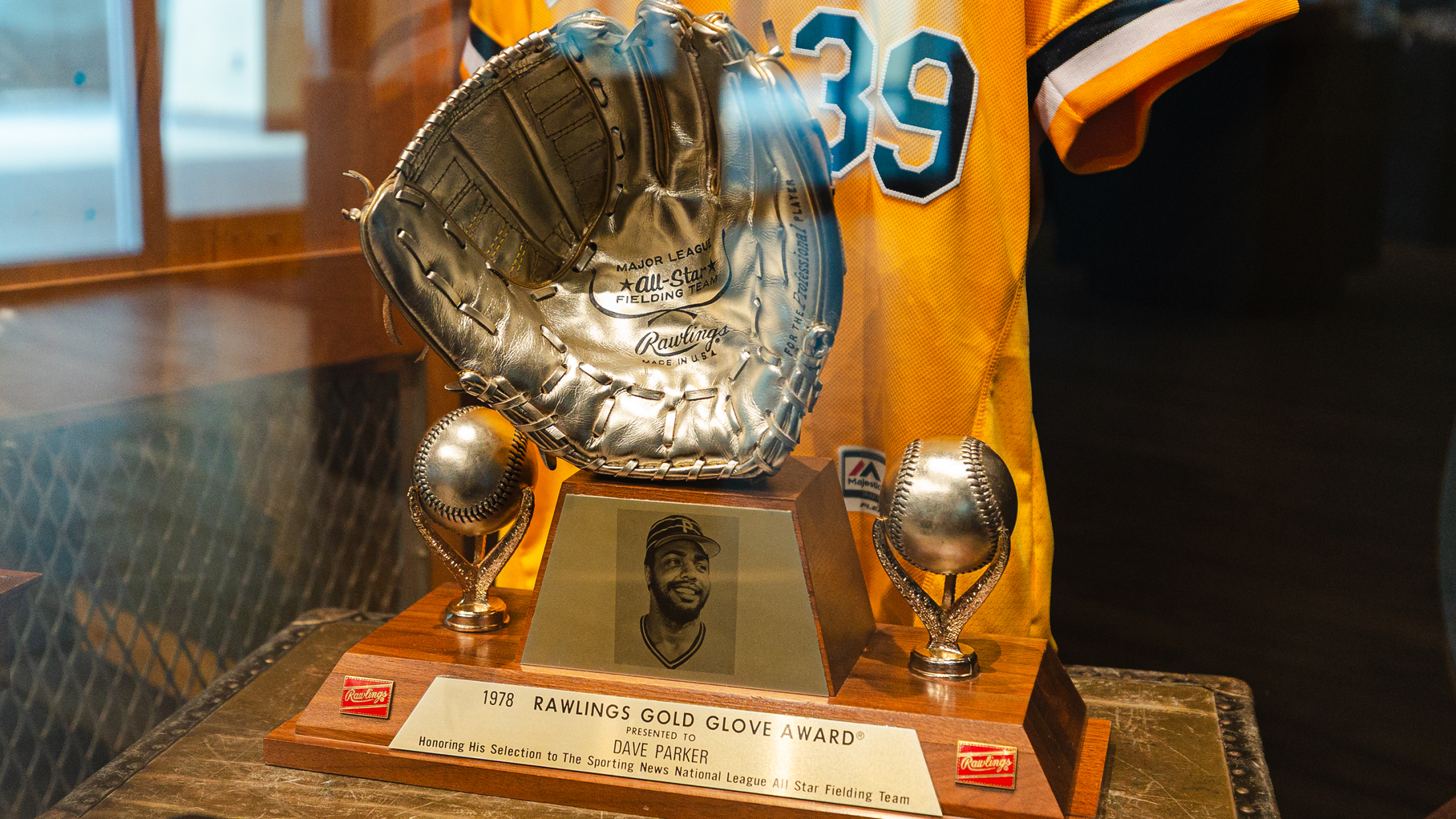
Known for his rifle arm in the outfield, Dave Parker won three Rawlings Gold Glove Awards during his illustrious career. The award on display here is from 1978, a season in which he was also named the National League’s Most Valuable Player.
Courtesy of the Dennis D. Heindl Sports Collection.
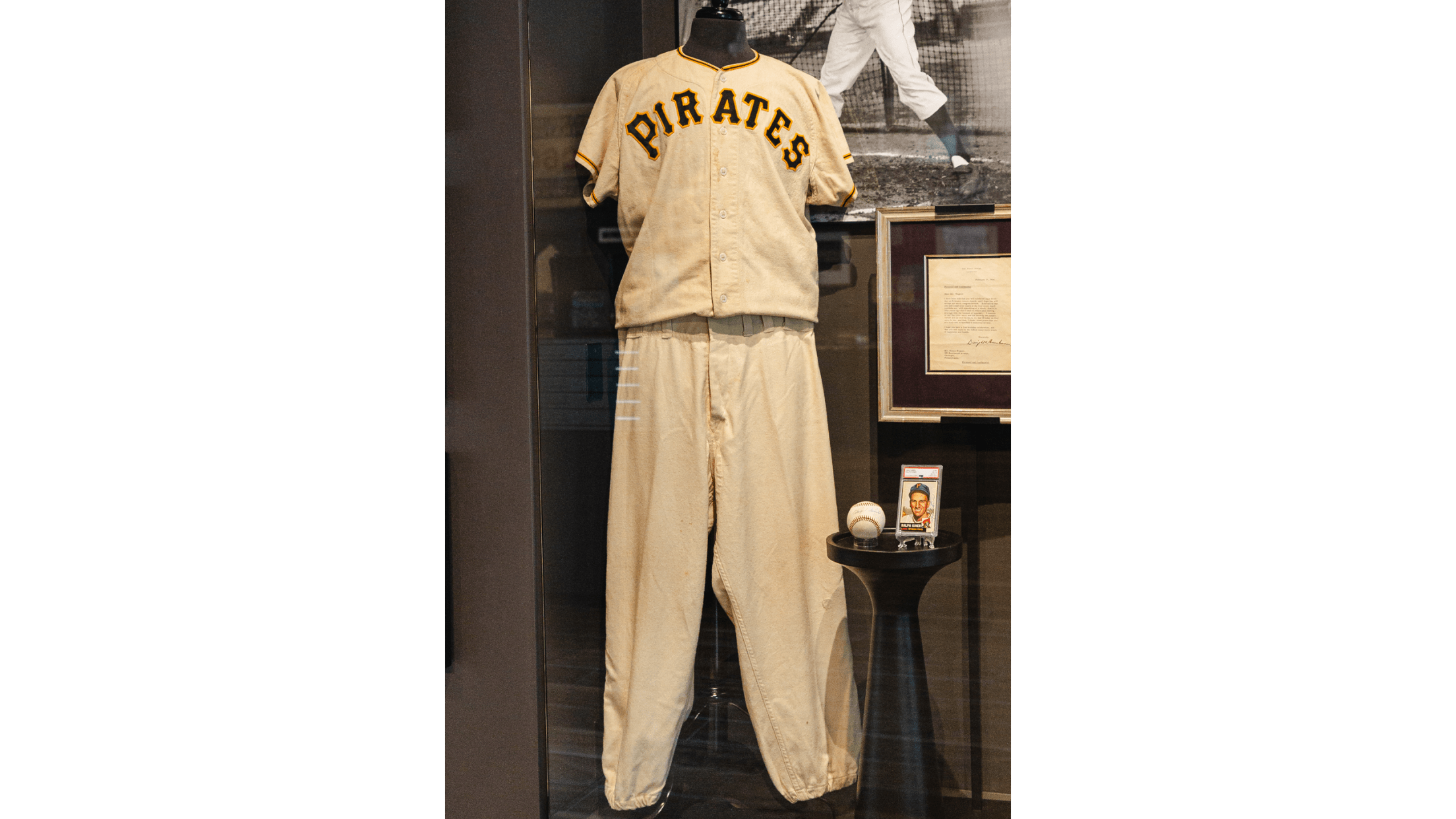
Ralph Kiner is the only player in MLB history to lead his respective league in home runs in each of his first seven seasons. This uniform was worn by Kiner in 1951, a season in which he hit 42 home runs while also leading the National League in walks (137), OBP (.452), slugging (.627) and OPS (1.079).
Courtesy of the Dennis D. Heindl Sports Collection.
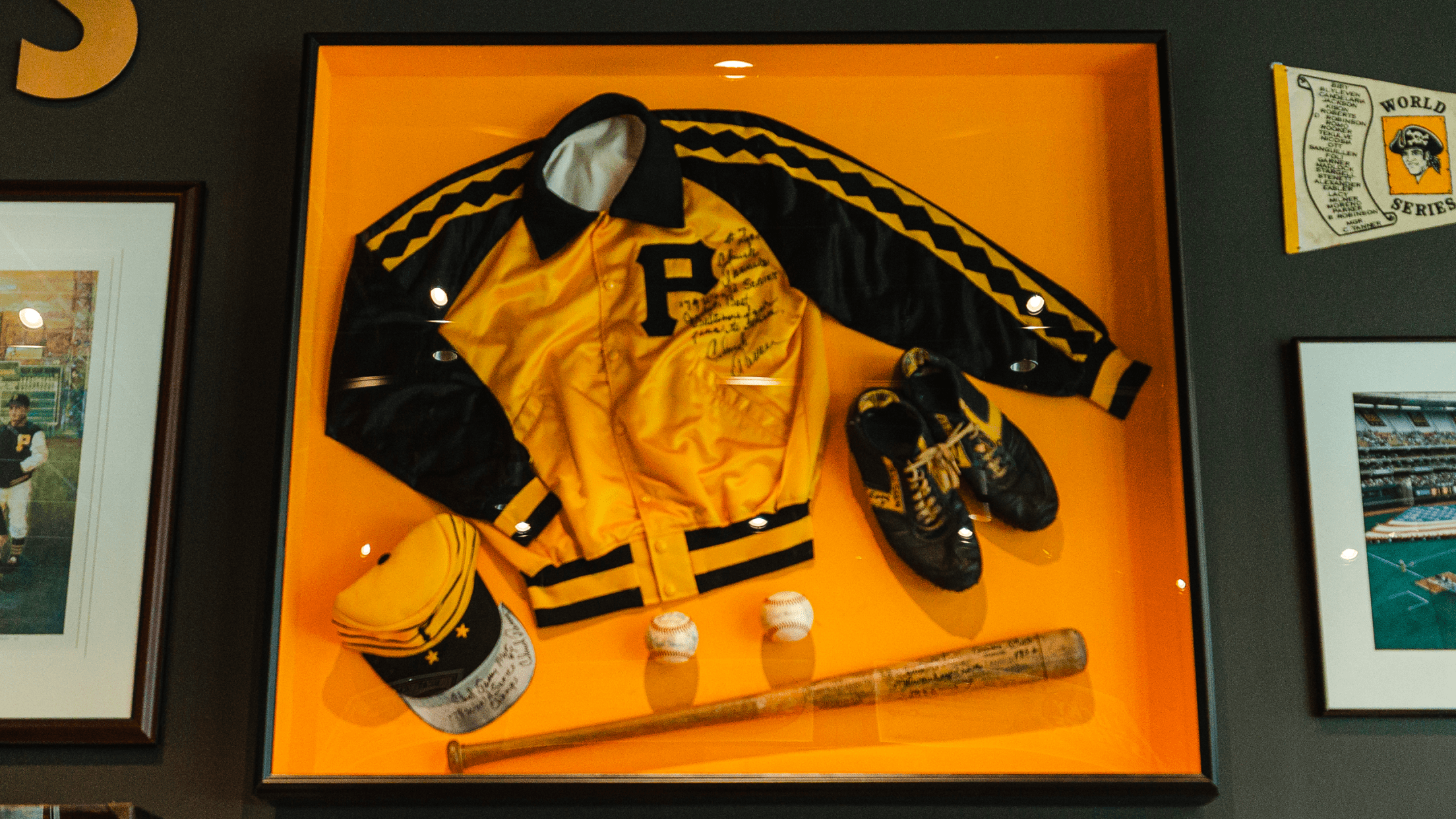
Pittsburgh’s inspirational manager, Chuck Tanner, led the Pirates to a World Series championship in 1979. After his team trailed the Orioles, three games to one, in the Fall Classic, Tanner remained optimistic. His club won Game 5 in Pittsburgh before winning the final two games in Baltimore. Included in the frame is Tanner’s game-worn jacket, spikes and hat from the 1979 World Series, along with two signed baseballs from the ’79 World Champs and a bat used by Tanner when he played for the Boston Braves in 1956.
Courtesy of the Dennis D. Heindl Sports Collection.
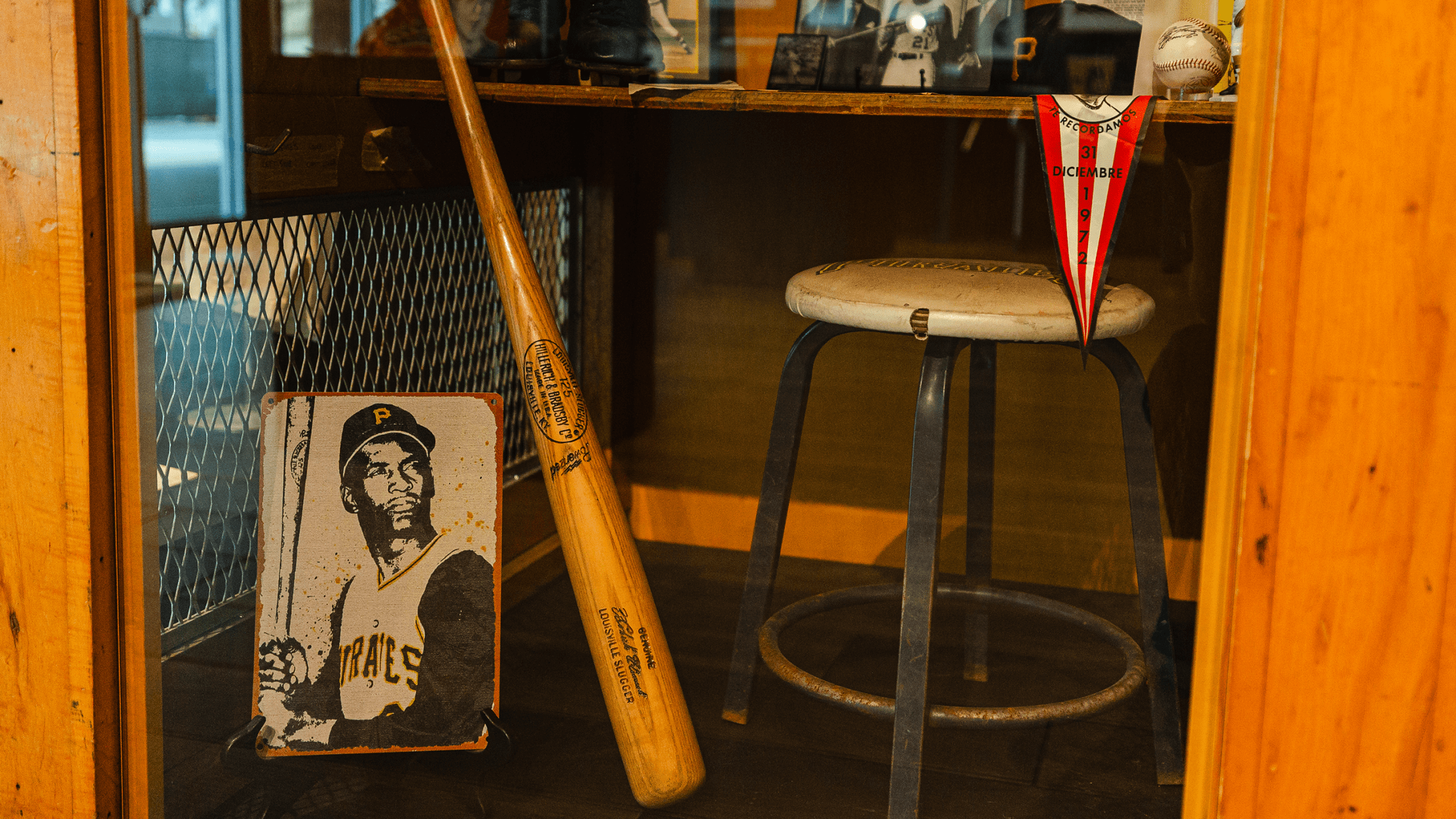
Roberto Clemente finished his Hall-of-Fame career with a lifetime batting average of .317. He won four N.L. batting titles (1961, 1964, 1965 and 1967) and produced exactly 3,000 hits during the regular season with the Pirates. For a majority of his career, Clemente wielded one of the heaviest bats in Major League Baseball history. He generally used a massive 36-inch bat that weighed between 36 and 38 ounces.
Courtesy of the Dennis D. Heindl Sports Collection.
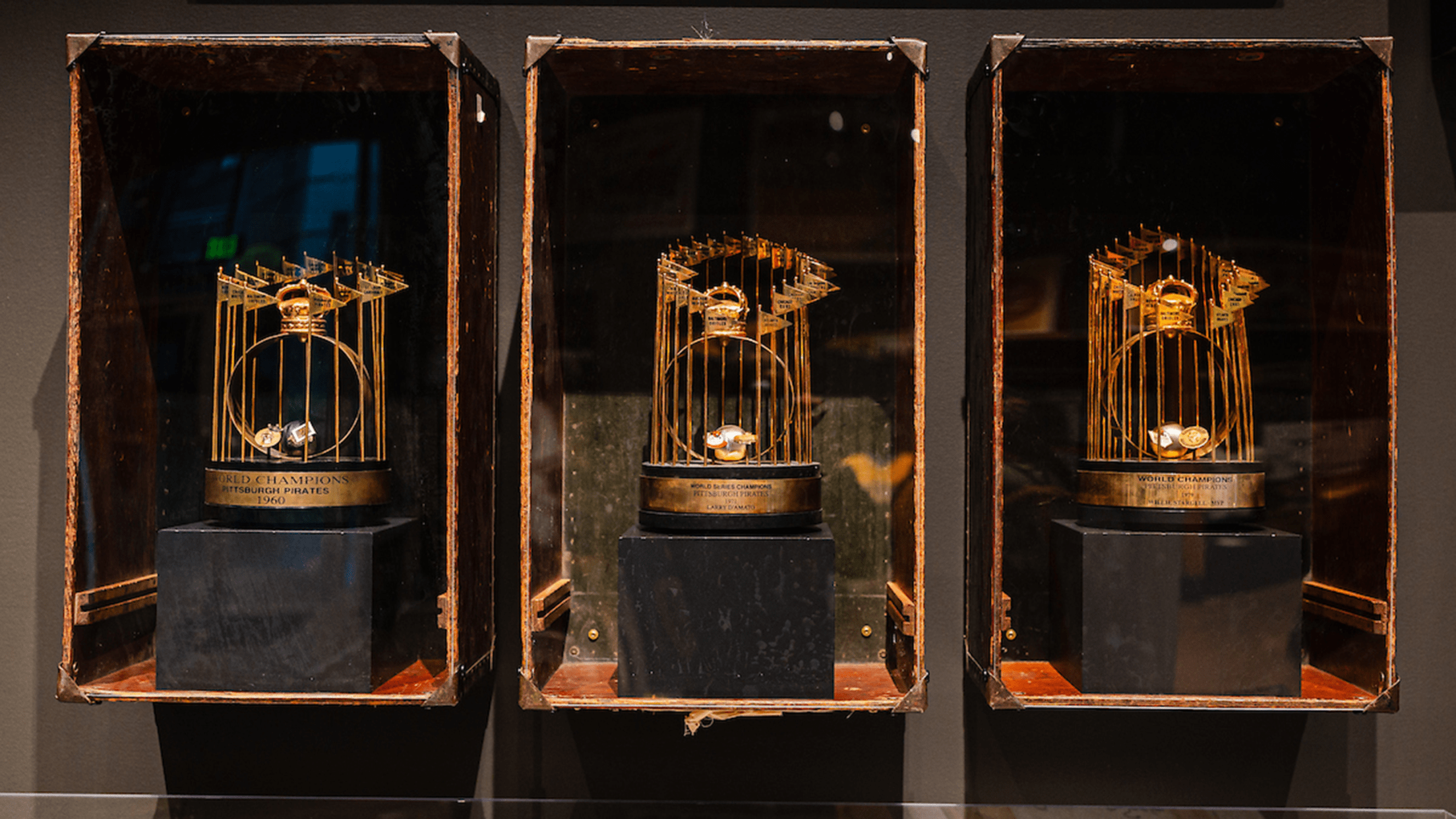
The original 1979 World Series Trophy, presented to Willie Stargell by Major League Baseball, features a crown figure over a baseball, a golden engraved banner, and miniature pennants representing every MLB team. The personal, player-issued 1979 World Series trophy was awarded to Stargell after he won both the N.L.C.S. and World Series MVP award.
Courtesy of the Dennis D. Heindl Sports Collection.
Replica World Series trophies from the 1960 and 1971 Pirates are on display within Legacy Hall. Led by Bill Mazeroski, Dick Groat and Vernon Law, the Pirates captured their third championship in 1960, defeating the New York Yankees, four games to three. The Bucs defeated the Baltimore Orioles in the 1971 Fall Classic, as Steve Blass tossed a complete game in Game 7 and Roberto Clemente batted .414 to take home MVP honors.
Courtesy of the Dennis D. Heindl Sports Collection.
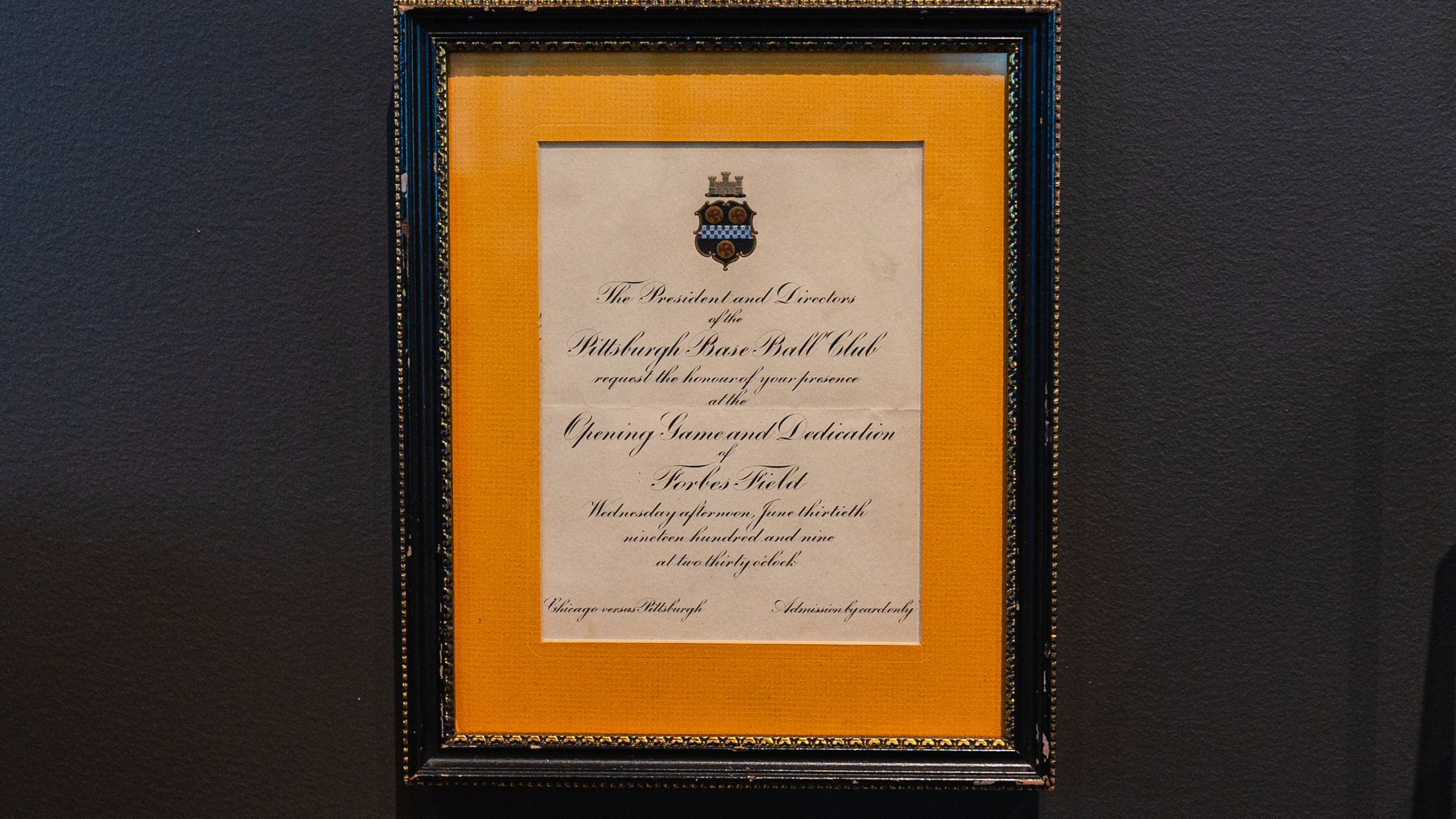
Forbes Field opened in Pittsburgh's Oakland neighborhood on June 30, 1909, and was the first stadium made of concrete and steel in the National League. It served as the primary home for the Pirates, but also hosted Steelers and Pitt Panthers football games before closing on June 28, 1970. The Pirates won three World Series while playing at Forbes Field (1909, 1925 and 1960). In addition to the original home plate, the Pirates are proud to have a seat, a red metal turnstile and a cornerstone from the historic ballpark on display at Legacy Hall.
Courtesy of the Dennis D. Heindl Sports Collection.
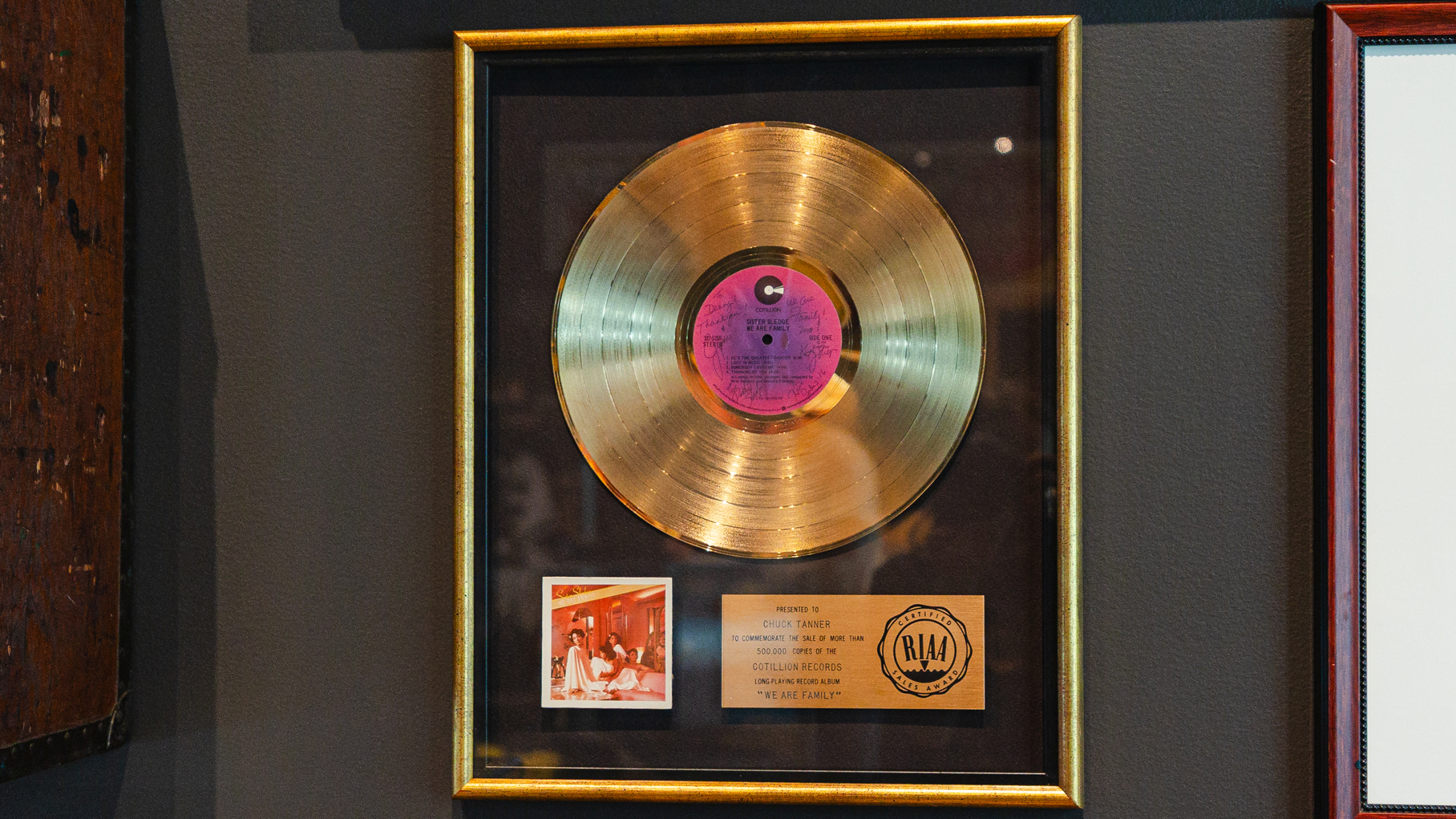
The 1979 World Series Champion Pirates used “We Are Family" as their official theme song. It was chosen by Willie Stargell while the team waited out a rain delay that season on June 1, prior to a game in which they would mount a ninth-inning comeback to win. After the team adopted the song, it rose to #2 on the pop chart and eventually went gold, becoming the #1 R&B song on the American charts in 1979.
Courtesy of the Dennis D. Heindl Sports Collection.
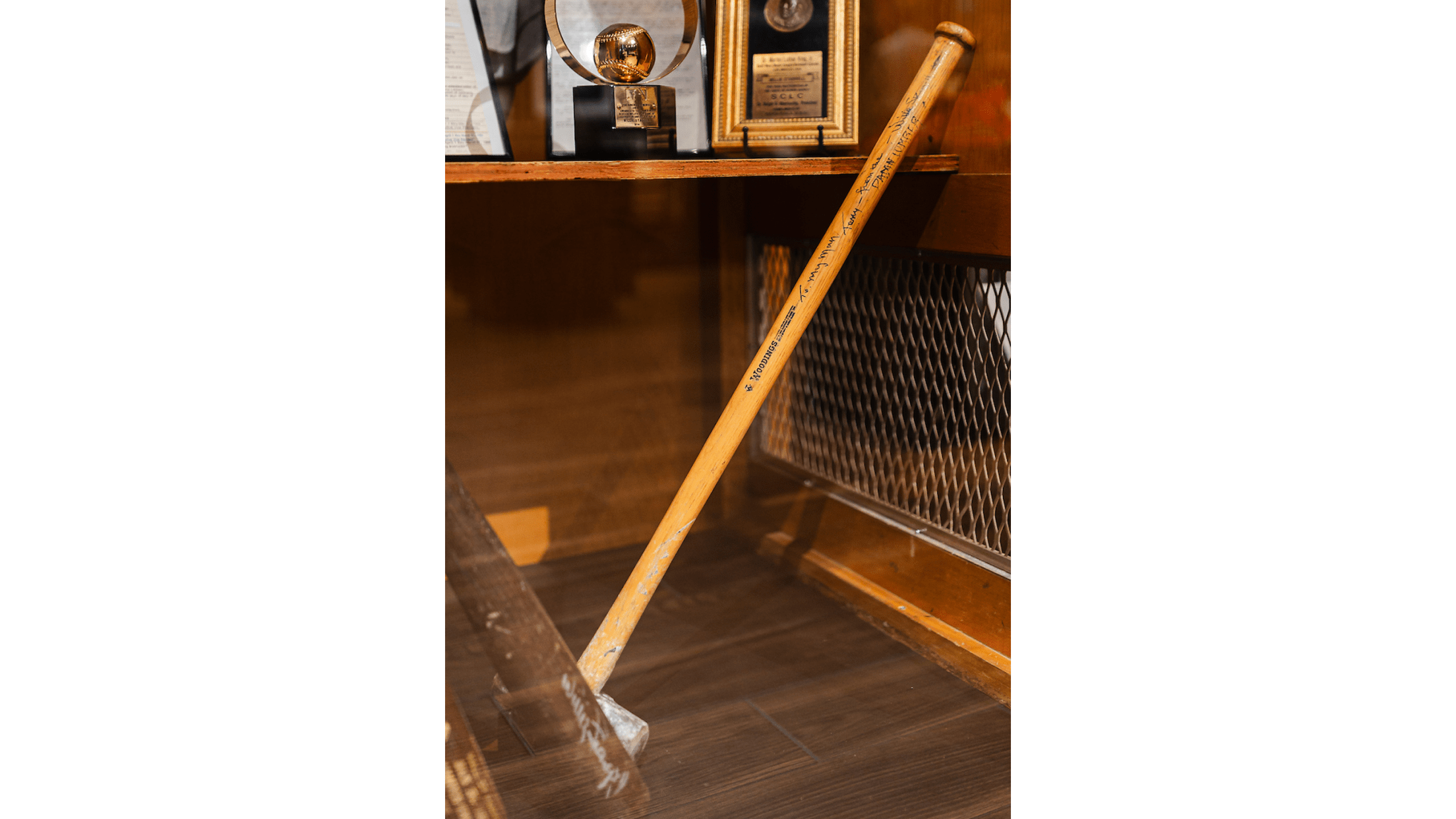
Willie Stargell’s 475 home runs with the Pirates rank first in team history. To help him get ready for the opposing pitcher, he would often be seen swinging this 20-pound sledgehammer in the on-deck circle during games. The sledgehammer is autographed by Willie, along with a personal note to long-time Pirates trainer Tony Bartirome.
Courtesy of the Dennis D. Heindl Sports Collection.
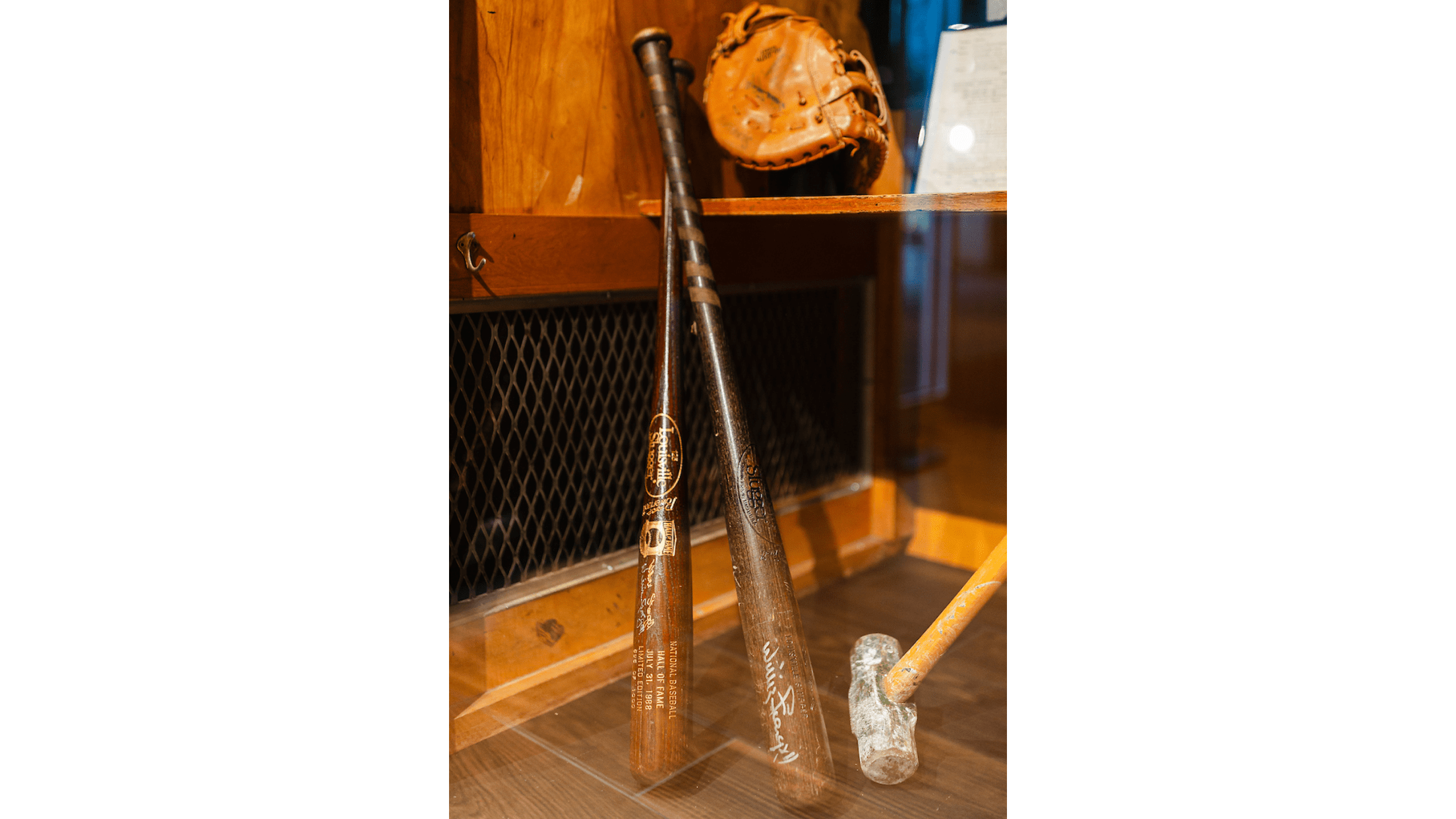
Willie Stargell led the National League in home runs twice during his 21-year career, hitting a career-high 48 in 1971 and 44 in 1973. His finest offensive season came in the 1973 after he also led the league in doubles (43), RBI (119), slugging (.646) and OPS (1.038) while finishing second the MVP voting. “Pops” captured MVP honors in 1979 and was selected to the All-Star team seven times. Stargell received this specially engraved bat when he was inducted into the National Baseball Hall of Fame on July 31, 1988.
Courtesy of the Dennis D. Heindl Sports Collection.
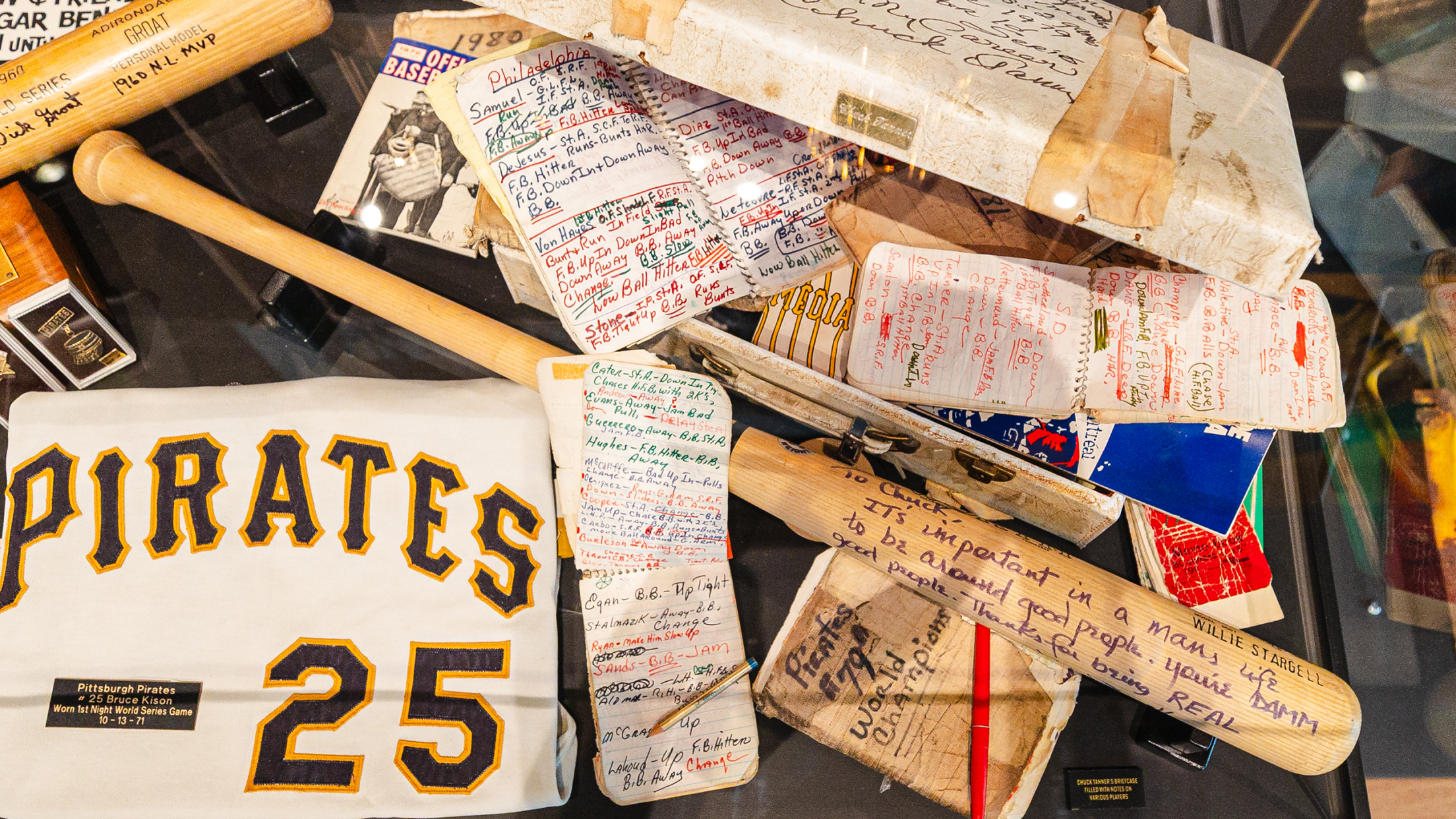
Chuck Tanner was one of the most respected managers in baseball. He served as Willie Stargell’s manager for six seasons, including the World Series winning campaign in 1979. Willie gave Chuck this bat which contains a personal message to his beloved manager.
Courtesy of the Dennis D. Heindl Sports Collection.
Courtesy of the Dennis D. Heindl Sports Collection.
Courtesy of the Dennis D. Heindl Sports Collection.
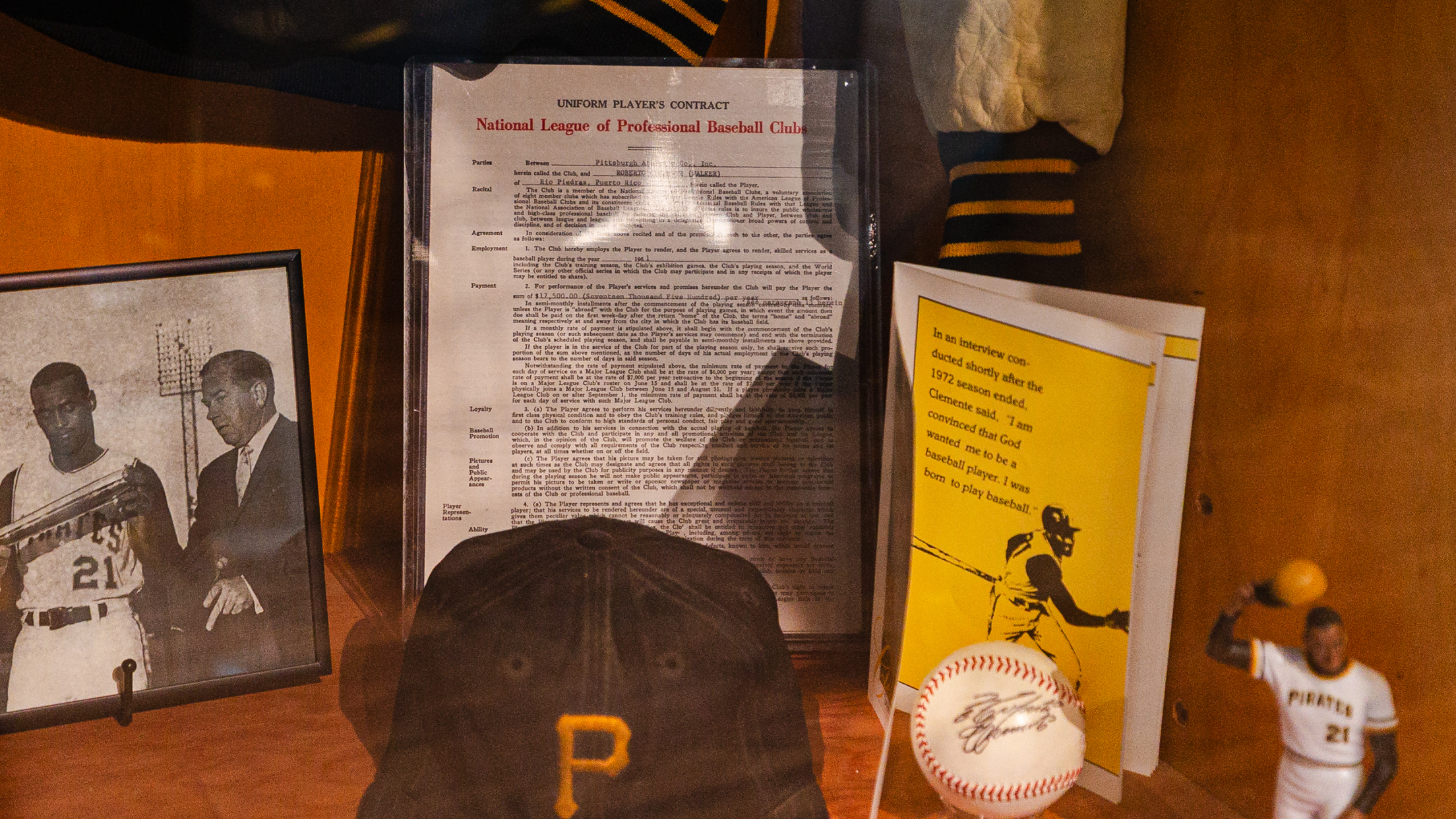
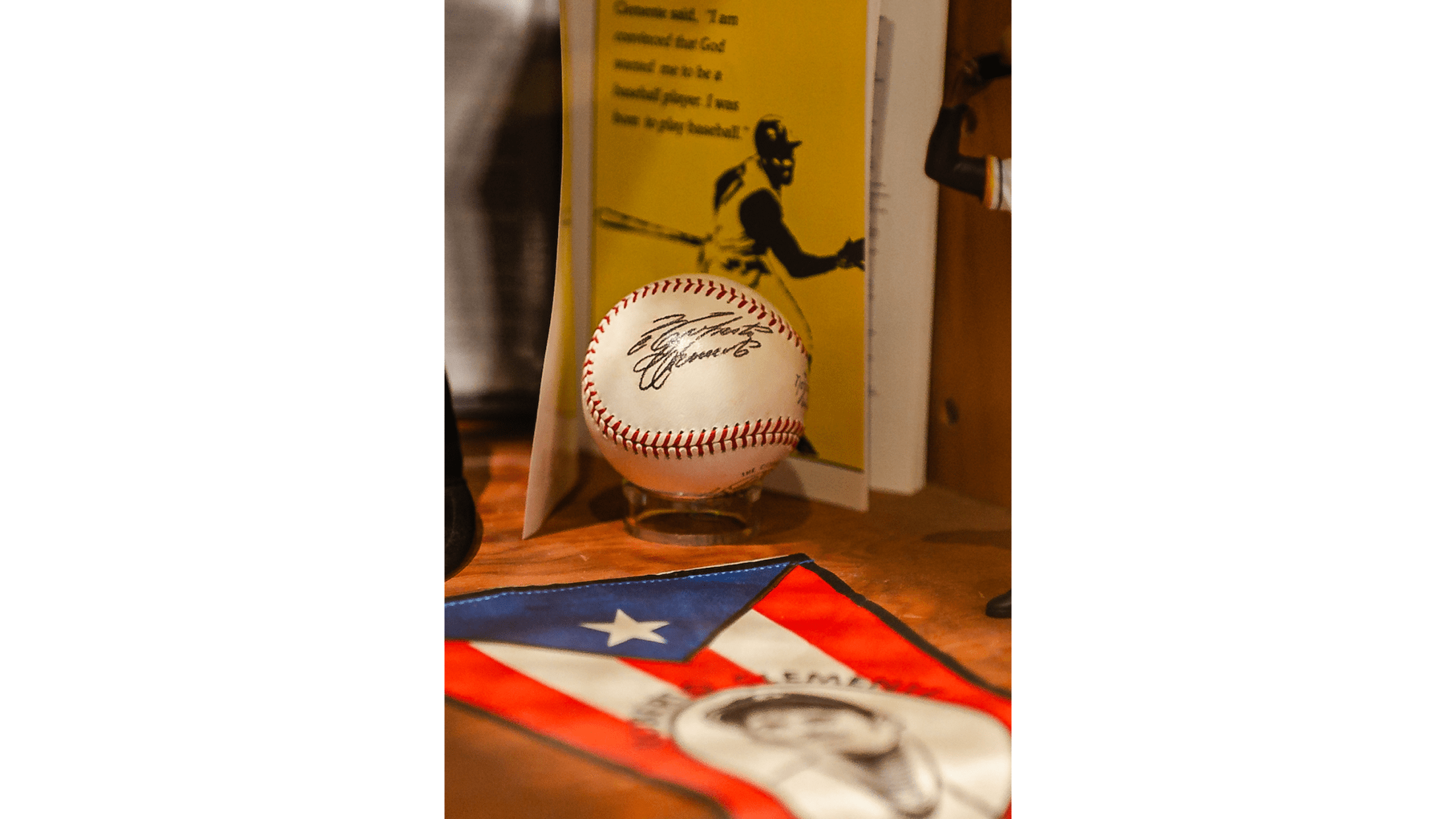
Roberto Clemente made his Major League debut with the Pirates in 1955. Coming off his first All-Star campaign in 1960, Roberto would go on to play 12 more seasons with Pittsburgh and would win the Most Valuable Player award in 1966. On display in the Clemente locker is his contract from 1961.
Courtesy of the Dennis D. Heindl Sports Collection.
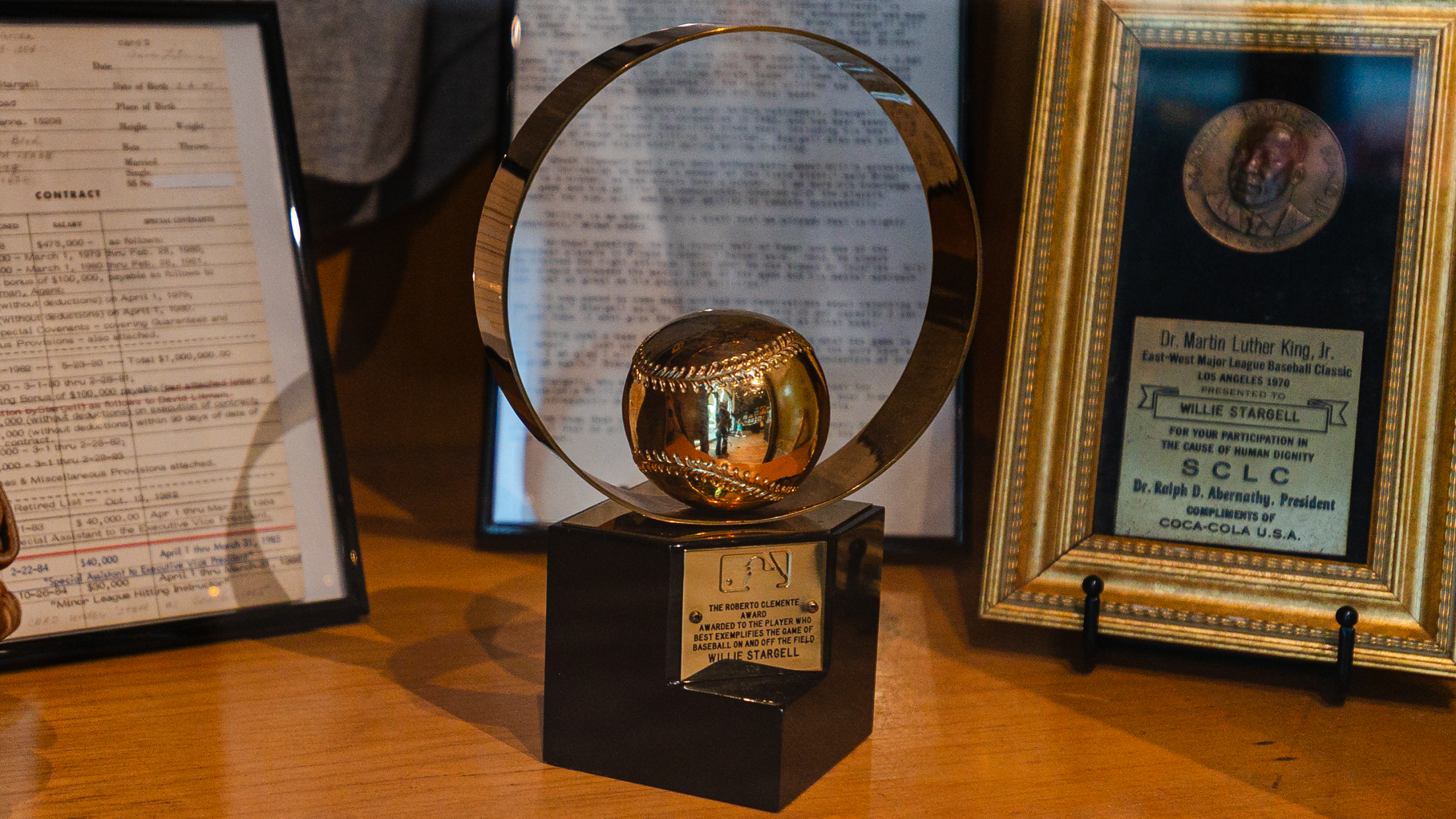
The Roberto Clemente Award is given annually to the Major League Baseball player who “best exemplifies the game of baseball, sportsmanship, community involvement and the individual’s contribution to his team,” as voted on by baseball fans and members of the media. Originally known as the Commissioner’s Award, it has been presented annually by MLB since 1971. In 1973, the award was renamed after Clemente following his death in a plane crash while delivering supplies to victims of the Nicaragua earthquake on December 31, 1972. Willie Stargell was the first Pirates player to win the award, having done so in 1974.
Courtesy of the Dennis D. Heindl Sports Collection.
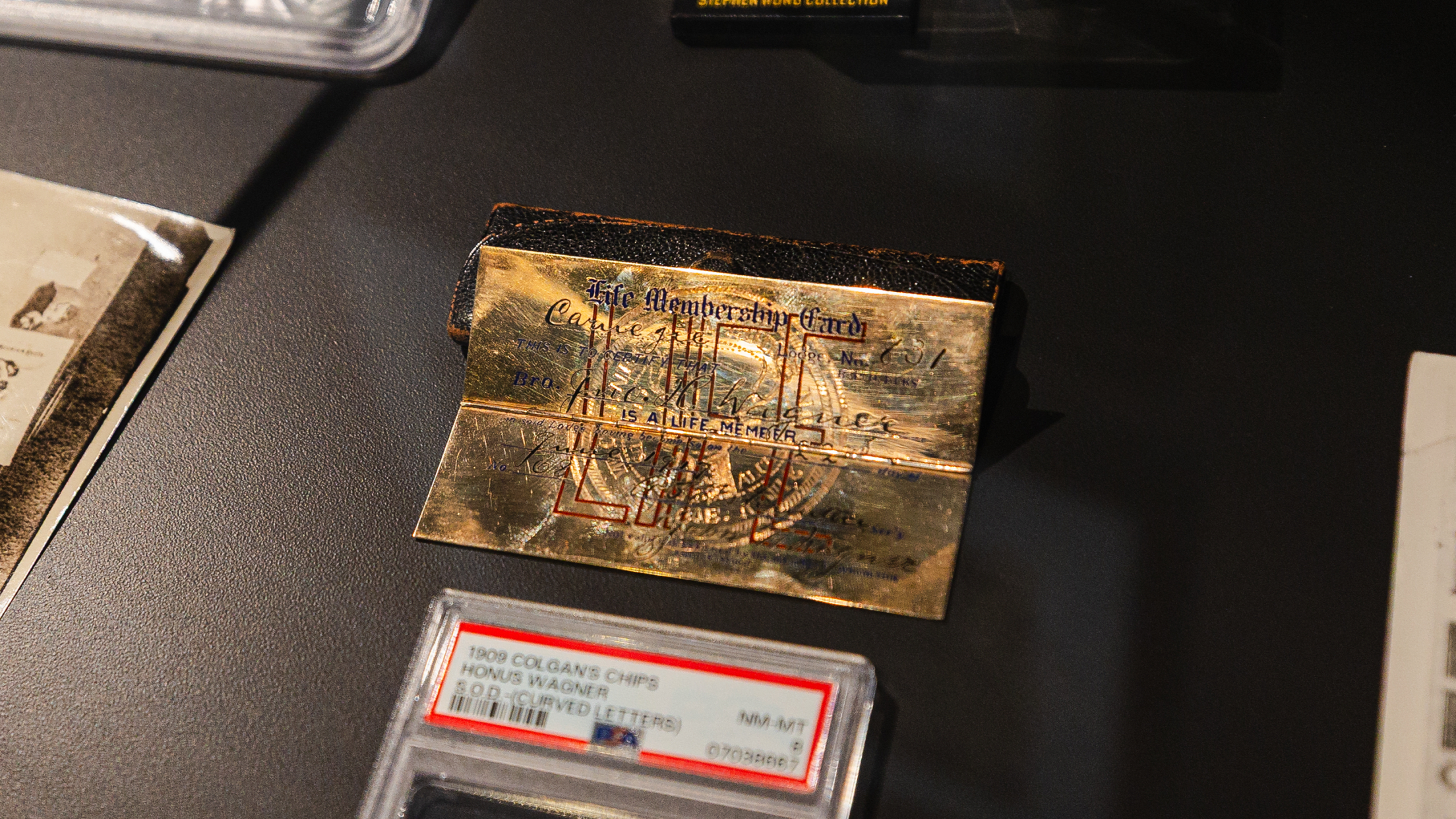
The Benevolent and Protective Order of Elks was established on February 16, 1868. Honus Wagner was a lifelong member of the Benevolent and Protective Order of Elks, specifically affiliated with the Carnegie, PA Lodge No. 831. Following his retirement from Major League Baseball, he spent much of his time at the local lodge and managed a semi-pro steel company team known as the Carnegie Elks. Wagner was issued his membership card on June 22, 1917.
Courtesy of the Dennis D. Heindl Sports Collection.
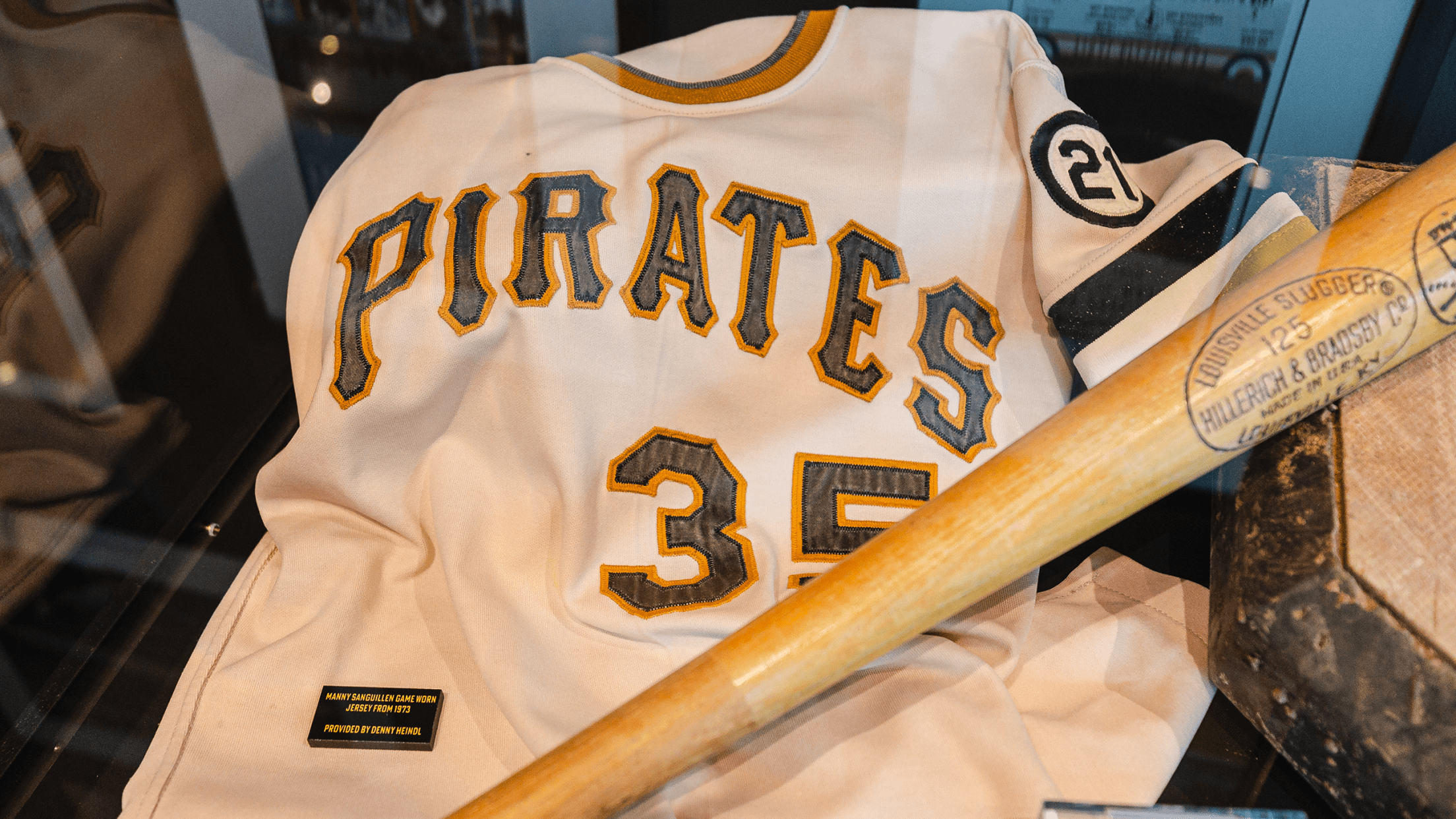
Following the untimely death of Roberto Clemente on December 31, 1972, the Pirates recognized “The Great One” with a 21 patch on their uniforms during the 1973 season. A close and personal friend of Roberto’s, Manny Sanguillen played 149 games with the Pirates in 1973 and hit a career-high 12 home runs. Sanguillen once said of his good friend, “I’ve never seen a better ballplayer than Roberto Clemente, not only in right field. He was the most complete ball player ever.”
Courtesy of the Dennis D. Heindl Sports Collection.
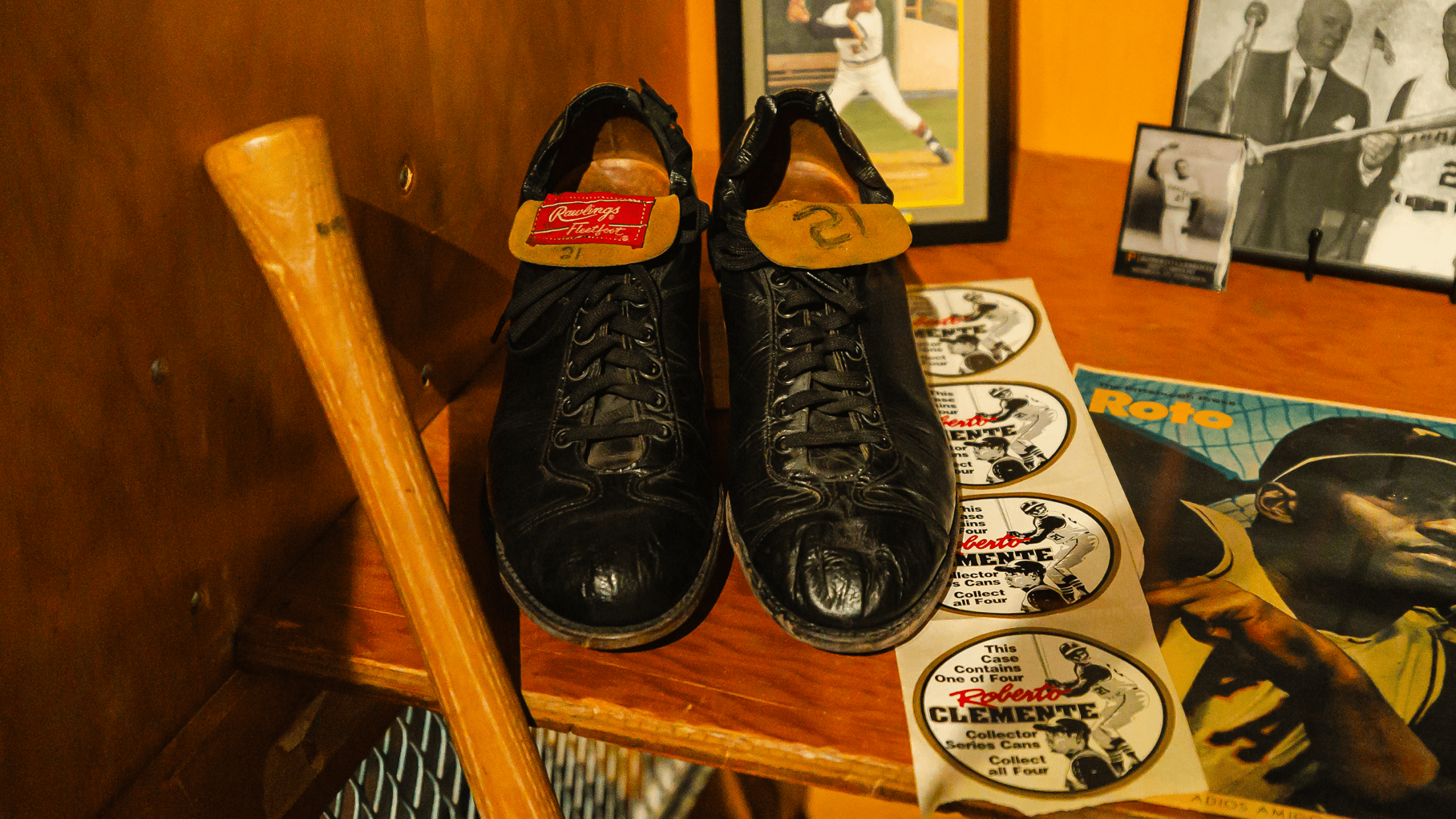
Roberto Clemente wore classic all-black, high-top leather baseball cleats during his career with the Pirates, primarily manufactured by brands like Rawlings and Spalding. He frequently wrote his iconic number 21 by hand on the tongue of his game-worn shoes.
Courtesy of the Dennis D. Heindl Sports Collection.
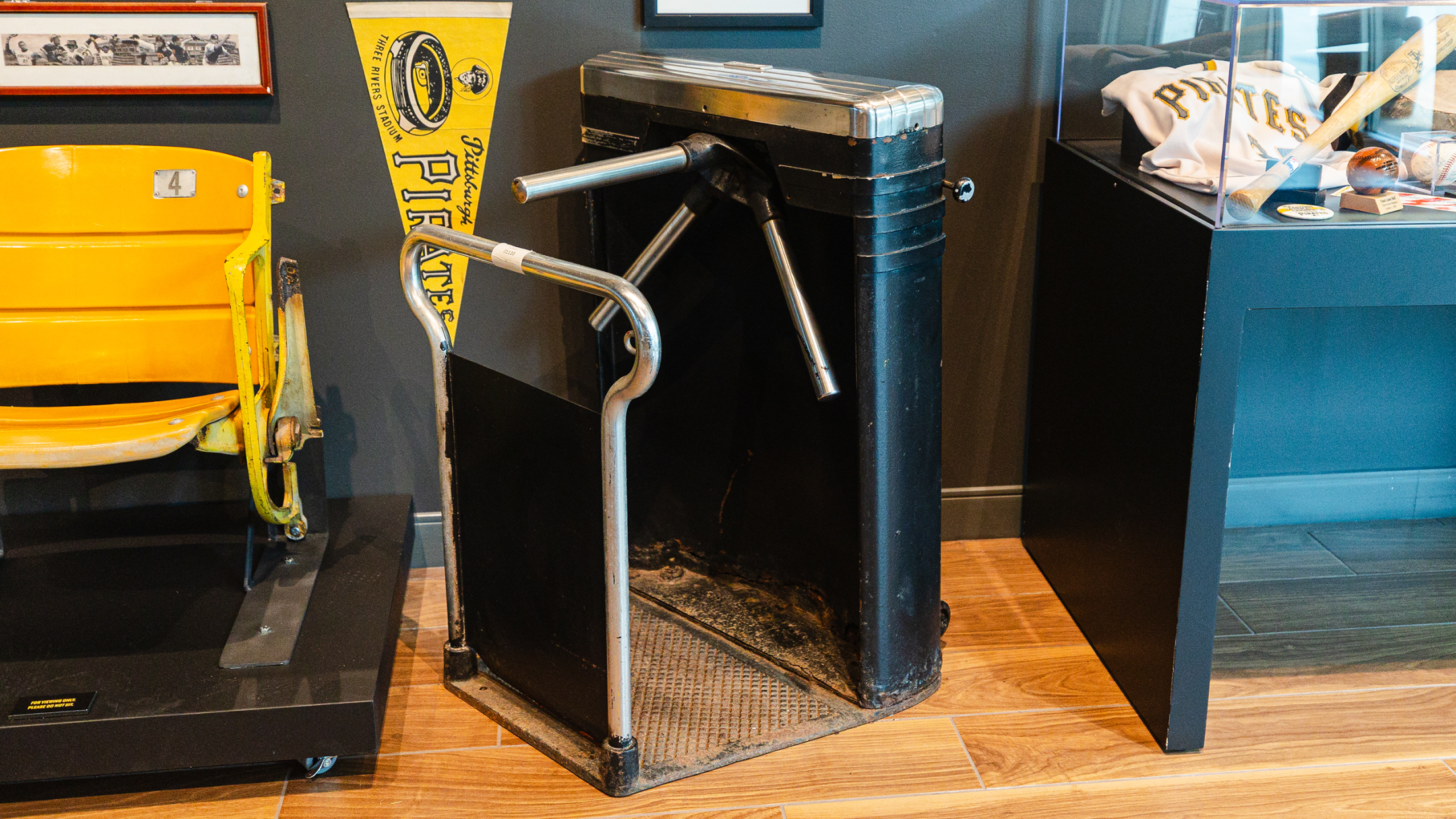
Three Rivers Stadium opened its doors on July 16, 1970, hosting both the Pittsburgh Pirates and Pittsburgh Steelers for the next three decades before closing in 2000. The venue also witnessed several memorable concerts and many other events. At just over the 37” in height, the Pirates are proud to display an original black and stainless-steel turnstile from their former home.
Courtesy of the Dennis D. Heindl Sports Collection.
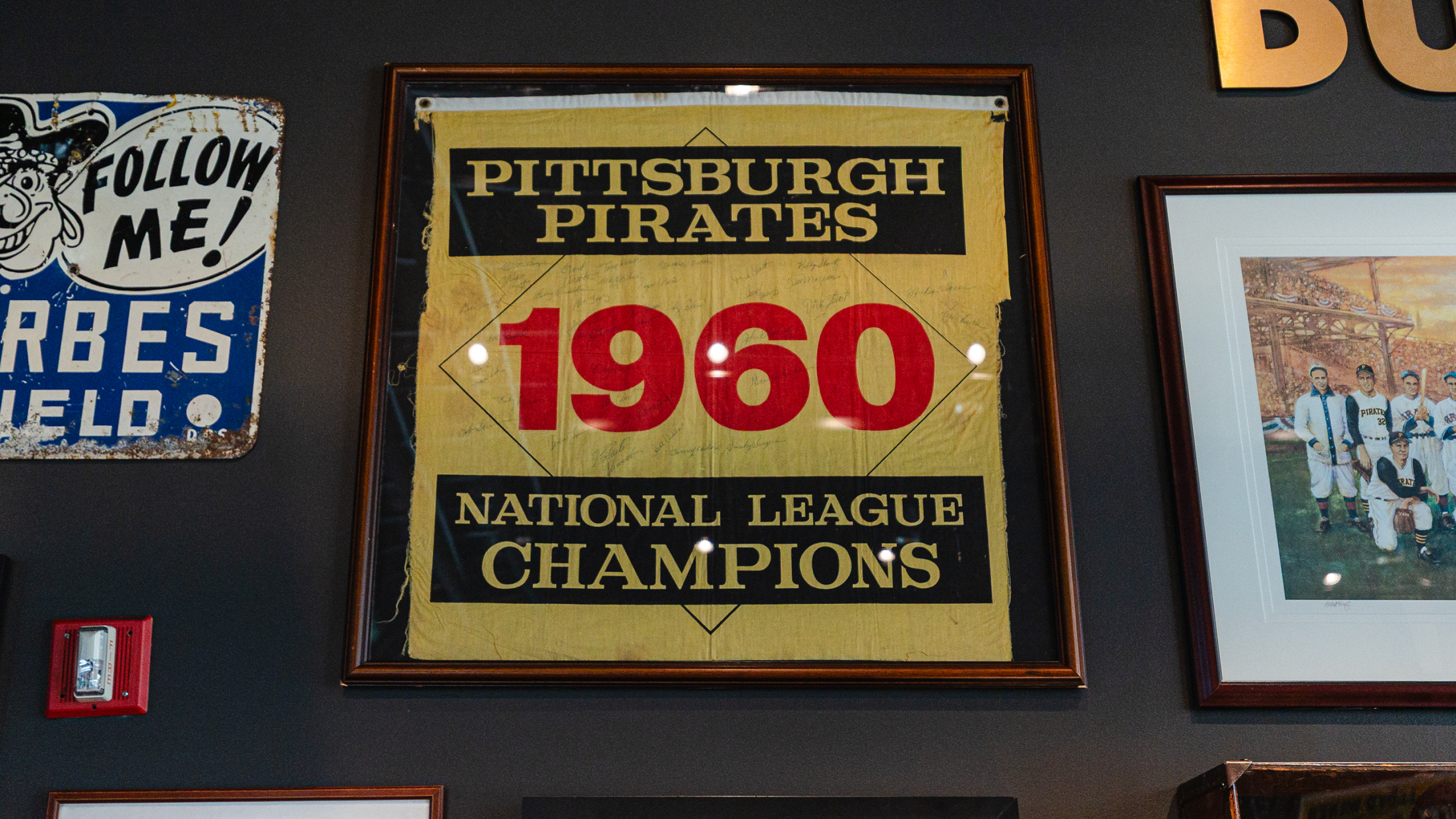
The Pirates captured the 1960 National League pennant before going on to beat the New York Yankees in the World Series. This one-of-a-kind N.L. Champions banner from 1960 features signatures from the Pirates and Yankees, including Roberto Clemente, Bill Mazeroski, Dick Groat, Mickey Mantle, Roger Maris and Yogi Berra.
Courtesy of the Dennis D. Heindl Sports Collection.
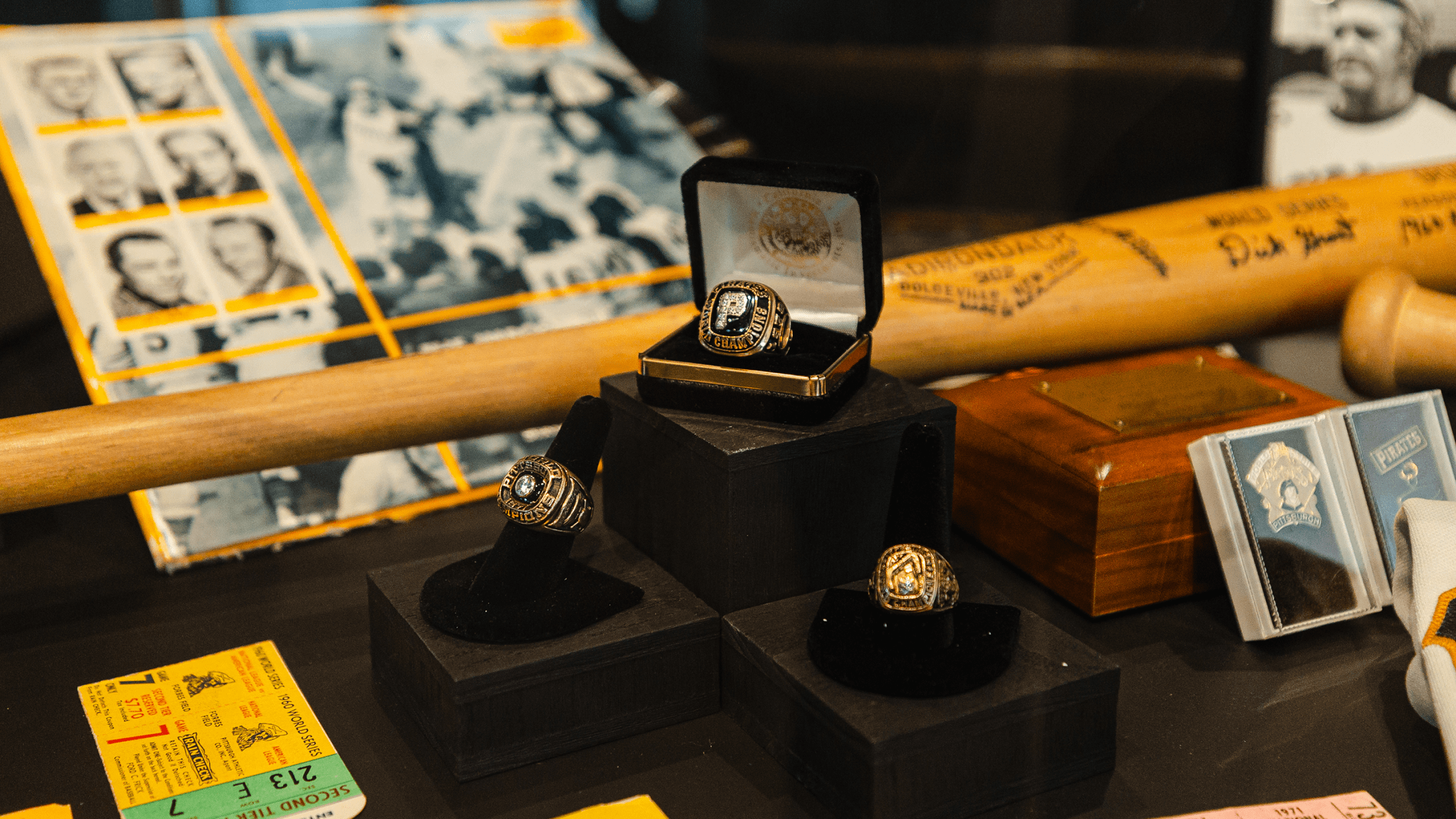
The goal for every Major League player is to win the World Series and to receive a ring to commemorate that accomplishment. The Pirates are happy to display the rings from their last three World Series championships from 1960, 1971 and 1979.
Courtesy of the Dennis D. Heindl Sports Collection.
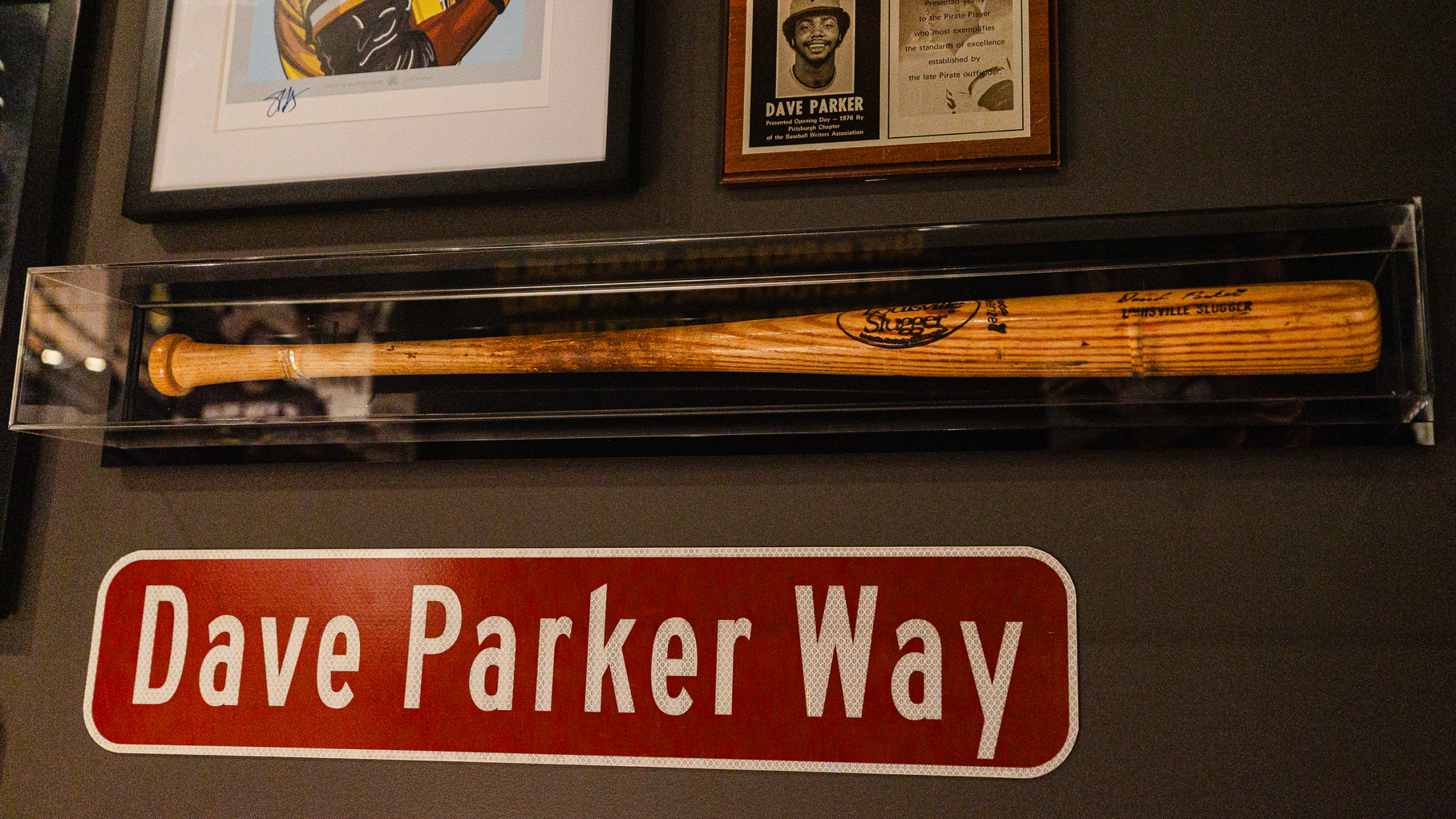
Known for his tremendous size and power during his time with the Pirates in the late 1970s, Dave Parker would frequently swing a Louisville Slugger bat ranging from 35 to 37 inches and weighing between 33 to 36 ounces. It was one of the bigger bats during that time and was used when he captured back-to-back batting titles in 1977 and 1978 while also being named the league’s Most Valuable Player in 1978.
Courtesy of the Dennis D. Heindl Sports Collection.
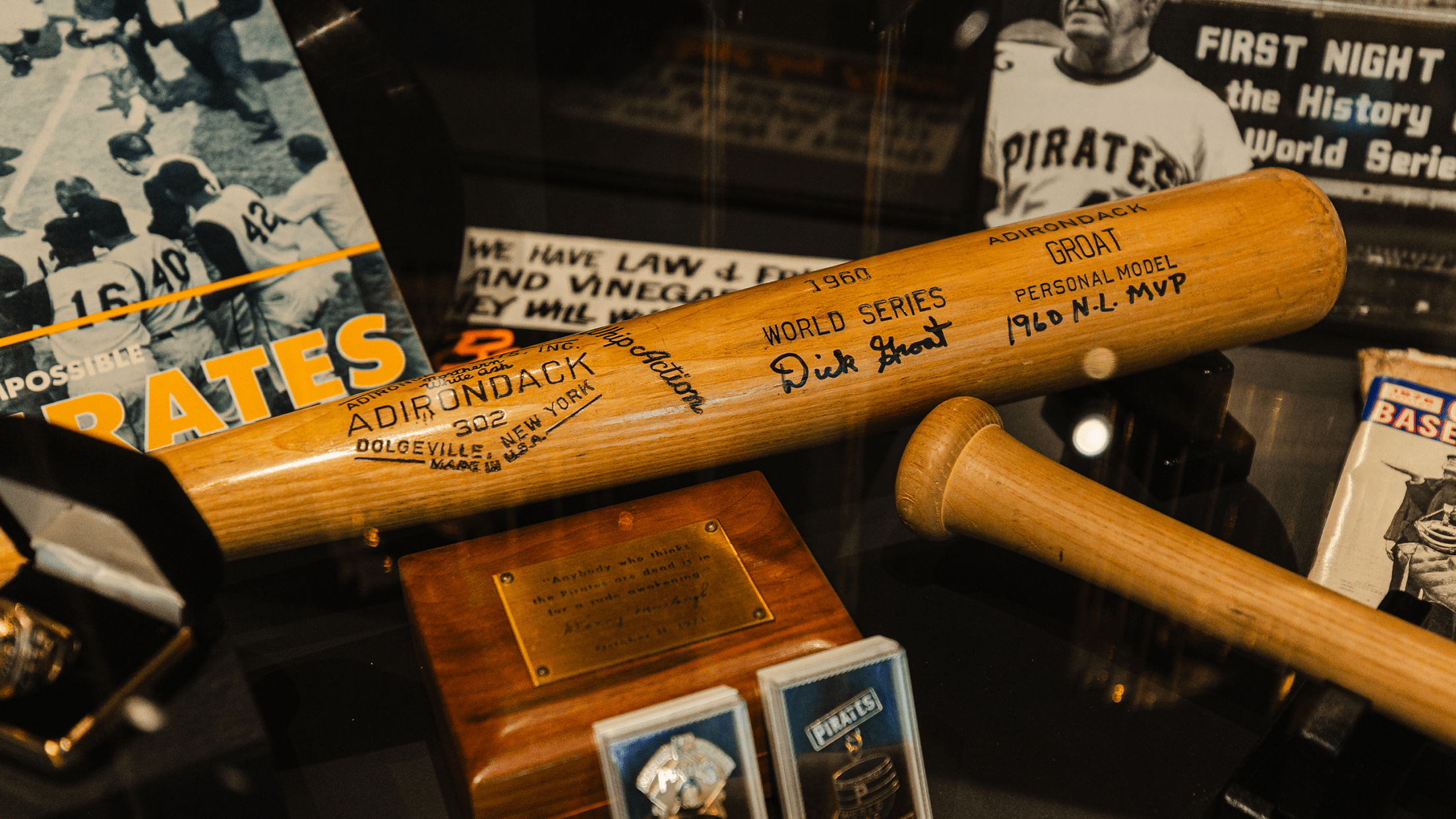
Dick Groat was the National League’s Most Valuable Player in 1960 as he helped lead the Pirates to the World Series championship that magical season. He led the league with a .325 batting average in 1960 and was also selected to the N.L. All-Star team. This commemorative Adirondack bat is signed by the former Bucco great.
Courtesy of the Dennis D. Heindl Sports Collection.
Willie Stargell was famous for using one of the heaviest pieces of lumber in baseball. He would typically swing a 36-inch bat that weighed around 43 ounces. Because his professional bats were so oversized, the Hall of Famer would warm up in the on-deck circle with a real sledgehammer. Stargell is the Pirates all-time home run leader, hitting a total of 475 long balls during his 21 years in a Pittsburgh uniform.
Courtesy of the Dennis D. Heindl Sports Collection.
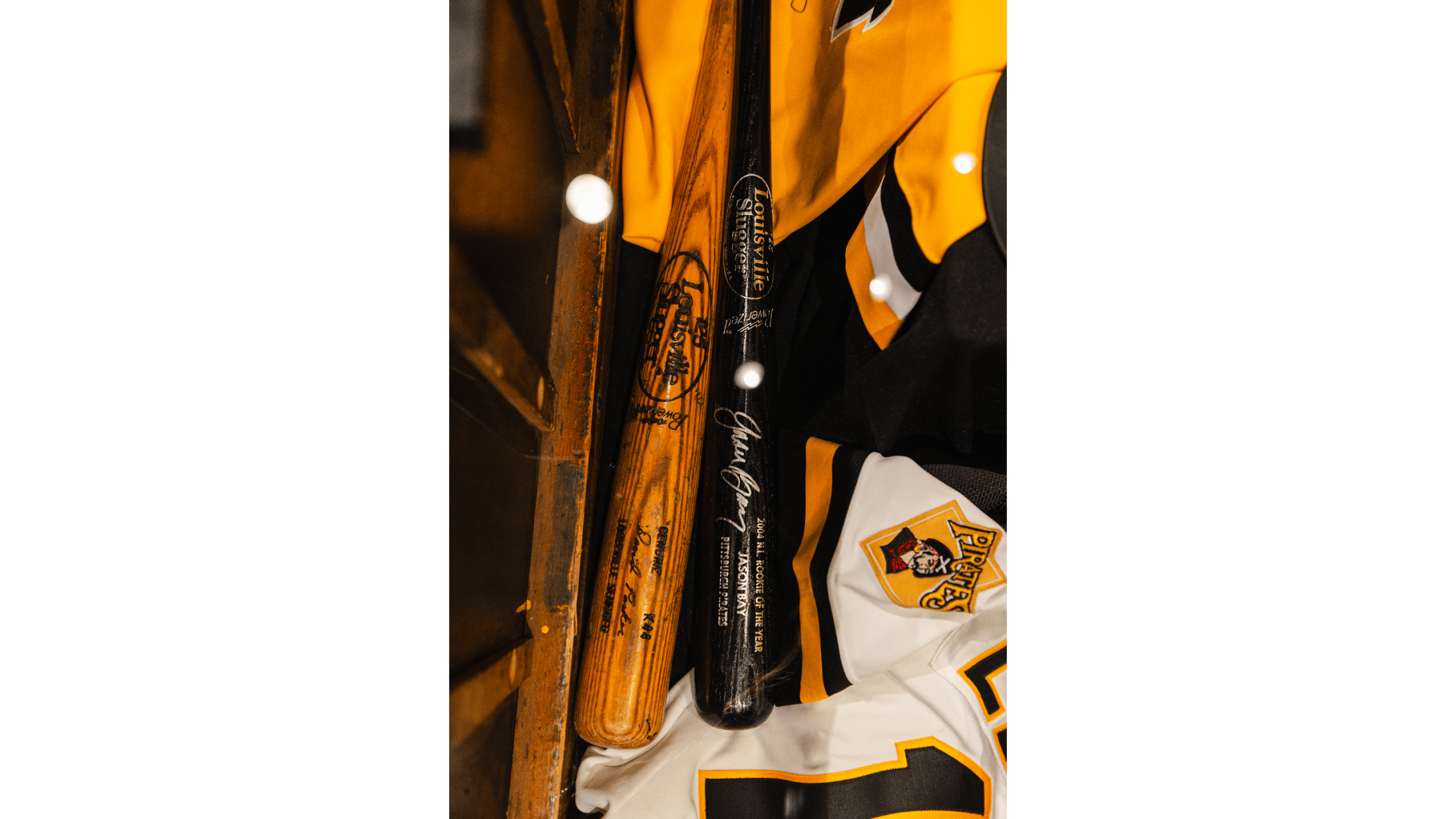
Jason Bay hit .282 with 26 home runs and 82 RBI in his first full season with the Pirates in 2004 and was named the National League Rookie-of-the-Year, the first Pittsburgh player to win the award. This commemorative 2004 N.L. Rookie-of-the-Year bat is signed by the two-time Bucco All-Star who ranks 10th on the club’s all-time home run list with 139.
Courtesy of the Dennis D. Heindl Sports Collection.
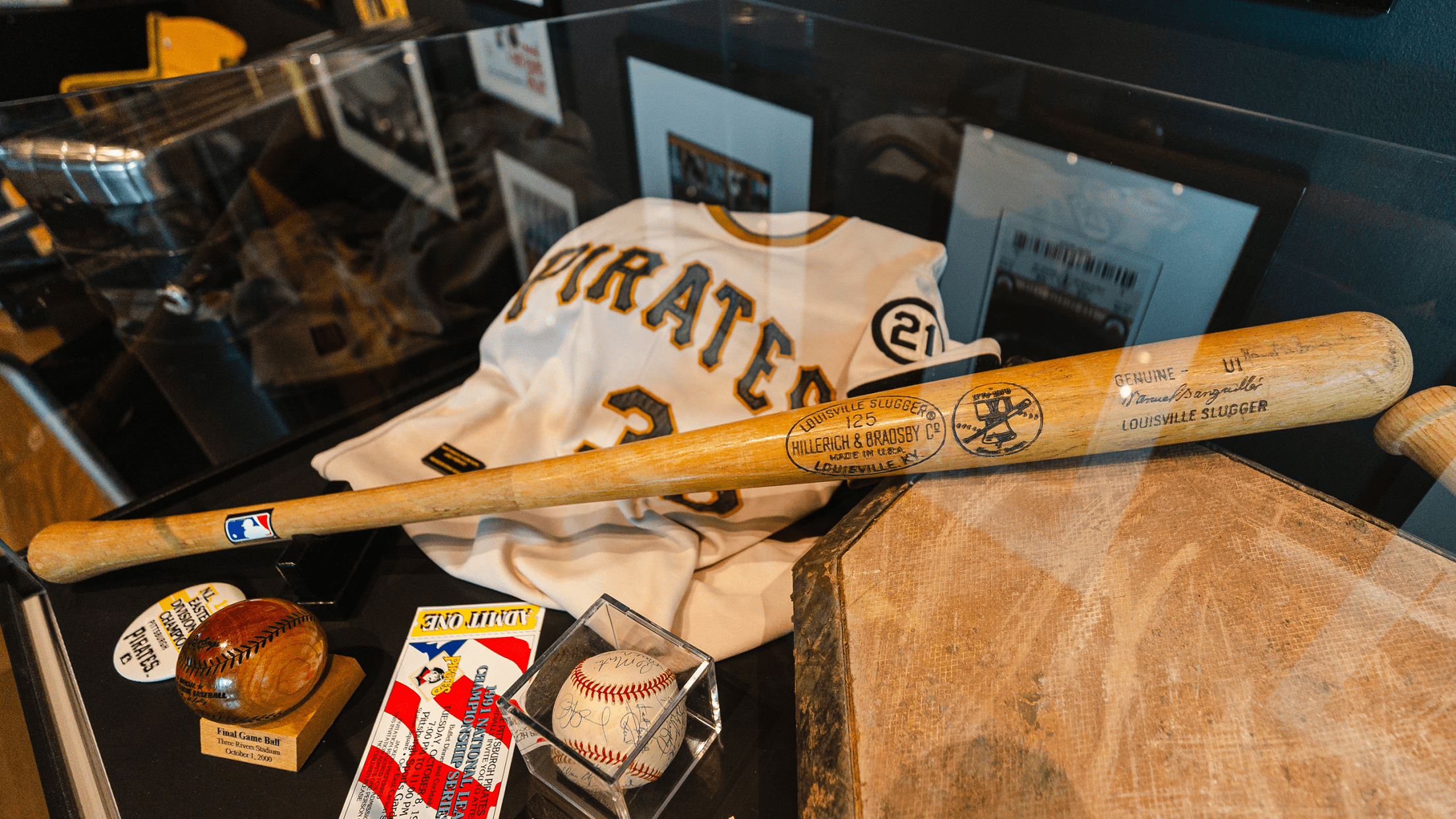
Manny Sanguillen would often use a bigger, longer bat weighing up to 40 ounces. This massive bat would allow him to reach pitches far off the plate and slap hits off balls that practically bounced before they reached home plate. He was a notoriously aggressive, free-swinging hitter with excellent bat control. He rarely walked because he preferred to swing at nearly everything he saw. Despite his unorthodox approach and heavy bat, he compiled a .296 career batting average over his 13 big-league seasons.
Courtesy of the Dennis D. Heindl Sports Collection.
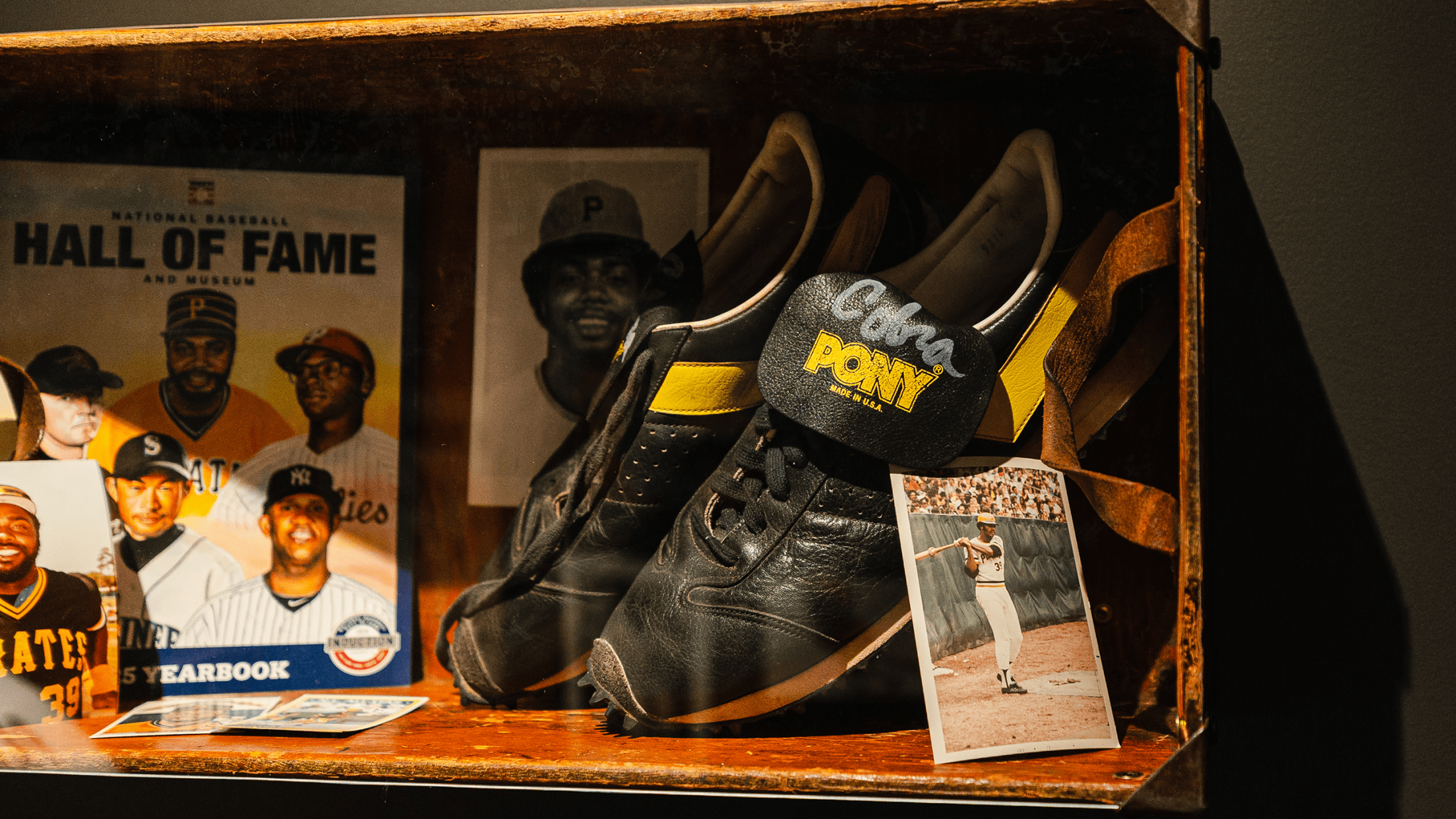
During his time with the Pirates in the late 70s and early 80s, Dave Parker would wear size 11 ½ black and yellow Pony shoes. Parker’s uniform number 39 was often written on the shoes and his nickname “Cobra” was written on the tongue.
Courtesy of the Dennis D. Heindl Sports Collection.
Dave Parker was named the team MVP by the Pirates in 1975, 1977 and 1978. This award was created in 1973 by the local chapter of the Baseball Writers Association of America and has been presented annually since then to the player who best exemplifies the standard of excellence established by Hall-of-Fame outfielder Roberto Clemente. The awards on display in Legacy Hall are from 1975 and 1977.
Courtesy of the Dennis D. Heindl Sports Collection.
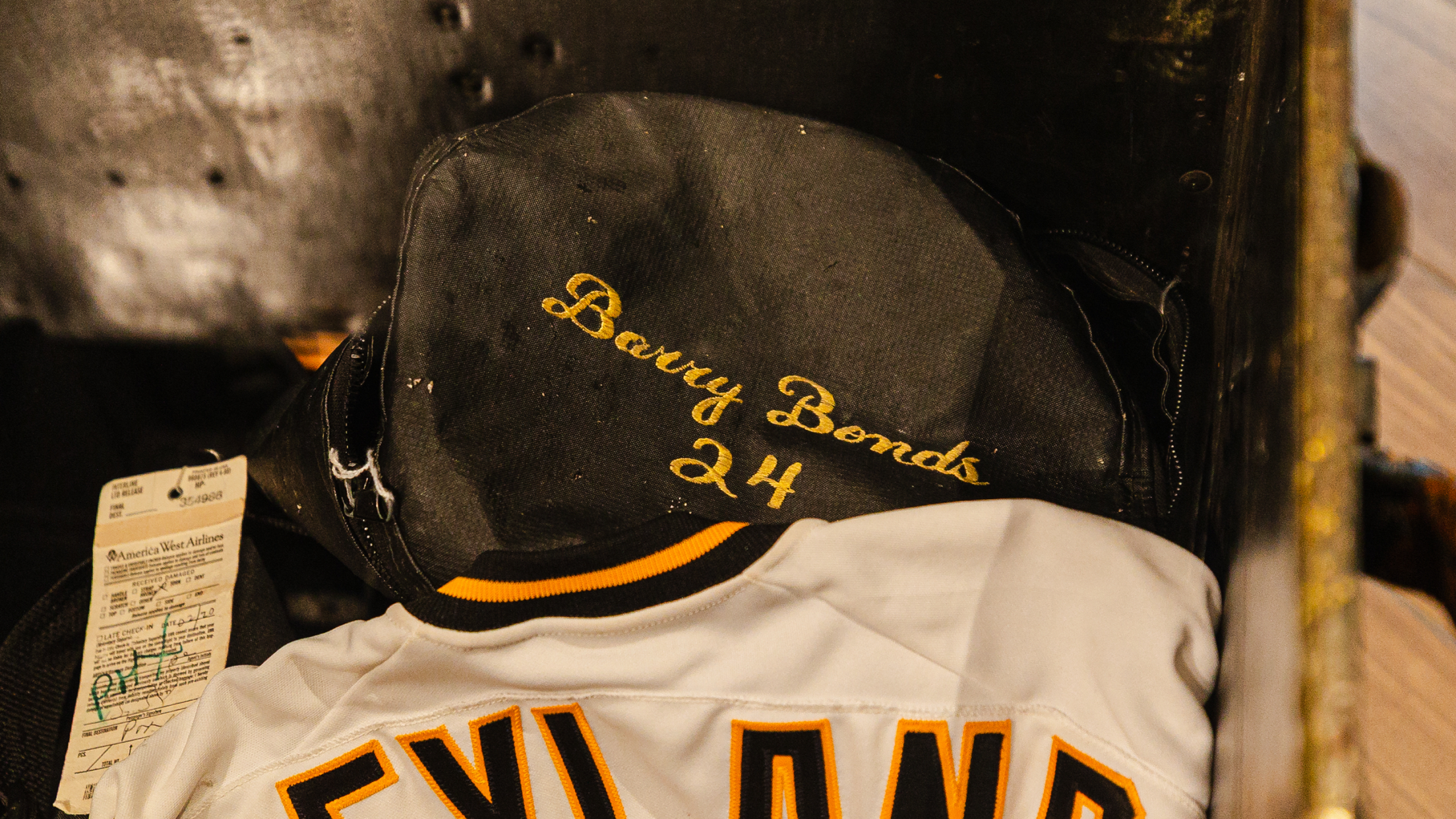
Barry Bonds is the all-time home run champion in Major League Baseball, hitting a total of 762 during his 22-year career. Barry began his career with the Pirates, making his debut in 1986, and spent his first seven seasons in a Bucco uniform. During his time with the Pirates, Bonds would have his bats transported from city to city in the black bag on display within one of the travel trunks in Legacy Hall.
Courtesy of the Dennis D. Heindl Sports Collection.
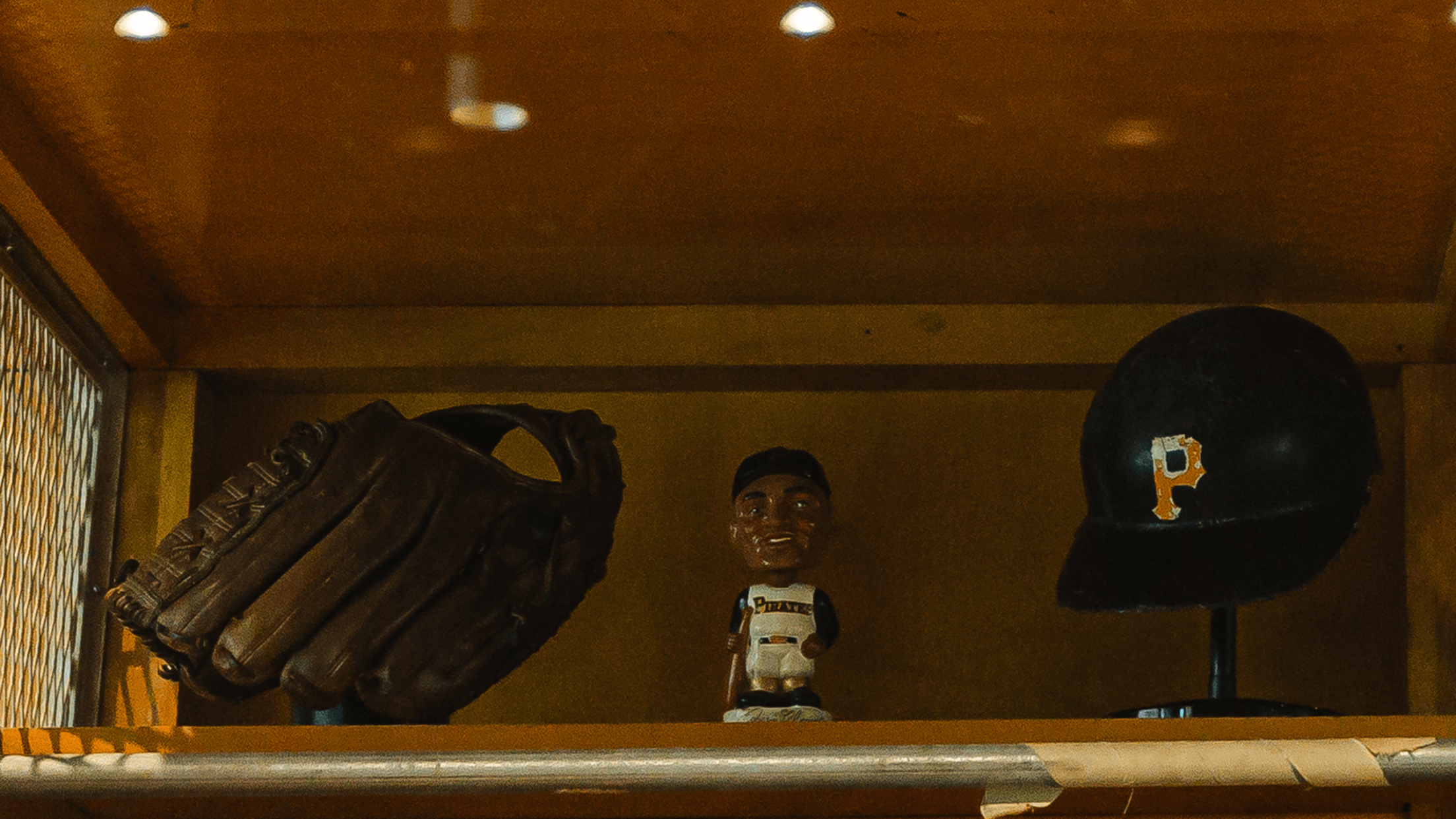
The infamous 1961-63 series of white base bobbing head dolls was one of the first Major League Baseball bobblehead sets sold to the public. The bobbleheads produced consisted primarily of bobbing head mascots, but a few star players were immortalized in bobblehead form: Roberto Clemente, Mickey Mantle, Roger Maris, and Willie Mays. This Roberto Clemente bobblehead is approximately eight inches tall and depicts Roberto with his hands on his hips, holding a bat, in a white Pirates jersey and black Pirates cap. It also features his signature along the base.
Courtesy of the Dennis D. Heindl Sports Collection.
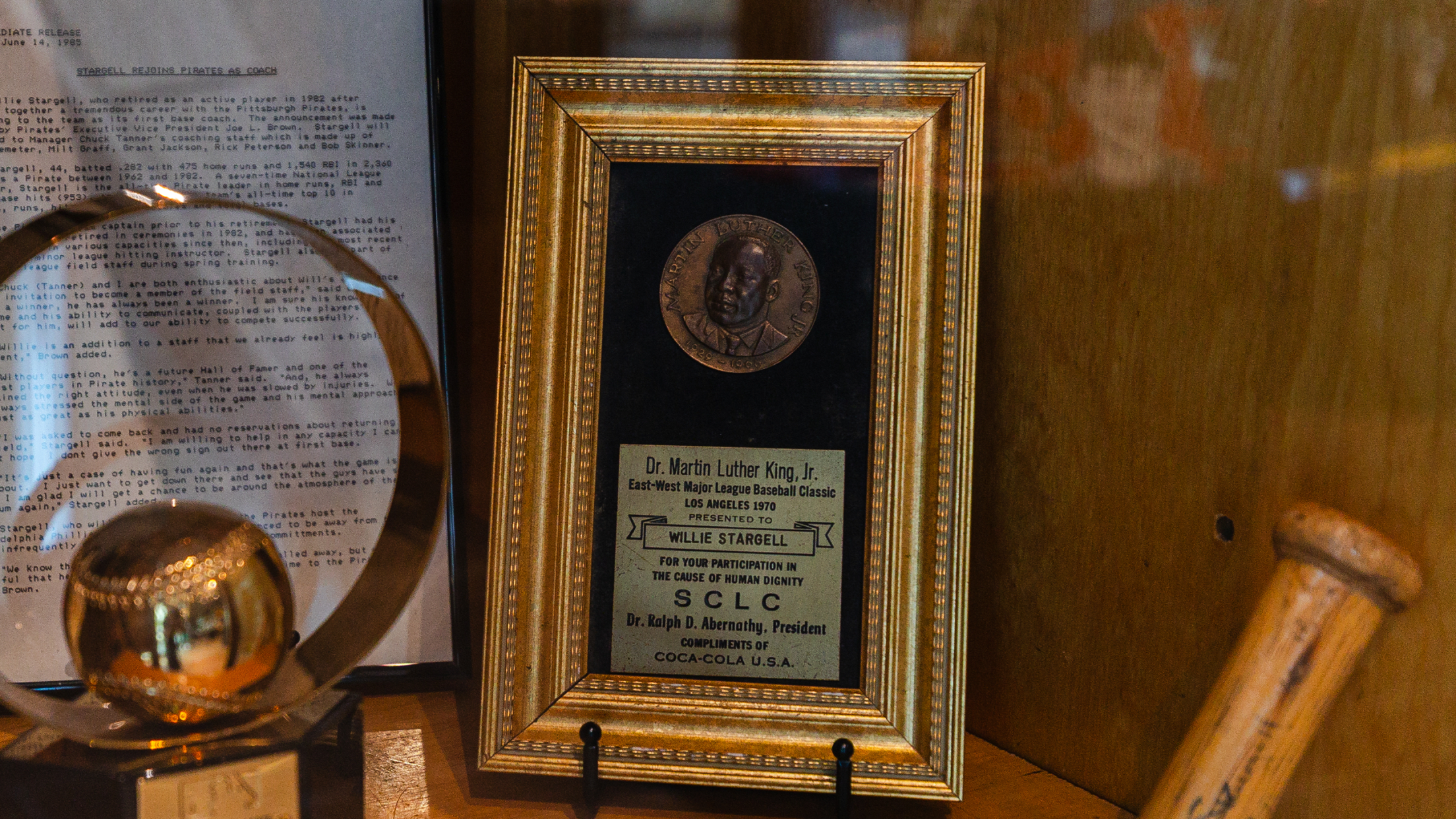
Willie Stargell was one of over a dozen Hall of Fame baseball players who participated in the East-West Major League Baseball Classic at Dodger Stadium on March 28, 1970. This historic exhibition game was organized specifically to honor Dr. Martin Luther King Jr., celebrate his legacy, and raise money for the Southern Christian Leadership Conference (SCLC) following his assassination in 1968.
Courtesy of the Dennis D. Heindl Sports Collection.
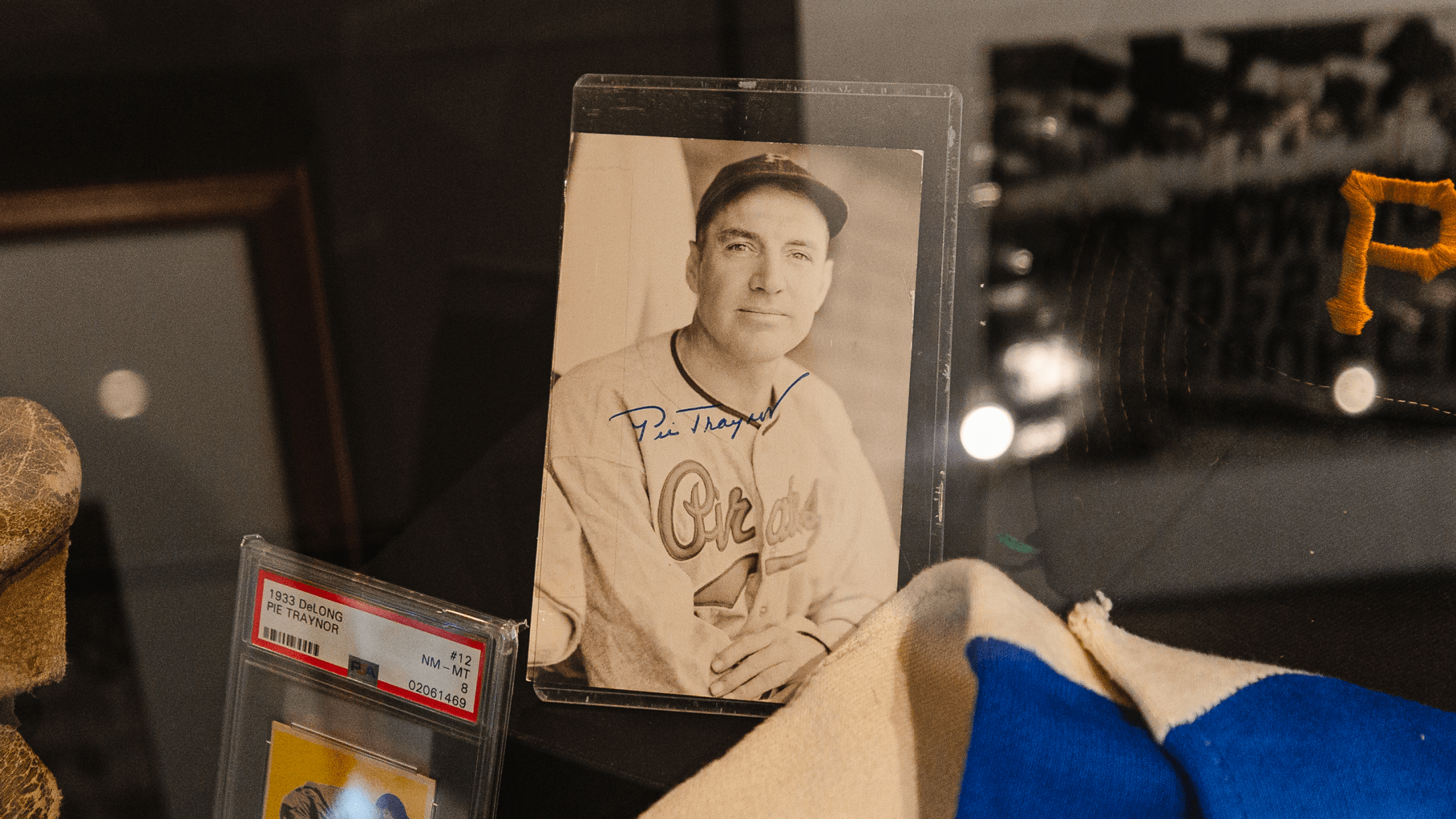
Hall of Fame third baseman Pie Traynor spent his entire 17-year career with the Pirates between 1920 and 1937. He produced a .320 career batting average, topping the .300 mark 10 times, and recorded over 100 RBI seven times. Traynor batted .346 in the 1925 World Series, helping lead the Pirates to their second championship. On defense, he led National League third basemen in putouts seven times, double plays four times, and assists three times. After his playing days, Pie managed the Pirates for five seasons before also spending time as a scout and broadcaster. Traynor was inducted into the National Baseball Hall of Fame in 1948 and had his uniform No. 20 retired by the Pirates in 1972.
Courtesy of the Dennis D. Heindl Sports Collection.
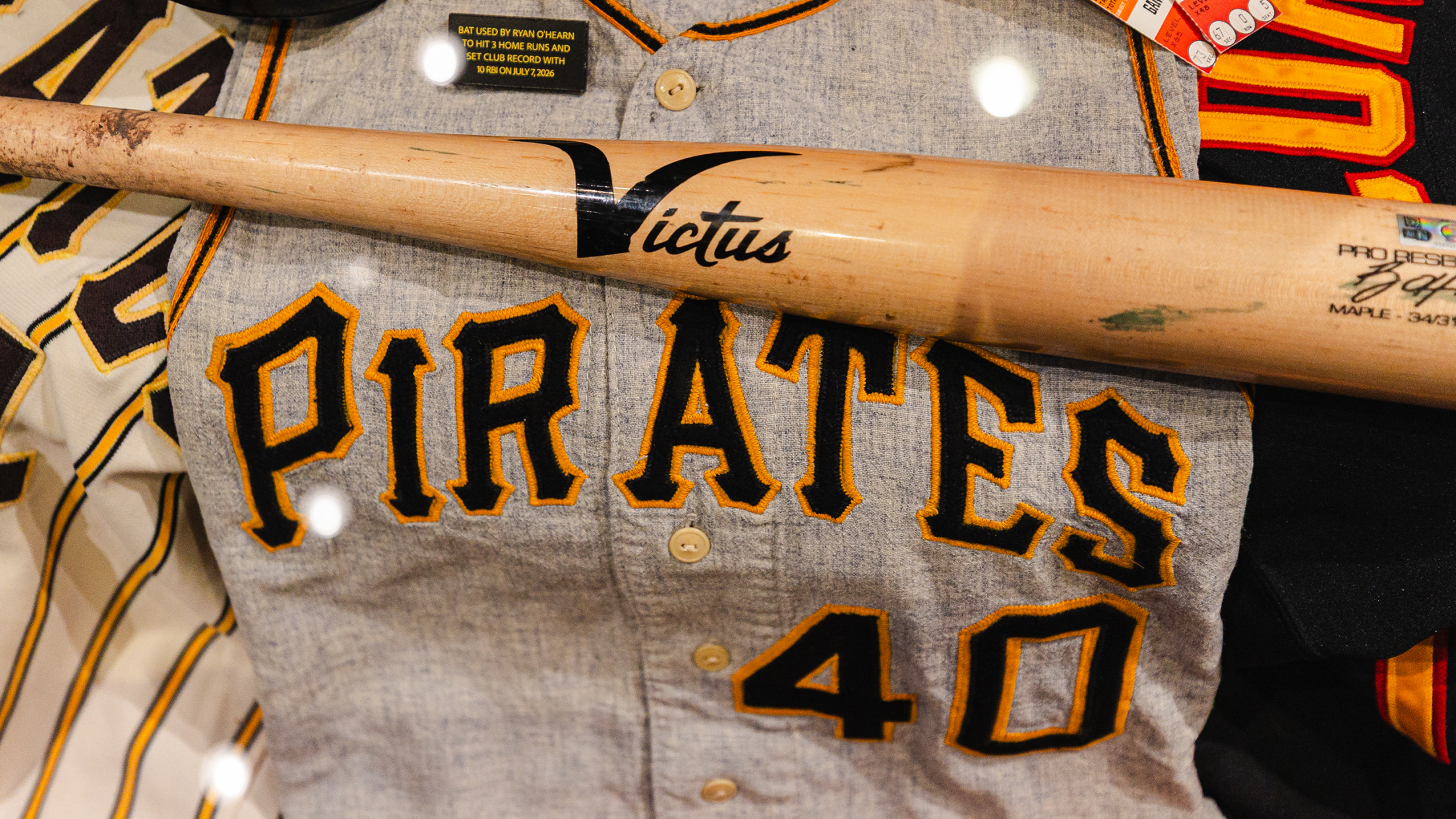
Danny Murtaugh managed the Pirates for 15 seasons and ranks second behind Fred Clarke (1,422) with 1,115 wins as a Bucco manager. He was the winning manager for two World Series championships (1960 and 1971) and spent his final season as the Bucco skipper in 1976. Murtaugh led the Pirates to five division championships and garnered Manager-of-the-Year honors from The Sporting News in 1960 and 1970. A member of the Pirates Hall of Fame, his uniform No. 40 was retired by the club in 1977.
Courtesy of the Dennis D. Heindl Sports Collection.
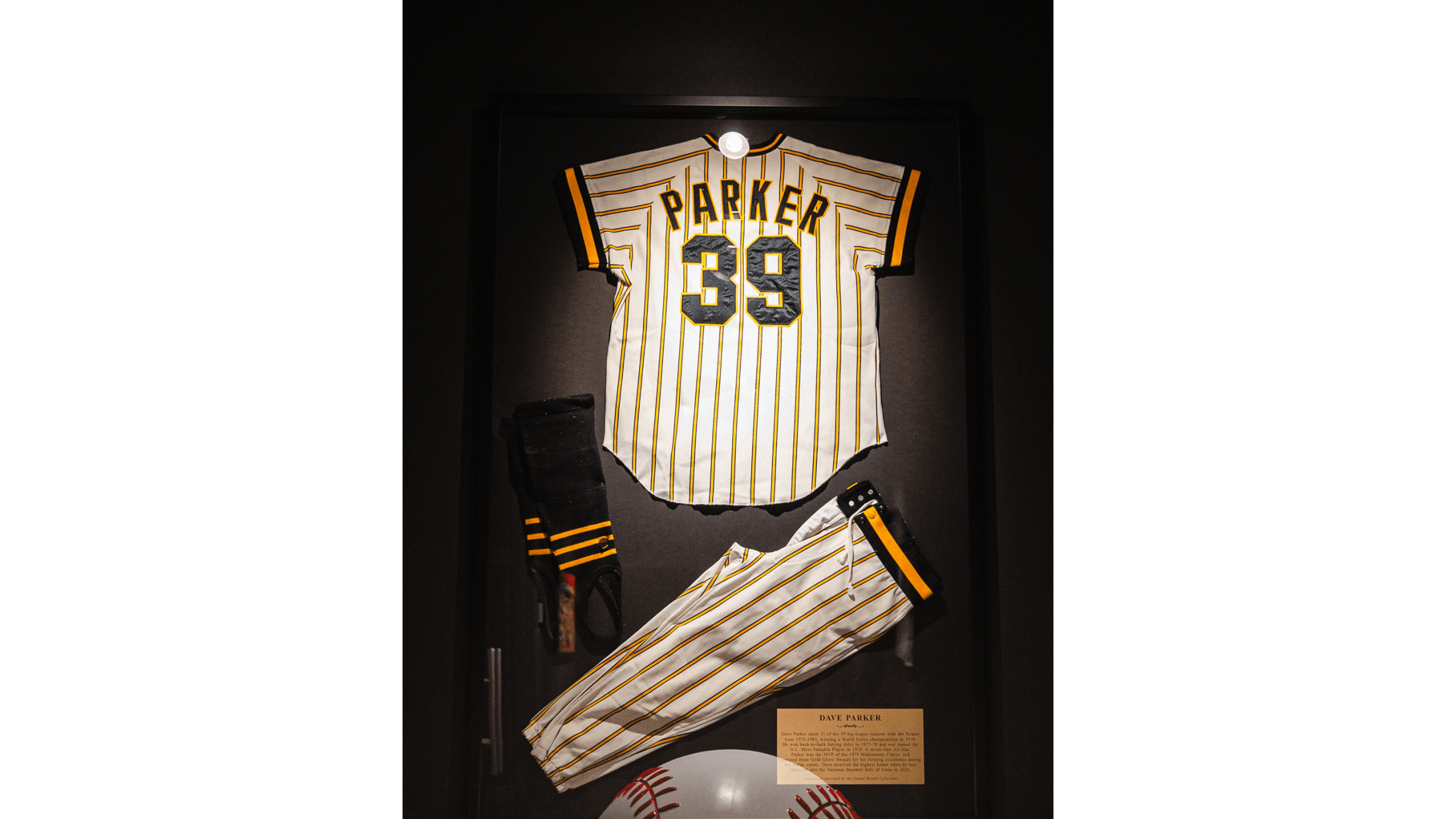
The Pirates wore multiple combinations of jerseys between 1977 and 1979. One of the designs was this unform worn by Dave Parker, which features a white jersey top and pants with black and gold pinstripes. The black socks were adorned with three gold stripes.
Courtesy of the Dennis D. Heindl Sports Collection.
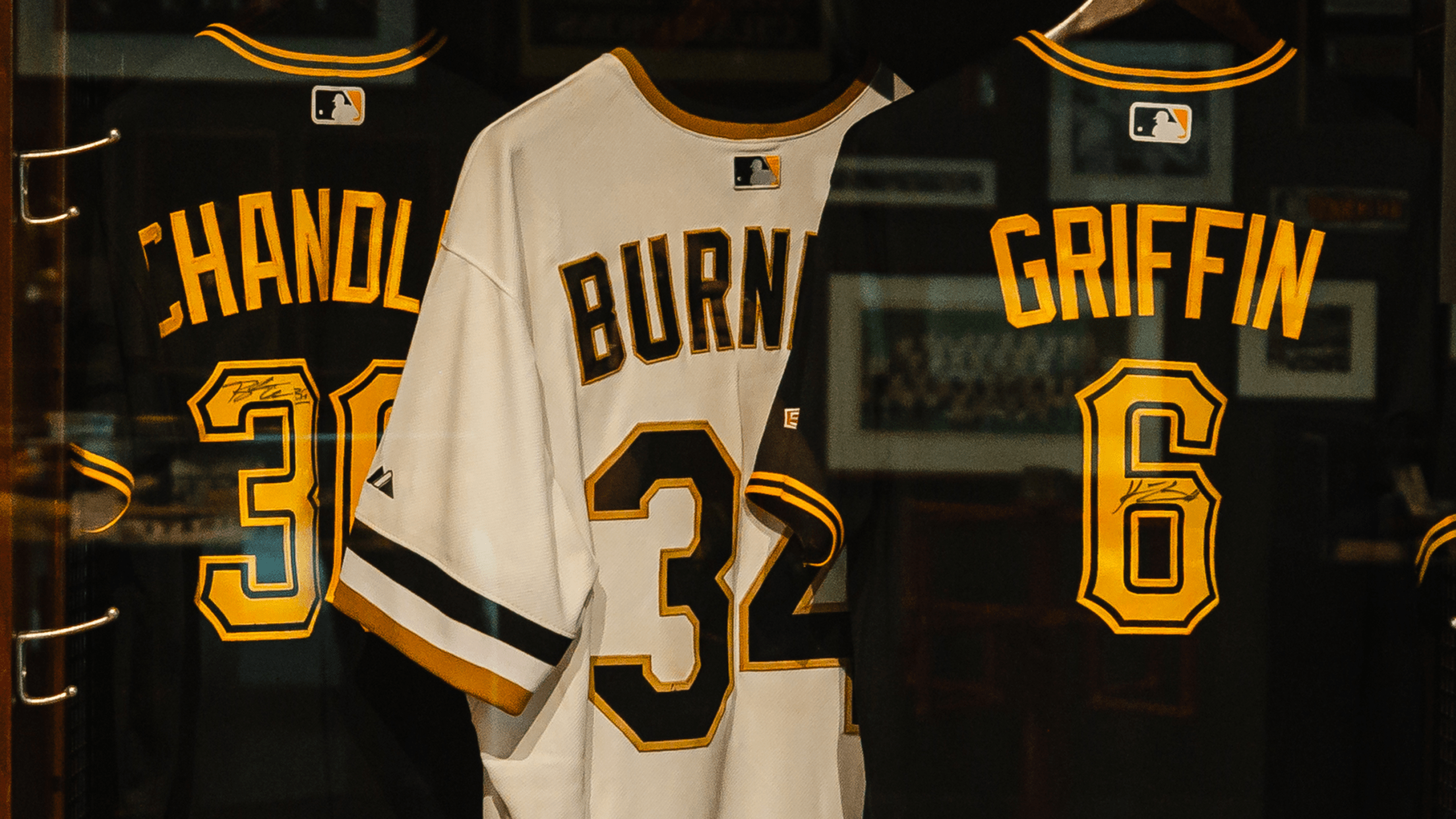
A.J. Burnett spent three of his final four seasons in the Majors pitching for the Pirates. An instant fan favorite, he won 16 games in his first year with the Bucs in 2012 and was selected to the All-Star team for the only time in his career in 2015 – his final season in the big leagues. The Burnett jersey that is hanging in the PNC Park locker was the one he wore while tossing a complete game against the Colorado Rockies at PNC Park on August 4, 2013.
Courtesy of the Dennis D. Heindl Sports Collection.
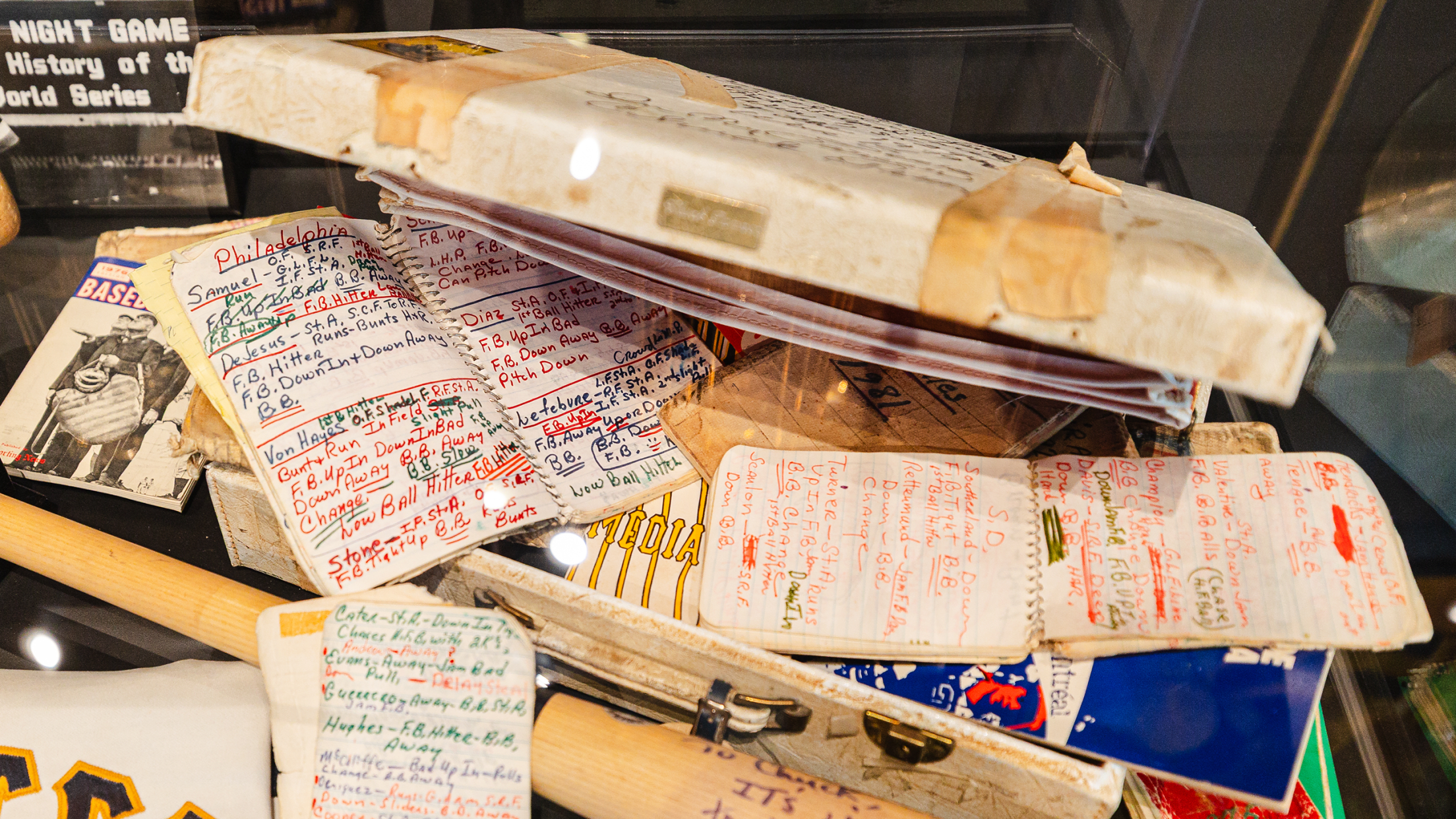
Chuck Tanner served as Pittsburgh’s manager for nine seasons from 1977-1985, winning a World Series championship in 1979. One of the most innovative managers during his time, Tanner would make hand-written notes on opposing batters and pitchers, and he would keep the notebooks in the white briefcase that is on display in Legacy Hall. When discussing his management style and reliance on stats, he stated: "I've got a briefcase of scouting reports, but I won't go by them. I go by my eyes."
Courtesy of the Dennis D. Heindl Sports Collection.
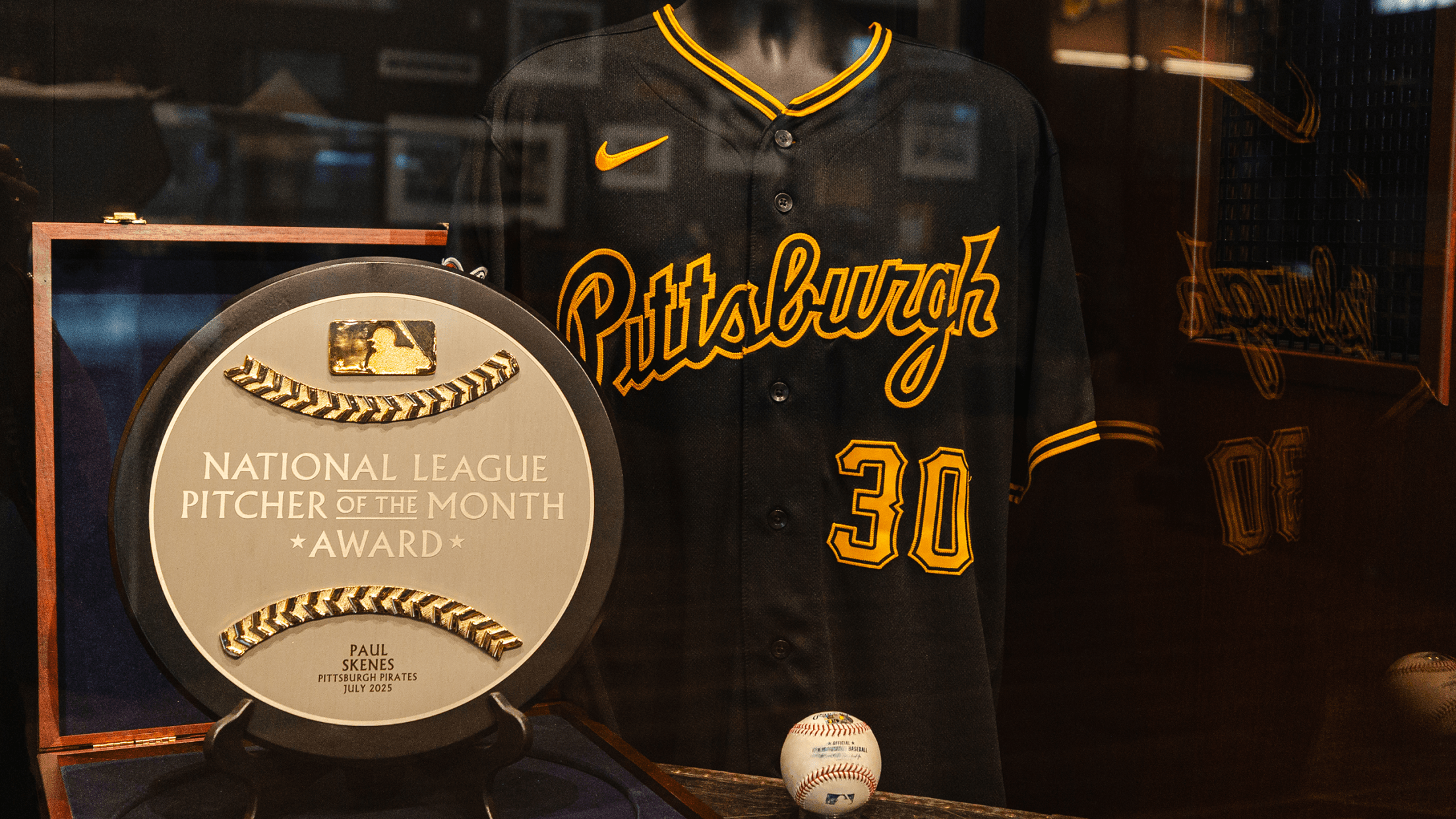
The Pirates selected Paul Skenes with the first overall selection in the 2023 Major League Baseball draft. He made his Major League debut on May 11, 2024, and won his first big-league game in his following start on May 17, 2024. Skenes was selected to the All-Star team in each of his first three seasons and became the first pitcher in Major League history to start the game in each of his first two campaigns. Paul was named the N.L. Rookie-of-the-Year in 2024 and followed that up by winning the N.L. Cy Young Award in 2025 – just the third Pittsburgh pitcher to win the award since it was first presented in 1956.
Courtesy of the Dennis D. Heindl Sports Collection.
Konnor Griffin was selected by the Pirates in the first round of the 2024 Major League Baseball draft – the ninth overall selection. He made his Major League debut as the starting shortstop on April 3, 2026, and recorded an RBI double in his first at-bat. At 19 years old, he became the first teenager to debut in MLB since Washington’s Juan Soto in 2018 and the first Pittsburgh teenager since Aramis Ramirez in 1998. A week after making his debut, Griffin and the Pirates agreed to terms on a nine-year contract.
Courtesy of the Dennis D. Heindl Sports Collection.
A two-sport star during his high school career (baseball and football), Bubba Chandler was the 72nd overall pick in the 2021 Major League Baseball draft, with the Pirates selecting him in the third round. He made his debut with the Pirates on August 22, 2025, and recorded a 4.0-inning save against the Colorado Rockies. Chandler followed that up with his first win in his next outing, making him the first pitcher in team history to record a save and a win in his first two Major League games.
Courtesy of the Dennis D. Heindl Sports Collection.
PITTSBURGH PIRATES COLLECTION